
Granada is one of the most atmospheric cities in Andalusia, where Arab heritage harmoniously blends with Spanish architecture and the mountain landscapes of the Sierra Nevada. Narrow streets, historic palaces, scenic viewpoints and vibrant neighbourhoods create a unique atmosphere that draws visitors back again and again.
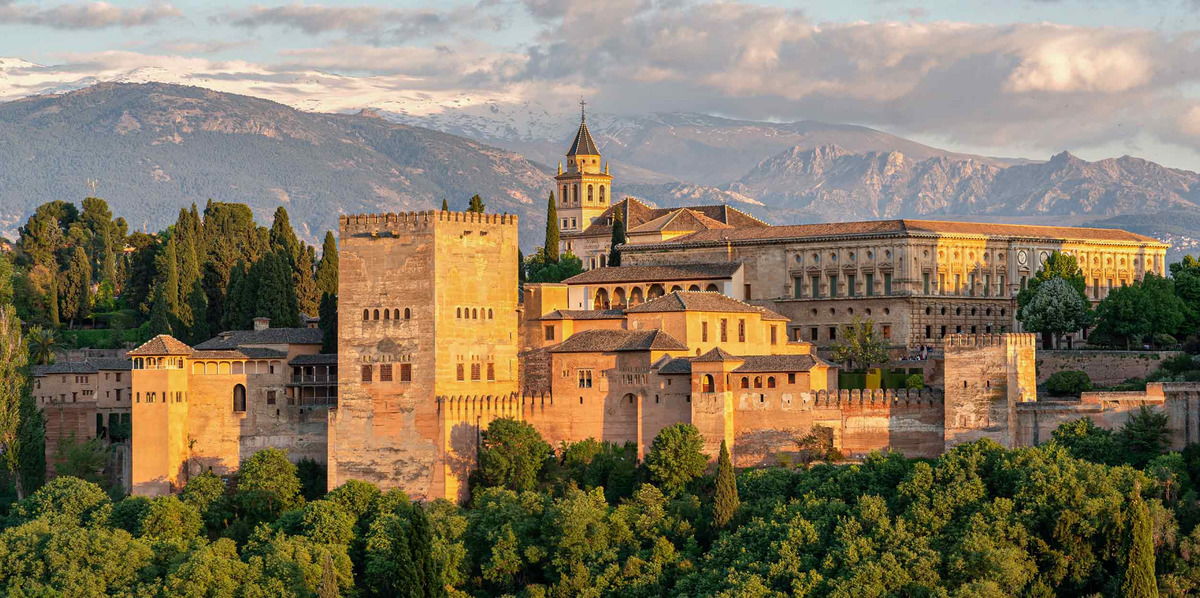
This guide presents a detailed route through the main attractions of Granada — from the Alhambra and the historic centre to the viewpoints of Albaicín and the Sacromonte district.
Top Attractions in Granada — Quick Overview
- The Alhambra and the Generalife Gardens
- Carmen de los Mártires
- Plaza Nueva and the historic centre
- Granada Cathedral and the Royal Chapel
- Carrera del Darro and Paseo de los Tristes
- The Albaicín district
- Mirador de San Nicolás
- Sacromonte
Walking Route Through Granada’s Main Attractions
On the map, Granada may seem compact, but its attractions are located at different levels of the city — from the Alhambra rising above the surroundings to the narrow streets of Albaicín. The terrain, uphill walks and relaxed pace make exploring the city especially rich and require a well-planned route.
If you only have one day and do not plan to visit the Alhambra, the main sights of the historic centre can be seen during a full and active walk. However, for a more complete experience — including the Alhambra, the Generalife Gardens and panoramic viewpoints — it is better to plan two to three days to enjoy the atmosphere without rushing.
This route below follows a logical sequence and mirrors the natural flow through the city: from the palace complex on the hill through the historic centre to the old quarters with some of the best views of Granada and the Sierra Nevada.
Alhambra
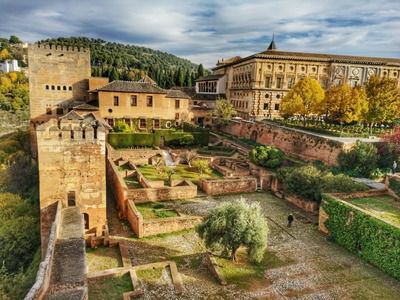
The Alhambra is the main jewel of Granada and one of the most impressive architectural complexes in Spain. Rising above the city against the backdrop of the Sierra Nevada mountains, it seems to unite history, art and the atmosphere of an eastern fairy tale.
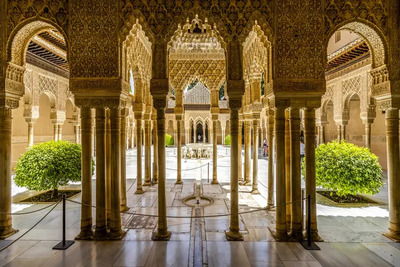
This palace-fortress ensemble, listed as a UNESCO World Heritage Site, reflects the rich heritage of the Nasrid dynasty. Elegant arcades, intricate stucco carvings, inner courtyards with fountains and tranquil gardens create a unique sense of harmony and serenity.
Visiting the Alhambra is not just sightseeing but a full journey through different spaces within the complex, where each area reveals a distinct chapter of the city’s history.
What Is Included in the Alhambra Complex
The Alhambra is not a single palace but an entire architectural ensemble made up of several sections, each creating its own atmosphere and impression.
- Nasrid Palaces (Palacios Nazaríes) — the heart of the Alhambra and its most refined element. Halls with delicate carvings, inner courtyards with fountains and intricate ornaments create the feeling of an eastern fairy tale.
- Alcazaba — the ancient fortress and defensive part of the complex. Its towers offer some of the best panoramic views of Granada and the surrounding mountains.
- Generalife Gardens (Generalife) — the former summer residence of the sultans with well-maintained gardens, terraces and water channels where the harmony between nature and architecture is especially evident.
- Palace of Charles V (Palacio de Carlos V) — a Renaissance building with a circular inner courtyard that sharply contrasts with the Moorish style of the surrounding structures and highlights the layered history of the city.
- Gardens and walking areas — shaded paths, viewpoints and quiet corners that make the visit calm and atmospheric.
The uniqueness of the Alhambra lies in the combination of grand panoramas and delicate architectural details that reveal themselves during a leisurely walk through the complex.
Practical Information
- Tickets are recommended to be purchased online in advance — visitor numbers are limited
- Average time to explore the complex — 3–4 hours
- Morning hours are the most comfortable for visiting
- Audio guides help better understand the history of the complex
After visiting the Alhambra, the route naturally continues with a descent into Granada’s historic centre.
Carmen de los Mártires
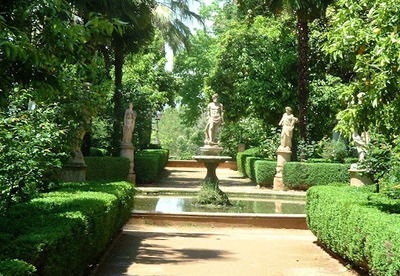
The Carmen de los Mártires gardens are one of the most peaceful and atmospheric places near the Alhambra, often remaining outside classic tourist routes. The space feels made for a slow, relaxing walk after an immersive visit to the palace complex.
This historic garden combines elements of French, English and Andalusian landscape design. Neat pathways, fountains, pavilions and viewpoints open scenic views over the city and surroundings, creating a sense of quiet and seclusion.
Small ponds with lilies, green labyrinths and shaded corners add special charm, making it easy to forget the noise of the city. Thanks to its calmer atmosphere compared to the Alhambra, a walk here highlights the contrast between grand palaces and the intimate beauty of the gardens.
Carmen de los Mártires fits perfectly into the route immediately after visiting the Alhambra — from here you can continue descending toward Granada’s historic centre.
Plaza Nueva and Granada’s Historic Centre
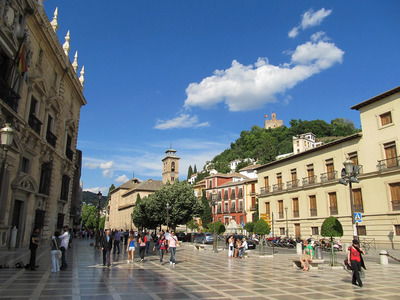
The descent from the Alhambra gradually leads to Plaza Nueva — one of the oldest squares in Granada and a natural transition point between the palace complex and the historic centre of the city.
Despite its name (“New Square”), Plaza Nueva is considered the oldest square in the city and has served as an important public space for centuries. Today it remains a lively meeting place from which the narrow streets of the old town extend.
From here, it is easy to begin a relaxed walk through the historic centre, where Moorish heritage gradually gives way to Renaissance and Baroque architecture. Stone facades, cosy squares and numerous cafés create an atmosphere where it is easy to stay longer than planned.
Continuing from Plaza Nueva, the route naturally leads to one of the city’s main architectural symbols — Granada Cathedral and the Royal Chapel.
Granada Cathedral and the Royal Chapel (Capilla Real)
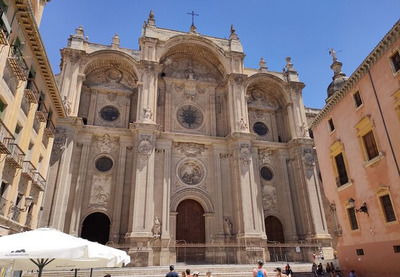
Granada Cathedral is one of the main architectural symbols of the city. Its monumental facade and spacious interiors reflect the transition from Gothic to Renaissance architecture and highlight Granada’s historical importance after the completion of the Reconquista.
The cathedral impresses with its scale: tall columns, bright naves and a richly decorated main altar create a sense of grandeur and openness. The architecture combines structural rigor with elegant decorative elements, allowing the interior to feel both majestic and harmonious.
Next to the cathedral stands the Royal Chapel (Capilla Real) — one of the most significant historical sites in the city. This is where the tombs of the Catholic Monarchs Isabella of Castile and Ferdinand of Aragon are located, whose victory marked the end of Muslim rule in Granada. The interior of the chapel has a more intimate atmosphere and is rich in late medieval symbolism.
Visiting the cathedral together with the Royal Chapel provides a deeper understanding of Granada’s historical contrast — the transition from Moorish heritage to Christian architecture and a new era in the history of Spain.
Carrera del Darro and Paseo de los Tristes
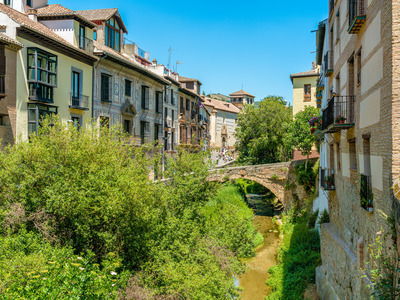
A leisurely walk from the cathedral gradually returns you to the Moorish atmosphere of the city — the narrow street Carrera del Darro is considered one of the most picturesque in Granada and often appears on lists of the most beautiful streets in Spain. The path along the Darro River passes historic stone buildings, small bridges and facades that seem to preserve traces of different eras.
The historical rhythm of the city is especially noticeable here: the gentle sound of water, reflections of the Alhambra’s towers and the gradual transition from the lively centre to quieter neighbourhoods create the feeling of travelling through time. As you continue, new views of the hills and the palace walls gradually appear.
The street naturally leads to Paseo de los Tristes — a small square at the foot of the Alhambra surrounded by historic buildings and cosy cafés. Despite its melancholic name (“Walk of the Sad Ones”), it is one of the most atmospheric places in Granada, perfect for taking a break and enjoying views of the fortress walls.
From here begins the ascent toward the Albaicín district — one of the most authentic areas of the city.
The Albaicín District (El Albaicín)
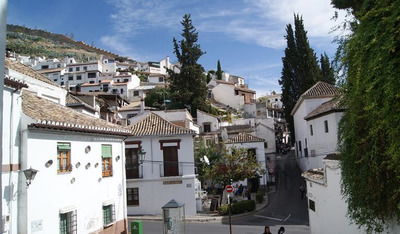
Albaicín is an ancient Moorish quarter that has preserved the layout of medieval Granada. Narrow winding streets, white houses, small squares and hidden courtyards create an atmosphere that sharply contrasts with the more open and monumental city centre.
The Albaicín is included in the UNESCO World Heritage list and is considered one of the most authentic districts of Granada. It is easy to get lost in the labyrinth of streets, where each turn reveals new views of the Alhambra, whose red walls stand out beautifully against the Sierra Nevada mountains.
Walking through the quarter is less about visiting specific attractions and more about gradually immersing yourself in the atmosphere of the old city. Stone stairways, quiet viewpoints and small churches shape the rhythm of a slow ascent up the hill.
The natural culmination of the walk is Mirador de San Nicolás — one of the most famous panoramic viewpoints in Granada.
Mirador de San Nicolás
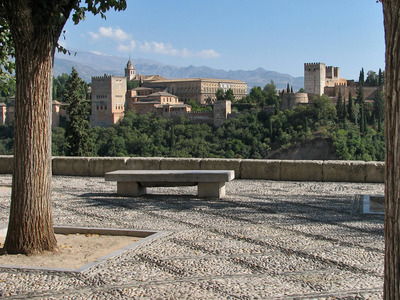
Mirador de San Nicolás is one of the most famous viewpoints in Granada and the natural highlight of a walk through the Albaicín. From here, you can enjoy a panoramic view of the Alhambra rising above the city, with the snow-capped peaks of the Sierra Nevada visible on the horizon.
The contrast between the reddish walls of the palace complex, the green slopes of the hills and the white houses of the district creates a striking scene that changes depending on the time of day. The view becomes especially expressive near sunset, when soft light highlights architectural details and makes the landscape almost painterly.
The viewpoint has long become a symbol of the city and a meeting place for travellers, musicians and locals. Despite its popularity, it remains easy to feel Granada’s atmosphere here — a blend of history, culture and peaceful contemplation.
From Mirador de San Nicolás, our walking route continues toward the Sacromonte district, known for its cave houses and flamenco traditions.
Sacromonte
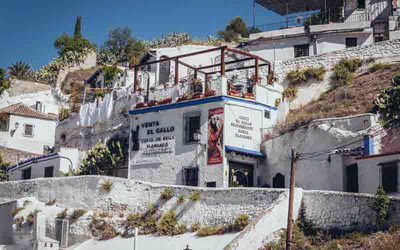
Sacromonte is one of the most distinctive districts of Granada, known for its cave houses and deep connection with flamenco traditions. This neighbourhood lies on the hillsides opposite the Alhambra and offers new perspectives over the city and surrounding landscapes.
Sacromonte is historically linked to Romani culture, which is reflected in the architecture and lifestyle of the area. White houses carved directly into the soft hills create a unique landscape unlike the rest of the city.
A walk through Sacromonte reveals a different side of Granada — calmer and more authentic. Narrow paths, panoramic views and a sense of open space make this part of the route especially atmospheric.
In the evening, the district comes alive thanks to traditional tablaos where flamenco performances take place — an art form closely connected with the history of Andalusia. Attending such a performance can become a memorable finale to your walk through the old quarters of the city.
Where to Stop and Try Local Cuisine
A walk through Granada becomes even more memorable if you include small gastronomic stops along the way. The city is famous for its tapas tradition, so many bars serve small snacks with drinks, allowing you to explore local cuisine without long breaks.
In the area around Plaza Nueva and the historic centre, you will find many authentic places where you can try classic Andalusian dishes — jamón, fried seafood, salmorejo and a variety of tapas. It is a convenient spot for a break after descending from the Alhambra.
Along Carrera del Darro and around Paseo de los Tristes there are small cafés with views of the river and the palace walls — an excellent place for a short pause during the route.
In the Albaicín district, look for cosy terraces with panoramic views, especially pleasant closer to the evening. In Sacromonte, the gastronomic experience can be combined with visiting traditional flamenco tablaos, creating a special atmosphere to end the day.
Summary of the Granada Attractions Walk
The route through Granada unfolds gradually — from the majestic Alhambra on the hill through the historic centre to the narrow streets of Albaicín and the panoramic views of Mirador de San Nicolás. Each part of the city has its own character, making the walk feel like a journey through different eras and cultural layers.
Granada does not require rushing: it is better to allow yourself to stop at viewpoints, get lost in the maze of old streets and enjoy the changing views and atmosphere. It is in this slow rhythm that the city reveals its true charm.
Even if the route seems full, it is precisely the combination of palaces, gardens, panoramic viewpoints and authentic neighbourhoods that makes discovering Granada truly memorable.
What to See Near Granada
Granada is not only perfect for exploring the city itself but also serves as a great starting point for travelling around Andalusia. Nearby you will find mountain resorts, historic towns and scenic natural routes that are easy to include in your travel plans.
- Sierra Nevada Ski Resort — just about an hour’s drive from the city, the Sierra Nevada mountains offer panoramic views, hiking routes and year-round opportunities for outdoor activities.
- Cazorla — an atmospheric Andalusian town near the Sierra de Cazorla natural park, where you can explore fortresses, historic streets and impressive natural landscapes.
- Jaén — a city rich in history, with a magnificent cathedral and panoramic views over olive groves that symbolise the region.
- Malaga — a vibrant Mediterranean city that can be considered for a day trip: museums, a historic centre and seaside walks create a completely different Andalusian atmosphere.
For exploring the surrounding areas, using a car is the most convenient option — it allows you to plan your route freely and discover lesser-known places in the region. You can check options on the car rental in Spain page.

 English
  Español
  Русский