
Úbeda is one of the most beautiful historic cities in Andalusia, known for its magnificent Renaissance architecture. The city is located in the province of Jaén and, together with neighboring Baeza, is included in the UNESCO World Heritage List thanks to its unique ensemble of palaces, churches, and squares dating back to the 16th century.
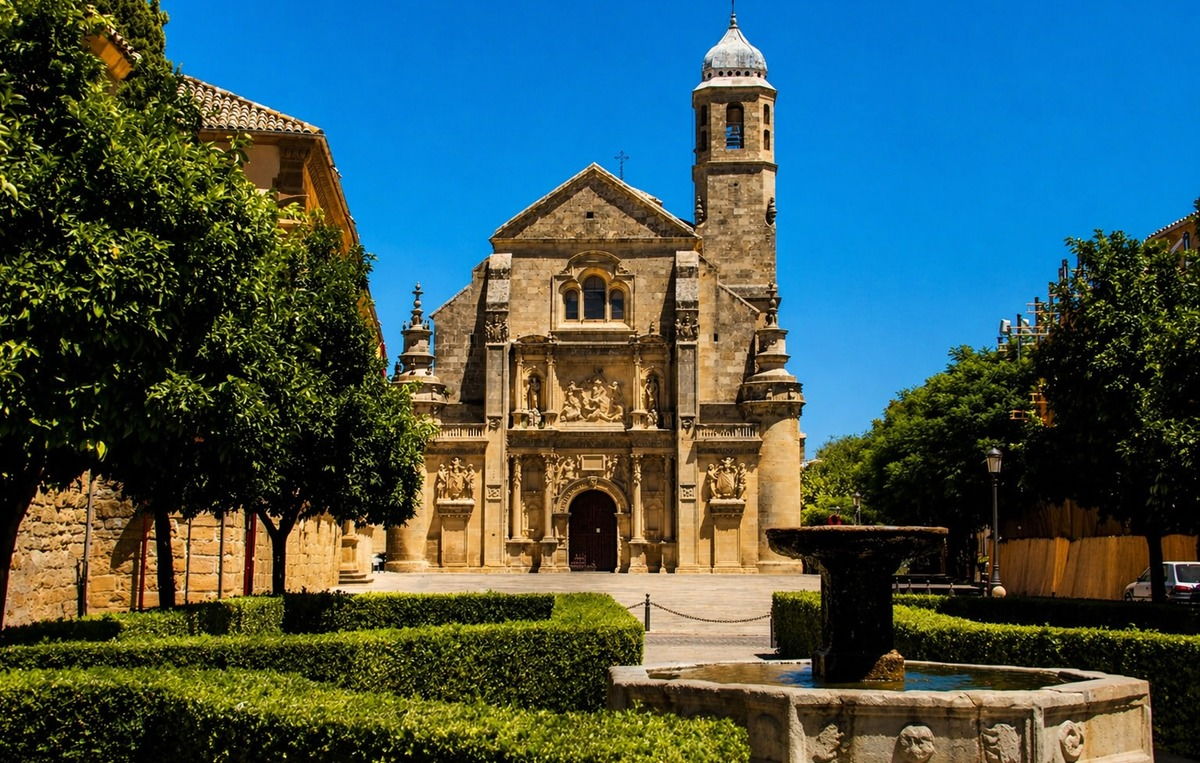
Walking along the streets of Úbeda, it is easy to feel the atmosphere of historic Spain: majestic stone palaces, spacious squares, and elegant building facades create the impression that the city has remained almost unchanged for centuries. Thanks to its architectural heritage, Úbeda is often called a true open-air museum.
In this article, you will learn what to see in Úbeda: the main attractions of the city, the best viewpoints, and the most interesting places to include in your walking route.
What to See in Úbeda in 1 Day — Walking Route
Úbeda is a compact city with a well-preserved historic center, so most of the main attractions can be seen in one day during a leisurely walk.
- Plaza Vázquez de Molina
- Sacra Capilla del Salvador
- Palacio del Deán Ortega
- Basílica de Santa María de los Reales Alcázares
- Palacio de las Cadenas
- Viewpoints of Úbeda
- Hospital de Santiago
- Medieval Walls of Úbeda
Additionally:
This route will allow you to see the city's most famous architectural landmarks, experience the atmosphere of the Renaissance era, and enjoy some of the most beautiful views in the province of Jaén.
Plaza Vázquez de Molina
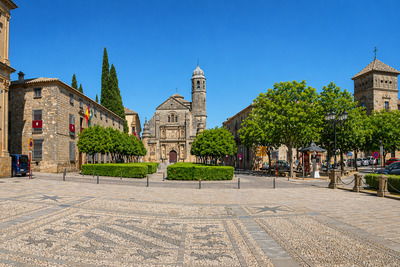
It is best to start exploring Úbeda from Plaza Vázquez de Molina — one of the most beautiful Renaissance architectural ensembles in all of Spain. This place is considered the heart of the city's historic center and one of the main reasons why Úbeda was included in the UNESCO World Heritage List.
The square is surrounded by majestic 16th-century buildings constructed during the city's golden age. At that time, Úbeda was an important cultural and political center of the region, and the local nobility sought to emphasize their influence by building luxurious palaces and religious structures.
The special atmosphere of the square is created by the harmonious combination of architecture and space: the wide square, strict light-colored stone facades, and carefully designed decorative elements make this place truly solemn and memorable.
Several key attractions of Úbeda are located here — the famous Sacra Capilla del Salvador, the Basílica de Santa María de los Reales Alcázares, and the Palacio del Deán Ortega. This makes the square an ideal starting point for further exploration of the city.
During your walk, it is worth paying attention to the Renaissance fountain Fuente de la Plaza Vázquez de Molina, which decorates the square and adds a special charm to it. In the evening, when the buildings are illuminated with soft lighting, the square looks especially impressive and becomes one of the most atmospheric places in the city.
💡 Plaza Vázquez de Molina is a great place to start your introduction to Úbeda, take your first photos, and feel the atmosphere of one of the most beautiful historic cities in Andalusia.
Sacra Capilla del Salvador
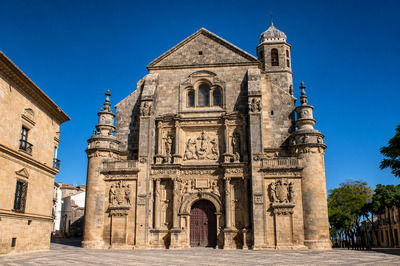
One of the most impressive architectural landmarks of Úbeda is the Sacra Capilla del Salvador — a magnificent 16th-century structure that is rightly considered the main symbol of the city. It is one of the most famous buildings of the Spanish Renaissance and an important part of the architectural ensemble of Plaza Vázquez de Molina.
The chapel was commissioned by the influential nobleman Francisco de los Cobos, an advisor to King Charles V. He wanted to create a family mausoleum that would emphasize his high status and wealth. The project was entrusted to the famous architect Diego de Siloé, and later the work was continued by the outstanding master Andrés de Vandelvira, who played a key role in shaping the architectural appearance of Úbeda.
The facade of the chapel impresses with its detail: carved columns, sculptures, and decorative elements create the impression of a true stone masterpiece. The building looks especially beautiful in sunny weather, when the light highlights the delicate craftsmanship and makes the facade even more expressive.
Inside the chapel, visitors can see rich decoration, elegant paintings, and sculptures, as well as elements reflecting the influence of the Italian Renaissance on Spanish architecture. The interior looks solemn and harmonious, creating a sense of grandeur and tranquility.
Today, Sacra Capilla del Salvador is considered one of the most visited attractions in Úbeda and a must-see for anyone interested in the history and architecture of Spain.
💡 Entrance to the chapel is paid, but the cost is usually low. It is definitely worth including in your route — this is one of the most impressive buildings not only in Úbeda, but in all of Andalusia.
Palacio del Deán Ortega
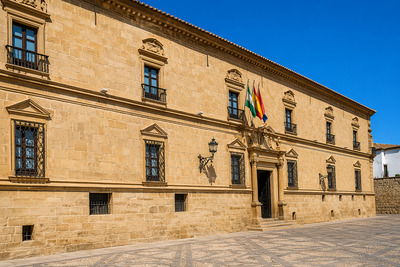
Next to the Sacra Capilla del Salvador stands another important building of Plaza Vázquez de Molina — Palacio del Deán Ortega, built in the 16th century. It is one of the most elegant palaces in Úbeda and a vivid example of Renaissance architecture.
The palace was commissioned by Fernando Ortega, dean of the Málaga Cathedral, which is how the building received its name. Like many other constructions in Úbeda, the palace was created during the city’s golden age, when the local nobility actively embellished the city with magnificent buildings.
The facade of the palace looks restrained and noble, while inside there is a beautiful inner courtyard — a patio surrounded by arches and columns. Such courtyards were a characteristic feature of Spanish palaces and served as places for relaxation and meetings.
Today, Palacio del Deán Ortega is known for housing one of the historic hotels of the Parador network — Parador de Úbeda. This means that travelers can spend the night in a real 16th-century palace and experience the atmosphere of historic Spain.
Even if you are not planning to stay at the hotel, it is worth stepping into the inner courtyard or visiting the terrace — here you can take beautiful photos and enjoy views of Plaza Vázquez de Molina and the Sacra Capilla del Salvador.
💡 The inner courtyard of the palace is often open to visitors, making it a great place to take a short break during your walk and experience the atmosphere of historic Úbeda.
Basílica de Santa María de los Reales Alcázares
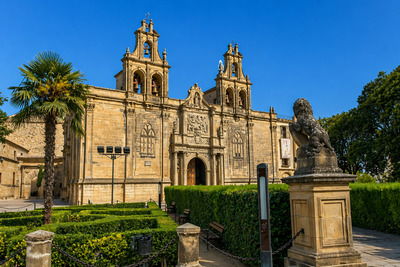
Just a few steps from the Sacra Capilla del Salvador and Palacio del Deán Ortega stands another important building of Plaza Vázquez de Molina — the Basílica de Santa María de los Reales Alcázares. Thanks to its location, the church is an integral part of Úbeda’s main architectural ensemble.
The history of this site dates back to ancient times. It is believed that the basilica was built on the site of a former mosque, which in turn stood on the grounds of an old Arab fortress — the alcázar. This is why the word “Alcázares” remains in the name of the church, reminding visitors of the city’s Muslim past.
The modern building of the basilica was formed over several centuries, starting from the 13th century. As a result, the church combines elements of different architectural styles — from Gothic to Renaissance — which makes it especially interesting for lovers of history and architecture.
Inside, visitors can see beautiful altars, historic paintings, and decorative elements that create an atmosphere of calmness and solemnity. After restoration, the church has reopened to visitors and is gradually regaining its status as one of the main religious centers of the city.
The square in front of the basilica is one of the most pleasant places for a walk. From here, beautiful views open up toward the surrounding palaces and the Sacra Capilla del Salvador, so many travelers stay here a little longer to take photos and enjoy the atmosphere of historic Úbeda.
💡 Since the basilica is located directly on Plaza Vázquez de Molina, it is convenient to visit it right after exploring the Sacra Capilla del Salvador — the walk between these buildings takes no more than one minute.
Palacio de las Cadenas
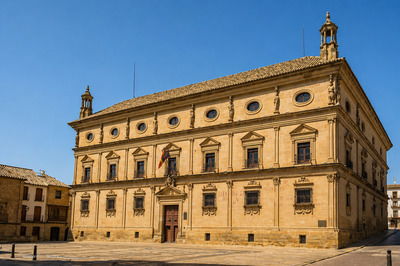
Just a few steps from the Basílica de Santa María and other historic buildings of Plaza Vázquez de Molina stands Palacio de las Cadenas — one of the most striking and majestic structures of this architectural ensemble.
The palace was built in the 16th century based on the design of the well-known architect Andrés de Vandelvira, whose name is associated with the creation of many outstanding buildings in Úbeda. The construction was commissioned by the influential nobleman Juan Vázquez de Molina, who held high government positions at the Spanish royal court.
The name “las Cadenas,” which translates as “chains,” is connected to the decorative chains that once adorned the facade of the building and symbolized the high status of its owner. Today, the palace attracts attention with its strict and harmonious facade executed in the Spanish Renaissance style.
Currently, the building houses the city hall of Úbeda (Ayuntamiento de Úbeda), so the palace remains an important administrative center of the city. Despite this, its external appearance has been fully preserved, and the building still looks as majestic as it did several centuries ago.
Standing in front of Palacio de las Cadenas, it is easy to imagine how wealthy and influential the city was in the 16th century, when chapels, palaces, and religious buildings were being constructed simultaneously on the square, forming one of the most beautiful ensembles in Spain.
💡 Since the palace is located directly on Plaza Vázquez de Molina, it is convenient to explore it while walking between the Sacra Capilla del Salvador and the Basílica de Santa María — all the main buildings here are literally just a few minutes apart.
Viewpoints of Úbeda
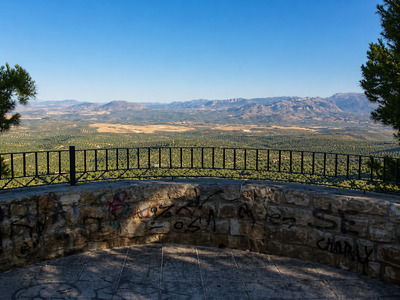
If you enjoy looking into the distance and want to admire panoramic views, the viewpoints of Úbeda are an excellent choice. They are located along the old city wall and form a convenient walking route that can be completed in just 15–25 minutes, with leisurely stops at the best panoramic spots of the city.
The most convenient place to start the walk is from Plaza Vázquez de Molina — the main historic center of Úbeda. From here, you only need to walk through the narrow streets of the old town for a few minutes to reach the first sections of the city wall, where views open over the Guadalquivir River valley and the endless olive groves of the province of Jaén.
The first point of the route is usually Mirador del Alcázar, located next to the remains of old fortifications. It is one of the most popular viewpoints, offering excellent views of hills covered with thousands of olive trees stretching to the horizon.
Continuing along the wall, in just a few minutes you will reach Mirador del Redentor, known for its semicircular stone platform. It is a convenient place for a short stop and photos: from here, a wide panoramic view opens over the valley and the Sierra Mágina mountain range, which is especially visible in clear weather.
The next stop is Mirador de San Lorenzo, located slightly further along the route. This part of the walk is especially pleasant thanks to its peaceful atmosphere and beautiful views of the countryside, contrasting with the strict architecture of the historic center.
If desired, the walk can be continued along the city wall to other panoramic points such as Mirador de la Muralla, which also offers picturesque views of the valley and surrounding hills.
The best time for a walk along the viewpoints is in the morning or evening, when the soft sunlight makes the landscapes especially expressive. In clear weather, you can see dozens of kilometers of olive groves and mountain ranges on the horizon — views like these often become some of the most memorable moments of a trip to Úbeda.
💡 The entire route along the main viewpoints follows a flat and comfortable path, making it easy to include in your walk right after visiting Plaza Vázquez de Molina.
Hospital de Santiago
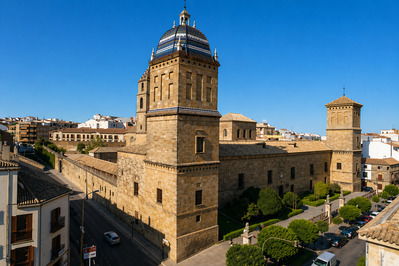
After walking through the historic center and viewpoints, it is worth heading to another outstanding attraction of Úbeda — Hospital de Santiago. It is located about a 10–12 minute walk from Plaza Vázquez de Molina and is considered one of the most beautiful buildings in the city.
The hospital was built in the 16th century based on the design of the famous architect Andrés de Vandelvira and was intended as a place to help the sick and pilgrims. In those times, such buildings played an important role along religious travel routes, including the well-known Camino de Santiago, along which thousands of people traveled to the sacred sites of Spain. Thanks to its large-scale and harmonious appearance, the building received the unofficial name “the Andalusian Escorial,” as it resembles the famous monastery complex located near Madrid.
The architecture of the building impresses with its symmetry and strict lines. The facade is decorated with decorative elements, while inside there is a spacious inner courtyard with columns and a beautiful staircase, considered among the most expressive features of the entire complex.
Today, Hospital de Santiago is used as a cultural center of the city. Exhibitions, concerts, festivals, and various cultural events take place here, making the building an important part of modern life in Úbeda.
In front of the building there is a spacious square where it is pleasant to stop for a few minutes, take photos, and enjoy the view of one of the most impressive structures in the city.
💡 Although the hospital is located slightly away from the historic center, the walk to it passes through beautiful city streets and takes about 10 minutes on foot, making it easy to include as the final stop of your walk in Úbeda.
Medieval Walls of Úbeda
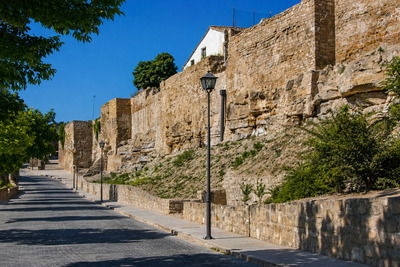
While walking toward the viewpoints of Úbeda, you will likely notice fragments of the old city walls — an important historical element that reminds visitors of the city’s medieval past. Many sections of the walls are located just a few minutes’ walk from Plaza Vázquez de Molina and fit well into the overall walking route.
The first fortifications in this place appeared during the period of Arab rule, when Úbeda was an important strategic point in the region. Later, the walls were strengthened and expanded, forming a powerful defensive system that protected the city from possible attacks.
Today, several sections of the walls, towers, and historic city gates have been preserved, among which Puerta de Granada and Puerta del Losal stand out in particular. These gates once served as the main entrances to the city and still remain among the most recognizable historical landmarks of Úbeda.
Walking along the walls, you can feel the atmosphere of an old town and imagine what it looked like during the Middle Ages. Some sections of the walls are located near viewpoints, making it easy to combine the walk with panoramic views of the Guadalquivir River valley.
💡 From the viewpoints to the nearest sections of the city walls, it takes only a few minutes to walk — a great way to finish your walk through the historic center and see another important part of Úbeda’s history.
Useful Information for Visiting Úbeda
Úbeda is a compact city with a well-preserved historic center, so most attractions are convenient to explore on foot. Before your trip, it is worth considering a few practical details that will help make your walk more comfortable.
Where to Park in Úbeda
The historic center of Úbeda is partially restricted for car traffic, so it is best to choose a convenient parking place near the center in advance.
💡 If you are planning a trip around Andalusia by car, it is worth thinking about routes and parking in advance. For traveling around the region, many travelers choose car rental 🚗 — this is the most convenient way to visit Úbeda, Baeza, Jaén, and the natural areas of the province.
- Parking Plaza de Andalucía — one of the most convenient options near the historic center. From here, you can reach Plaza Vázquez de Molina in about 5–7 minutes on foot.
- Parking Santa Clara — another popular parking area near the city center. Suitable for those planning to explore the main attractions.
- Parking near Hospital de Santiago — a good option if you start your route from this part of the city or plan to finish your walk here.
💡 During the high season, it is better to arrive in the morning — later in the day, available spaces in the center may be significantly fewer.
When Is the Best Time to Visit Úbeda
The best time for walking around Úbeda is spring and autumn, when temperatures are comfortable and the weather is ideal for long walks.
In summer, the city can be quite hot, especially in the middle of the day. During this period, it is better to plan walks for the morning or evening hours.
How Much Time Is Needed for Sightseeing
Most of the main attractions of Úbeda can be seen in 1 day. Thanks to the compact layout of the sites, the walk is convenient and not too tiring.
If you have extra time, it is worth combining your visit to Úbeda with a trip to the nearby city of Baeza — one of the most popular routes in the province of Jaén.
Can You Combine Úbeda and Baeza in One Day
Yes, many travelers explore Úbeda and Baeza in one day, as the distance between the cities is only about 10 kilometers.
The route is usually planned as follows: in the morning, visitors explore Úbeda, and then head to Baeza, where they spend the second half of the day. The trip between the cities takes about 10–15 minutes by car.
💡 This route is considered one of the most popular in Andalusia, as both cities are included in the UNESCO World Heritage List.
What to See Near Úbeda
Úbeda is conveniently located in the province of Jaén, close to historic cities and natural areas of Andalusia. Because of this, it is easy to include it in a travel route around the region and combine visits to several interesting places in one trip.
- The most obvious destination is Baeza, located only about 10 kilometers from Úbeda. These two cities are included in the UNESCO World Heritage List and are often visited together. Baeza is known for its Renaissance architecture, charming squares, and atmospheric historic center. The journey between the cities takes about 10–15 minutes by car.
- About 45 minutes away is the city of Jaén, known for its cathedral, Arab baths, and Santa Catalina fortress. It is one of the most interesting destinations for a day trip from Úbeda.
- Nature lovers should head to Cazorla, located about 1 hour away. This picturesque mountain town is considered the gateway to the Sierra de Cazorla Natural Park and is perfect for walking among nature and mountain landscapes.
- If you have more time, it is worth visiting Granada, located about 1.5 hours away. This city is famous for the Alhambra Palace, historic districts, and rich Moorish heritage.
- Lovers of mountain landscapes and outdoor activities should pay attention to Sierra Nevada, located about 2 hours away. This region is known for its mountain routes, beautiful panoramas, and opportunities for recreation throughout the year.
- During trips between Úbeda, Baeza, and Jaén, you can see the endless olive groves of the province of Jaén — one of the most recognizable landscapes of the region.
💡 Thanks to its convenient location, many travelers combine Úbeda and Baeza in one day and then continue their route toward Jaén, Cazorla, or Granada.

 English
  Español
  Русский