
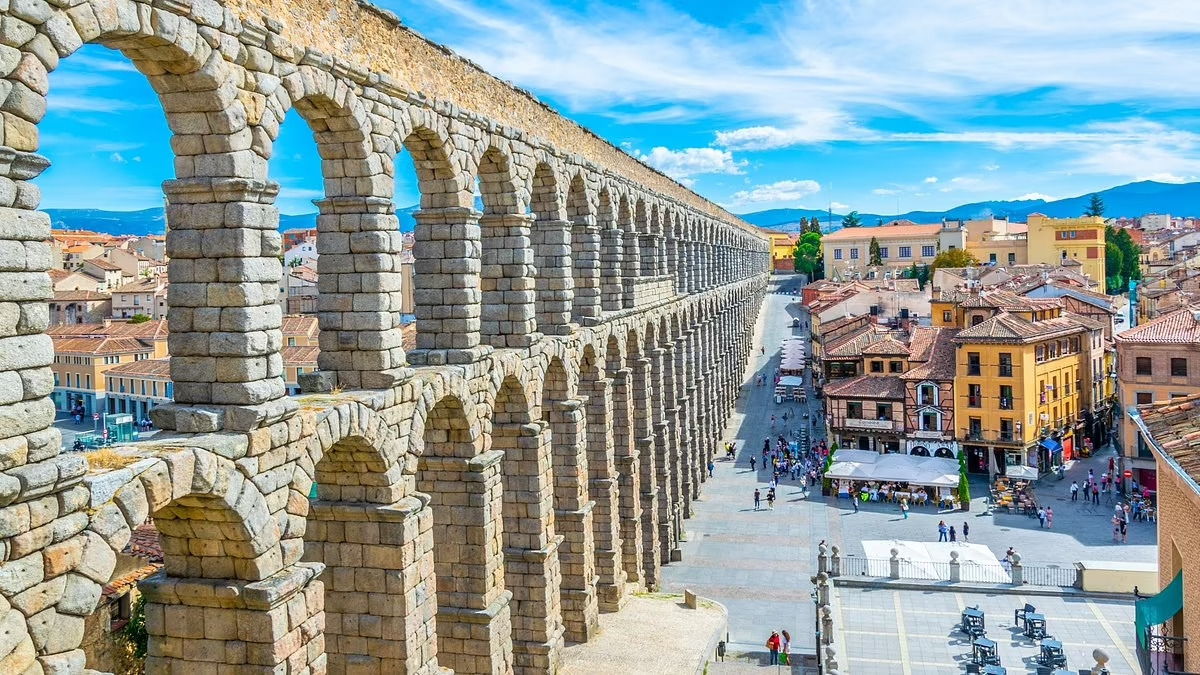
Segovia is one of the most beautiful historic cities in Spain and a popular destination for a trip from Madrid.
If you are planning a visit and wondering what to see in Segovia, this fortress city offers impressive landmarks — from the famous Roman aqueduct to the fairy-tale Alcázar.
The origins of Segovia are surrounded by mysteries and legends. It is believed that its history dates back to Celtic times, when the first tribes settled in this area. The city’s name may come from the Celtic word “Segobriga,” which can be translated as “fortress on a hill” or “protected place,” reflecting its strategic importance throughout the centuries.
The people of Segovia are known for saying that Madrid is the largest city of Segovia — a humorous local expression that reflects their pride in the city’s long history. Indeed, Segovia is considered one of the oldest settlements in Spain, with more than 2,000 years of history.
📍 Segovia Walking Route: How to See the Main Attractions
Segovia is a compact city, so most of its main attractions can be explored in a single walk. A convenient route begins at the Roman aqueduct — the symbol of the city — and leads through the historic center toward the Alcázar.
- Start at the Segovia Aqueduct — the main entrance to the old town.
- Along the way, notice Casa de los Picos — one of the most unusual buildings in Segovia, famous for its distinctive facade covered with stone “spikes”.
- Continue up to Plaza Mayor and the Cathedral.
- Walk through the narrow streets of the Jewish Quarter.
- Finish the route at the Alcázar, where some of the best views of the city await.
This route allows you to explore the main sights of Segovia at a relaxed pace and fully experience the atmosphere of the city.
Main Attractions of Segovia
Now let’s take a closer look at the main attractions of Segovia.
Aqueduct — Acueducto de Segovia
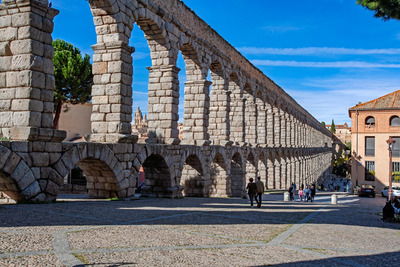
The Segovia Aqueduct is one of the largest and best-preserved engineering structures of the Roman Empire in Spain. Just imagine how many centuries it has stood here — simple yet elegant, and still capable of inspiring awe.
Built in the 2nd century AD, the aqueduct was used to transport water from the nearby mountains into the city, covering a distance of more than 15 kilometres.
Today it continues to impress with its design and architectural complexity — 167 arches constructed from more than 20,400 granite blocks, assembled without the use of mortar or cement, making it a remarkable example of ancient Roman engineering.
The aqueduct is considered the symbol of Segovia and attracts thousands of visitors who come to admire and photograph this architectural masterpiece. It is truly unforgettable.
House of the Peaks — Casa de los Picos
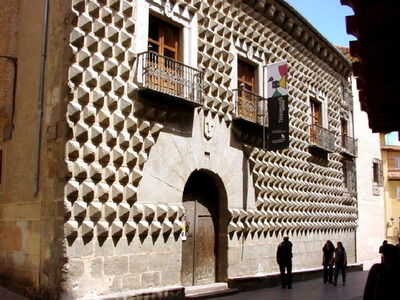 Casa de los Picos is one of the most unusual buildings in Segovia, instantly recognisable thanks to its distinctive facade covered with stone “spikes.” Built in the 15th century as the residence of a noble family, it now houses an art school and exhibition spaces.
The granite pyramid-shaped blocks give the building the appearance of a medieval fortress and make it one of the most photogenic spots in the city. Located close to the aqueduct, Casa de los Picos often becomes the first interesting stop on the way into the historic centre.
It is an excellent example of how Segovia’s architecture combines defensive elements with decorative aesthetics typical of the period.
Main Square of Segovia — Plaza Mayor
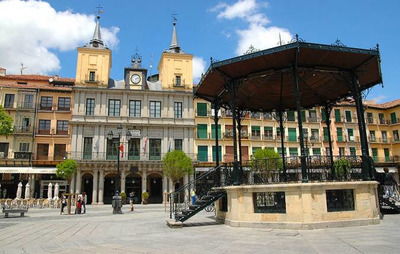
Plaza Mayor is not just a landmark but the cultural and historical heart of Segovia. Several main streets of the old town meet here, making it a natural starting point for exploring the city.
The square took its present form in the 16th century after the centre of urban life shifted closer to the new cathedral. Today it is surrounded by historic buildings, arcades, and traditional Castilian facades that create an authentic medieval atmosphere.
Throughout the year, the square hosts local events, festivals, and cultural activities, which keep it lively and vibrant rather than purely touristic.
Nearby cafés and restaurants offer the chance to try local dishes and traditional gastronomic specialties, including the famous roast suckling pig (cochinillo asado) cooked in wood-fired ovens.
Segovia Cathedral — Catedral de Segovia
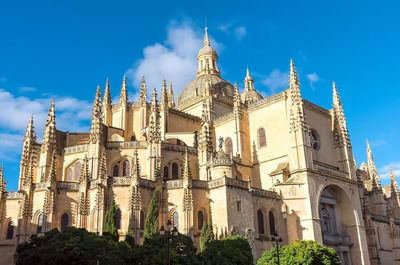
Segovia Cathedral, also known as Catedral de Santa María de Segovia, is one of the finest examples of Gothic architecture in Spain.
Located in the heart of the old town, the cathedral attracts visitors from around the world thanks to its rich history and impressive architectural beauty.
This majestic building is often called the “Lady of Cathedrals” for its elegance, harmony, and refined appearance.
It is an essential stop on any itinerary and almost impossible to miss — especially since it lies within easy walking distance of both the Alcázar and the aqueduct, only about 10 minutes from each landmark.
The entrance is located on Plaza Mayor, and admission costs €4 — a small price considering that ticket revenue helps maintain this historic monument.
Jewish Quarter — Judería de Segovia
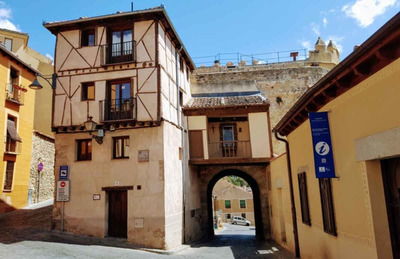 The Jewish Quarter of Segovia is one of the most atmospheric and historically significant areas of the city. During the Middle Ages, it was home to one of the largest and most influential Jewish communities in Castile, which played an important role in the economic and cultural life of Segovia.
Walking through its narrow cobbled streets makes it’s easy to imagine what the city looked like centuries ago: preserved layouts, historic houses, and quiet alleyways create an authentic medieval atmosphere.
The area once contained synagogues, residential buildings, and artisan workshops. Today, Segovia’s Jewish heritage is highlighted by the Jewish Education and Heritage Centre, where visitors can learn more about the history, traditions, and daily life of the Sephardic Jewish community.
After exploring the Jewish Quarter, the route naturally leads toward one of Segovia’s most impressive landmarks — the Alcázar, rising above the city like something from a medieval legend.
Segovia City Walls — Murallas de Segovia
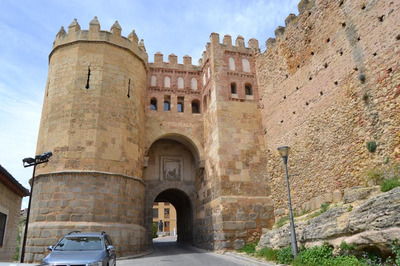
Segovia is rightly considered a fortress city, and its medieval walls played a crucial role in defending the town for centuries. Large sections of the fortifications have survived to this day, offering insight into the city’s strategic importance throughout history.
While walking through the old town, you can spot stretches of defensive walls, towers, and historic gates that enhance the medieval atmosphere. Some sections also provide beautiful views of the surrounding landscape and river valley.
Exploring the city walls is a great way to experience the authentic character of Segovia and discover the city from a different perspective.
Alcázar of Segovia — Alcázar de Segovia
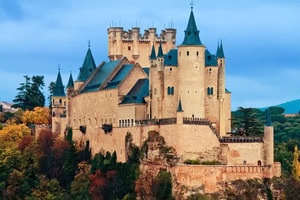
The Alcázar of Segovia, rising majestically above the city, is not only an architectural masterpiece but also a living monument to centuries of history.
Originally built as an Arab fortress in the 12th century, it later became a royal residence for Castilian monarchs. Many kings and queens lived here, and it was within these walls that Isabella I the Catholic was proclaimed Queen of Castile — one of the most significant events in Spanish history.
The Alcázar is considered one of the most impressive castles in Spain. Its Gothic towers and battlements look as if they belong in a fairy tale, and it is often said that the castle inspired the iconic opening castle imagery in Walt Disney films.
The interior is equally impressive, featuring intricately carved ceilings, stained-glass windows, and tapestries that create an atmosphere of royal splendour.
Near the entrance to the Alcázar you will find the Gardens of Queen Victoria, a well-maintained park originally created for the royal court. Today it offers a pleasant place to relax after exploring the city, with peaceful paths, green spaces, and a monument commemorating Spain’s independence from Napoleonic troops.
Pradera de San Marcos Viewpoint — the Best Views of the Alcázar
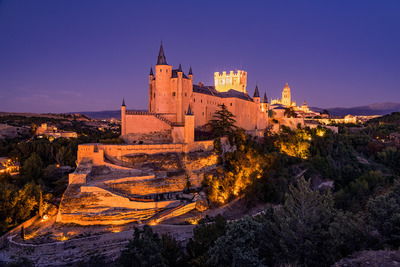
If you want to see one of the most iconic panoramic views of Segovia, make sure to visit the Pradera de San Marcos viewpoint. From here, you can enjoy the classic postcard view of the Alcázar rising above the river valley.
This spot is especially popular with photographers thanks to the scenic combination of nature, fortress walls, and the castle’s architecture. The viewpoint is located close to the Alcázar and works perfectly as the final stop of a walk through the historic centre.
The best time to visit is at sunset, when the city walls glow with warm light and create the atmosphere of a true medieval fairy tale.
San Antonio el Real Monastery — Monasterio de San Antonio el Real
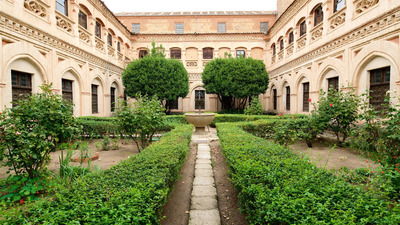
San Antonio el Real Monastery is one of Segovia’s lesser-known but highly atmospheric landmarks, offering a quieter and more contemplative side of the city. Located slightly outside the historic centre, it often remains off standard tourist routes, making a visit especially enjoyable.
The complex was founded in the 15th century and is closely linked to the history of the Castilian royal family. It was originally built as a hunting palace for King Henry IV before being converted into a monastery. Today, it remains an active religious site with remarkable examples of late Gothic and Mudéjar art.
The interior is particularly notable for its richly decorated Mudéjar coffered ceilings, carved wooden details, gilded elements, elegant altarpieces, and frescoes reflecting the religious traditions of the period. Fewer visitors mean you can explore the details at a relaxed pace and enjoy the peaceful atmosphere.
This monastery is especially appealing for travellers who want to discover less obvious sights in Segovia and explore hidden historical places away from the main tourist crowds.
Despite its tranquil setting, the monastery is easy to reach — the walk from the city centre takes around 15–20 minutes.
Ideas for Exploring Central Spain
Segovia fits perfectly into an itinerary through central Spain and is rarely the only destination on a trip. Thanks to the short distances between cities, it is easy to expand your journey and visit several iconic places in one route.
- Madrid Attractions — world-class museums, royal palaces, green parks, and vibrant neighbourhoods of the Spanish capital.
- What to See in Toledo — an ancient fortress city, former capital of Spain, and one of the most atmospheric destinations in the region.
- Ávila Attractions — perfectly preserved medieval walls and one of the best examples of a fortified city in Europe.
- What to see in Aranjuez — the royal palace, historic gardens and the peaceful atmosphere of a country residence, which perfectly complements the more intense historical cities of the region.
If you plan to visit several cities during one trip, travelling by car is often the most convenient option. It allows you to build your own route freely, stop at smaller towns and viewpoints, and avoid being tied to public transport schedules.
For this type of journey, you can check options for car rental in Madrid in advance — especially convenient if you are flying into the capital and planning to explore the surrounding region.
This route lets you experience different sides of Spain — from lively Madrid to intimate medieval towns, each with its own unique character.

 English
  Español
  Русский