
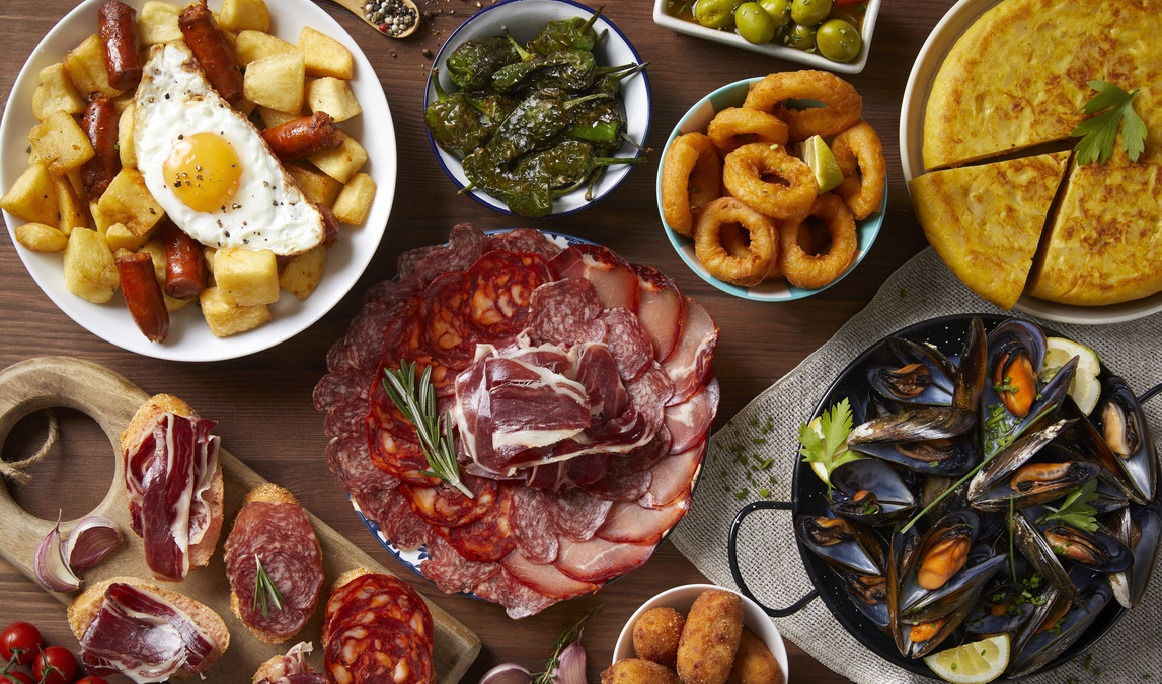
Madrid cuisine is an important part of life in the Spanish capital and one of the best ways to get to know the city more closely. Here, food accompanies everyday walks, meetings with friends and the discovery of local culture.
As you stroll through Madrid from one attraction to another, it is impossible not to notice the appetising aromas drifting from bars and taverns. Sooner or later, the question arises: what should you try in Madrid and which dishes are considered truly traditional to the capital?
Madrid cuisine was shaped by influences from different regions of Spain, but over time it developed its own character. Today, the capital is home to simple and hearty dishes that have been served for generations and are regarded as gastronomic hallmarks of the city.
Traditional Dishes of Madrid
- Cocido madrileño — a hearty stew with chickpeas, meat and vegetables.
- Callos a la madrileña — spicy braised tripe with chorizo and morcilla.
- Bocadillo de calamares — the famous fried calamari sandwich.
- Caracoles a la madrileña — snails in a rich tomato and spice sauce.
- Gambas al ajillo — a hot starter with garlic and olive oil.
- Rabo de toro — slow-braised oxtail in a wine sauce.
- Huevos estrellados — fried potatoes with eggs and ham.
- Oreja a la plancha — grilled pig’s ear, a popular bar snack.
- Gallinejas y entresijos — a traditional Madrid delicacy made from lamb offal.
Traditional Desserts of Madrid
- Rosquillas de San Isidro — festive doughnuts dedicated to Madrid’s patron saint.
- Bartolillos madrileños — fried pastries filled with delicate custard cream.
Traditional Dishes of Madrid
Cocido madrileño
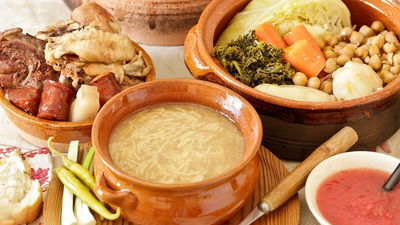
It is one of the most popular dishes during the colder months and perhaps the main gastronomic symbol of Madrid.
Cocido consists of meat simmered in a large quantity of broth with chickpeas and vegetables. Traditionally, Madrid families prepare it in large portions and serve it in a special way that has remained almost unchanged for generations.
First, bone-in meat (pork, beef or chicken, most often a combination of several types), chorizo and morcilla sausages, a piece of bacon, chickpeas and vegetables are slowly simmered together in a large pot. Some families also add potatoes and cabbage, while others prefer a more classic version without them.
Once everything is ready, the broth is strained and thin noodles are cooked in it. The remaining ingredients are arranged on a large serving dish in the centre of the table so that everyone can fill their plate with whatever they prefer.
Interestingly, many traditional restaurants in Madrid still serve cocido in several stages known as vuelcos. The noodle soup is served first, followed by the chickpeas and vegetables, and only then the meat and sausages. This style of serving is considered part of the capital’s gastronomic culture.
The history of the dish dates back several centuries. Originally, cocido was a simple and filling meal for large families that could be prepared from affordable ingredients in a single pot. Over time, the recipe became one of the hallmarks of Madrid cuisine and today occupies a place of honour on the menus of many traditional taverns and restaurants.
Good to know: Madrileños themselves most often order cocido during autumn and winter. It is an extremely hearty dish, so many people recommend enjoying it for lunch rather than dinner.
💡 If you would like to learn not only about the capital’s traditional dishes but also where in Madrid to experience its local food culture, we recommend reading our guide “Where to Eat in Madrid and What to Try”. The article covers Madrid’s main gastronomic districts, popular food markets, tapas bars and places where you can experience the atmosphere of the city’s local cuisine.
Madrid-Style Tripe - Callos a la madrileña
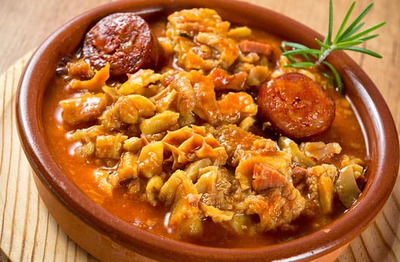
Another traditional slow-cooked dish, most commonly served during the cooler months. Callos a la madrileña consists of braised meat offal (usually veal tripe) with pieces of chorizo, morcilla and meat.
The dish is cooked slowly with tomato sauce, garlic, spices and red pepper. Thanks to the long cooking time, the sauce becomes rich and thick, while the meat turns exceptionally tender. Traditionally, tripe is served in earthenware dishes with bread, which is perfect for soaking up every last drop of the aromatic sauce.
Today, callos is considered one of Madrid’s gastronomic hallmarks. It can be found on the menus of many historic taverns, where the recipe has been passed down from generation to generation. In the past, it was a simple working-class dish prepared from affordable ingredients, but over time it became an integral part of the city’s culinary tradition.
Like many dishes made from offal, Madrid-style tripe is certainly not to everyone’s taste. For that reason, it is perhaps one of those dishes that you should try at least once to find out whether you belong among its admirers.
Good to know: Madrileños themselves most often order callos during autumn and winter. Thanks to its rich flavour and high calorie content, it is considered one of the most filling dishes in the traditional cuisine of the capital.
Calamari Sandwich - Bocadillo de calamares
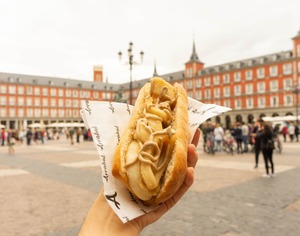
The concept is simple, but no less delicious for it: battered and fried calamari rings are placed inside fresh crusty bread. Despite its simplicity, bocadillo de calamares is considered one of Madrid’s most recognisable dishes.
You can try this sandwich in almost any place serving food: small cafés, tapas bars, traditional taverns and restaurants. Every establishment has its own little secrets — some focus on achieving an especially crisp coating, while others serve the bocadillo with sauce or lemon.
There is even a small gastronomic mystery surrounding the dish: why did calamari become the city’s signature street food when Madrid is located in the very centre of Spain? Historians associate this with the development of trade in the nineteenth century, when seafood began arriving regularly in the capital by railway. Calamari travelled particularly well and quickly became a popular snack in Madrid’s taverns.
Today, many residents and visitors consider it almost a tradition that when they find themselves in Plaza Mayor, they order a bocadillo de calamares from one of the many establishments surrounding the square. For many people, their introduction to Madrid cuisine begins with this simple yet highly characteristic dish.
Good to know: bocadillo de calamares is most often eaten as a quick lunch or a substantial snack while exploring the city centre. It pairs particularly well with a glass of beer, vermouth or other traditional Spanish drinks.
Madrid-Style Snails - Caracoles a la madrileña
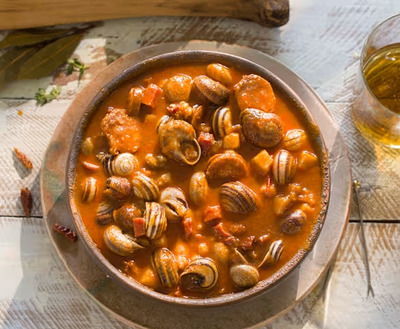
This dish also belongs to the category of food that people either love or hate: some enjoy snails from the very first bite, while others never quite dare to try them. Nevertheless, Caracoles a la madrileña remain part of Madrid’s traditional cuisine and can still be found on the menus of historic taverns and family-run restaurants.
It is a savoury hot starter in which snails naturally play the leading role. They are slowly simmered in a rich sauce made from fried onions, garlic, spices, tomatoes, broth and wine. Chorizo is considered an essential ingredient, giving the dish its characteristic aroma and a gentle touch of spice.
In this recipe, the sauce is no less important than the snails themselves. It becomes thick, rich and highly aromatic, which is why locals often joke that good bread is just as essential as the caracoles. Many people happily finish the remaining sauce by dipping pieces of fresh bread into it.
Although snails are no longer among the most popular dishes with tourists today, a few decades ago they could be found in many Madrid bars as a traditional accompaniment to wine or beer. For this reason, caracoles are considered part of the capital’s historic food culture.
Interesting fact: snail recipes can be found in many regions of Spain, but the Madrid version stands out thanks to its rich tomato sauce with chorizo and spices. This gives the dish a bolder and more distinctive flavour.
If you would like to try not only Madrid’s most famous dishes but also some lesser-known local specialities, Caracoles a la madrileña offers an interesting gastronomic experience and a different perspective on the capital’s cuisine.
Garlic Prawns - Gambas al ajillo
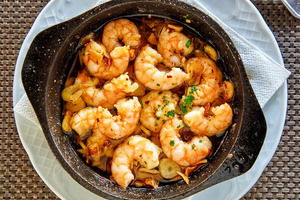
Gambas al ajillo is considered one of the most famous dishes of Madrid gastronomy. Although it is now prepared throughout Spain, it was in the capital’s traditional taverns that this hot starter gained particular popularity and became an integral part of tapas culture.
This is a dish best enjoyed in the company of good wine and fresh bread. The simplicity of the recipe perfectly reflects the philosophy of Mediterranean cuisine, where the quality of the ingredients and their natural flavours are what matter most.
Preparing gambas al ajillo is very simple: peeled prawns are quickly fried in olive oil with plenty of garlic. Some establishments also add a little white wine or sherry, creating an aromatic sauce that many people consider just as delicious as the prawns themselves.
Traditionally, the dish is served in small earthenware bowls while the oil is still sizzling hot, so it continues to bubble and fill the room with the aroma of garlic as it arrives at the table. It is this distinctive sound and smell that many visitors to Madrid’s taverns remember for years after their trip.
Interesting fact: despite Madrid’s distance from the sea, seafood occupies an important place in the local cuisine. Thanks to its status as the capital, the city has for centuries received the finest products from all regions of Spain, including fresh fish and seafood.
If you would like to try a classic Spanish starter loved by both tourists and Madrileños alike, Gambas al ajillo is one of the safest and most rewarding gastronomic choices.
Braised Oxtail - Rabo de Toro
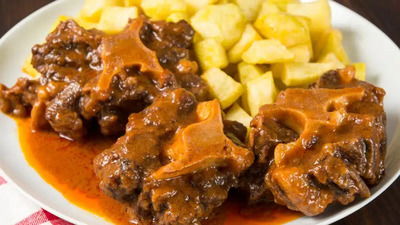
Although the recipe for Rabo de Toro originated in Córdoba, today it is considered an integral part of Madrid’s gastronomic culture and can be found on the menus of many traditional restaurants throughout the capital.
It becomes especially popular in May during the celebrations of San Isidro, the city’s most important festival honouring Madrid’s patron saint. During these festivities, many restaurants and taverns include oxtail in their special seasonal menus alongside other traditional dishes of local cuisine.
The name of the dish speaks for itself. Traditionally, bull tails were used, although today many establishments substitute them with veal tails. The meat is slowly braised for several hours with vegetables, aromatic herbs and red wine, becoming incredibly tender and falling away from the bone at the slightest touch of a fork.
The true secret of the dish lies in its long cooking time. During this process, the sauce develops a deep flavour and rich texture, while the meat absorbs the aromas of wine, vegetables and spices. For this reason, Rabo de Toro is considered one of the most expressive and flavourful meat dishes in Spanish cuisine.
Interesting fact: historically, the dish is associated with the tradition of bullfighting. After bullfights, the meat was used to prepare various dishes, and the tails gradually became the basis of one of southern Spain’s most famous recipes. Over time, the popularity of Rabo de Toro spread far beyond Andalusia and eventually reached Madrid.
Oxtail is most often served with potatoes, vegetables or simply fresh bread, which is perfect for soaking up every last drop of the rich wine sauce. If you enjoy slow-cooked dishes with deep, meaty flavours, Rabo de Toro is sure to leave a lasting impression.
Broken Eggs with Potatoes - Huevos estrellados
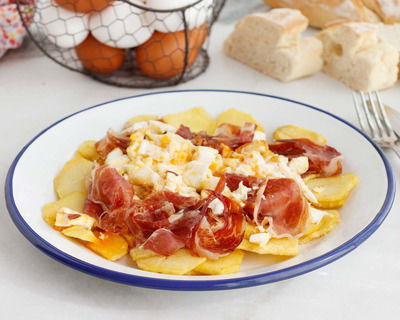
Among the most popular dishes served in Madrid’s taverns, a special place belongs to Huevos estrellados, which are also often referred to as Huevos rotos (“broken eggs”). This simple, hearty and delicious dish has long become one of the city’s gastronomic hallmarks.
The preparation is fairly straightforward: golden fried potatoes are placed on a plate, topped with eggs with runny yolks, and then lightly mixed before serving. The dish is most commonly accompanied by jamón, although other popular variations include chorizo, mushrooms, morcilla, vegetables or even seafood.
The secret of Huevos estrellados lies precisely in this combination of ingredients. As the yolk spreads over the hot potatoes, it creates a simple yet highly appetising sauce that makes the dish so popular among local residents.
Interesting fact: Huevos estrellados gained particular fame thanks to the legendary Casa Lucio restaurant in the La Latina district. It was here that the dish became so popular that it eventually came to be associated not only with the restaurant itself, but with Madrid’s food culture as a whole.
Today, Huevos estrellados can be found in virtually every traditional restaurant or tavern in the capital. Despite the simplicity of the recipe, many Madrileños consider it one of the most comforting and heartfelt dishes of local cuisine — equally suitable for lunch with friends or a relaxed dinner after a stroll through the city.
Grilled Pig’s Ear - Oreja a la plancha
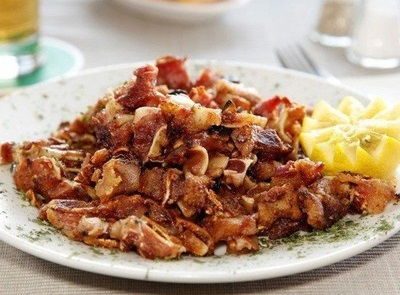
Oreja a la plancha is one of the most characteristic dishes of Madrid’s old taverns. For many tourists, it may sound unusual, but among local residents grilled pig’s ear has long been considered a classic snack to accompany beer, wine or vermouth.
The dish is prepared from pig’s ear that has been pre-boiled and then grilled on a hot surface until a golden crust forms. The pieces become slightly crispy on the outside while retaining a soft, gelatinous texture inside.
Oreja is most often served with salt, paprika, garlic and a few drops of lemon juice. In some bars, it is additionally sprinkled with chilli pepper or topped with a spicy sauce.
Interesting fact: this dish is particularly popular in Madrid’s traditional districts and is often featured on the menus of establishments that have been operating for several generations. For many Madrileños, oreja is just as much a symbol of the old city tavern as bocadillo de calamares or a glass of vermouth before lunch.
Like callos or caracoles, grilled pig’s ear belongs to the category of dishes that people either love or dislike. Some appreciate its rich flavour and unusual texture, while others prefer more familiar snacks. For this reason, oreja a la plancha is considered a good choice for those who would like to experience a less touristy and more authentic side of Madrid cuisine.
Good to know: locals often order oreja as a tapas dish to share. A small portion is perfect for trying the dish without turning the experience into too bold a gastronomic adventure.
Gallinejas y entresijos
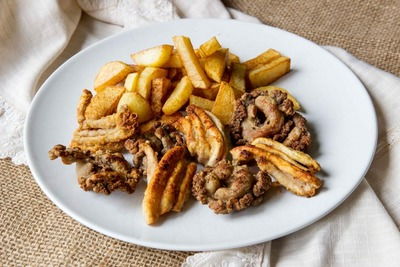
If there is one dish that can truly be called an authentic Madrid delicacy, it is Gallinejas y entresijos. Few people outside the capital are familiar with it, and among tourists it remains a genuine gastronomic rarity.
The dish is prepared from various parts of the small intestine of a milk-fed lamb. Traditionally, they are carefully cleaned, cut into pieces and fried in their own fat until golden and crispy. The result is a snack with a rich flavour and unusual texture that has remained part of Madrid’s gastronomic culture for many decades.
The history of the dish dates back to the nineteenth century, when such ingredients were readily available to ordinary city residents and widely used in traditional cooking. Over time, Gallinejas y entresijos became one of the most recognisable local delicacies and is rarely found in other regions of Spain.
This dish becomes especially popular during the celebrations of San Isidro, Madrid’s most important festival. In May, around fairgrounds and festive events, you can find special stalls and family-run establishments where gallinejas are prepared according to recipes passed down from generation to generation.
Interesting fact: many Madrileños consider Gallinejas y entresijos to be one of the capital’s most authentic dishes. Unlike cocido or bocadillo de calamares, which have long become known throughout Spain, this recipe remains closely associated specifically with Madrid.
Like oreja a la plancha or callos a la madrileña, this dish is not something everyone enjoys at first taste. However, for those who want to discover the true traditional cuisine of the capital and try what Madrileños themselves have been eating for generations, Gallinejas y entresijos offers one of the most unusual gastronomic experiences of any trip to Madrid.
Traditional Desserts of Madrid
Unlike many other regions of Spain, Madrid cannot boast a large number of famous traditional desserts. While Valencia is known for its almond and pumpkin sweets, the Basque Country for its confectionery traditions, and Galicia for the almond cake Tarta de Santiago, Madrid cuisine has historically focused primarily on hearty main courses.
If you ask a local resident about dessert after a traditional meal in a tavern, they will most likely mention classic Spanish favourites such as flan (caramel custard), arroz con leche (rice pudding), natillas (custard), cuajada (a milk-based dessert) or the now-popular cheesecake, tarta de queso.
However, all of these sweets are enjoyed throughout the country and are not considered exclusively Madrilenian. This makes it even more interesting to discover the desserts that are genuinely linked to the history and traditions of the Spanish capital.
Rosquillas de San Isidro

If cocido madrileño can be called the symbol of Madrid among savoury dishes, then among desserts this title undoubtedly belongs to Rosquillas de San Isidro. These small sweet doughnuts have remained an integral part of the capital’s gastronomic traditions for several centuries.
Rosquillas become especially popular in May during the celebrations of San Isidro, the city’s most important festival honouring Madrid’s patron saint. During these days, they are sold at fairs, confectioneries and bakeries throughout the city, and many residents buy them specially for their festive tables.
Interestingly, there are several traditional varieties of this dessert. The best known are rosquillas tontas (“plain doughnuts”), which are made without icing, and rosquillas listas, coated with a sweet lemon glaze. There are also rosquillas de Santa Clara topped with white meringue and rosquillas francesas covered with almond sprinkles.
Despite the differences in the recipes, they are all fragrant baked treats with delicate notes of aniseed and citrus, making them an excellent accompaniment to coffee or hot chocolate.
Interesting fact: according to a local legend, the popularity of rosquillas is linked to a vendor known as Tía Javiera, who sold her doughnuts during public festivities in the eighteenth century. Over time, her recipe became so famous that it evolved into one of Madrid’s culinary symbols.
Today, Rosquillas de San Isidro remains one of the capital’s most recognisable desserts. If your trip to Madrid takes place in May, it is well worth trying several varieties and comparing them — exactly as many local residents do during the festival.
Bartolillos madrileños
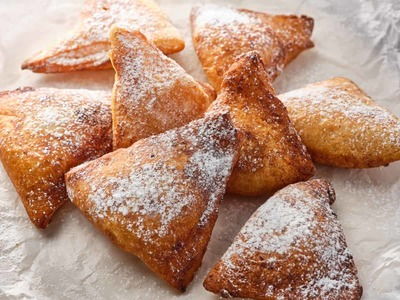
Bartolillos madrileños is one of Madrid’s oldest yet most undeservedly overlooked desserts. While rosquillas are associated with the city’s festivals, bartolillos have remained a classic of local pastry shops and home baking for several centuries.
At first glance, the dessert resembles small fried half-moon pastries, but inside is a delicate custard cream flavoured with lemon and cinnamon. The thin pastry is fried until golden and then dusted with icing sugar.
The history of bartolillos dates back at least to the eighteenth century. They are believed to have originally been prepared in Madrid’s monasteries and religious communities before the recipe spread throughout the city and became part of traditional Madrid cuisine.
Despite the simplicity of the ingredients, preparing them requires a certain level of skill. The pastry must be thin and crisp, while the custard needs to be firm enough not to leak during frying. For this reason, the best bartolillos are still often sought out in historic pastry shops where recipes have been preserved for generations.
Interesting fact: many gastronomic guides describe Bartolillos madrileños as one of the capital’s most authentic desserts. Unlike many popular Spanish sweets that can be found throughout the country, bartolillos remain closely associated specifically with Madrid.
Today, this dessert is less common than churros or rosquillas, but that is precisely what makes it particularly interesting for travellers who want to discover not only well-known dishes but also some of the city’s lesser-known gastronomic traditions.
In addition to rosquillas and bartolillos, other sweets are also popular in Madrid. During Holy Week, many pastry shops prepare traditional torrijas — slices of bread soaked in milk and egg — while in January, the famous Panecillos de San Antón are baked for the Feast of Saint Anthony. Although these desserts are considered seasonal, they remain an important part of the gastronomic traditions of the Spanish capital.
What Else to Read About Spanish Gastronomy
Madrid cuisine is just one facet of Spanish gastronomy. Different regions of the country have developed their own culinary traditions, recipes and products, many of which differ significantly from the cuisine of the capital.
- Traditional Dishes of Spain — the most famous dishes and culinary symbols of the country’s different regions.
- Traditional Andalusian food — gazpacho, fried fish, sherry and other gastronomic symbols of southern Spain.
- Catalan Food — the dishes of Catalonia, where Mediterranean traditions are combined with innovative gastronomy.
- Traditional Food in Valencia — the birthplace of paella, rice dishes and one of Spain’s most famous gastronomic traditions.
- Traditional Drinks of Spain — wines, vermouth, cider and other beverages that accompany Spanish cuisine.

 English
  Español
  Русский