
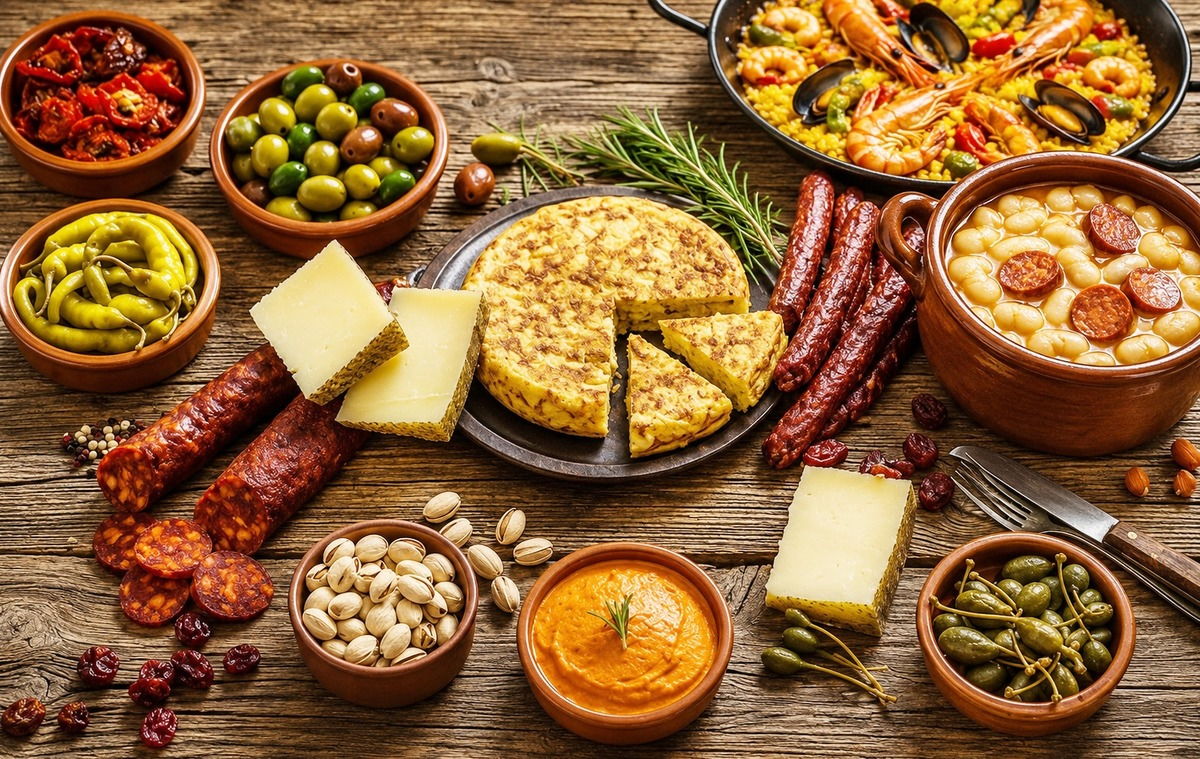
Spanish cuisine is one of the most diverse in Europe. Although many people associate it with paella, jamón, and gazpacho, the country's culinary traditions are far richer. In the east, rice dishes dominate; in the south, cold soups and tapas are especially popular; in the north, seafood and hearty home-style cooking prevail; while the central regions are known for rich stews and dishes made with beans and chickpeas. Although most of these dishes originated in specific regions, today they are prepared throughout almost the entire country.
This article brings together the most famous traditional dishes of Spain, many of which have long become true symbols of the country's national cuisine. Each of these dishes reflects the character of Spanish cooking in its own way — simple, vibrant, and incredibly diverse, based on fresh local ingredients, centuries-old traditions, and a genuine love of good food.
Main Dishes of Spanish Cuisine
Spanish cuisine is impossible to imagine without the dishes that have long become its gastronomic symbols. These are often the first introduction tourists have to local food and are among the must-try specialities when travelling around Spain.
Paella
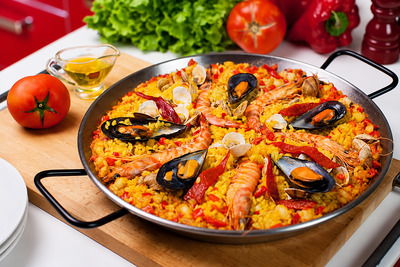
Paella is Spain's most famous traditional dish, originating from Valencia. It was here, several centuries ago, that the classic recipe was created, eventually becoming one of the country's gastronomic symbols.
Interestingly, authentic Valencian paella is traditionally prepared not with seafood but with chicken, rabbit, and vegetables. The seafood version appeared later, yet today it is considered one of the most popular choices among tourists.
The basis of paella is rice, olive oil, saffron, and other spices, while depending on the recipe it may include seafood, chicken, rabbit, vegetables, or a combination of these ingredients. Today there are many different varieties of paella, although the classic Valencian version is still regarded as the benchmark.
You can enjoy excellent paella in almost every region of Spain today. However, many believe that the best place to discover this dish is its birthplace — Valencia, where it remains an essential part of the local gastronomic culture.
Gazpacho
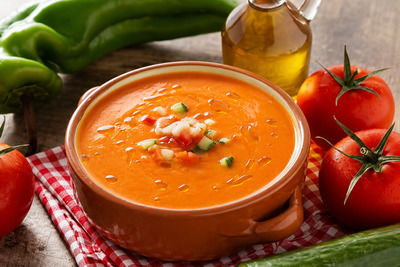
Gazpacho is the famous cold soup that originated in Andalusia. It is made from ripe tomatoes, sweet peppers, cucumbers, garlic, olive oil, and a small amount of bread. Thanks to its refreshing taste, gazpacho has long become one of the main gastronomic symbols of southern Spain.
Interestingly, the earliest versions of gazpacho appeared long before tomatoes were introduced to Europe. Originally, the soup was made from bread, garlic, olive oil, vinegar, and water, while its familiar red colour came much later.
Wherever you travel — to Seville, Málaga, Granada, or Cádiz — almost every traditional restaurant will serve authentic gazpacho. It is especially enjoyable on a hot summer's day while sitting in a shaded square or on a terrace overlooking the historic streets of southern Spain.
Spanish Tortilla (Tortilla Española)
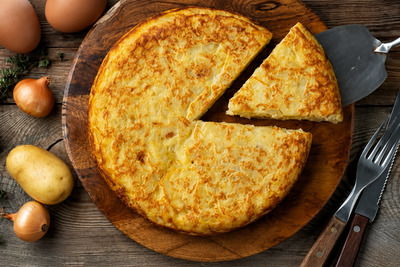
Spanish tortilla is one of the most popular dishes in the country's national cuisine and can be found in almost every bar, café, and restaurant throughout Spain. Despite its simple ingredients, tortilla has long become one of Spain's gastronomic symbols.
The classic tortilla is made from just a few ingredients: potatoes, eggs, olive oil, and, optionally, onions. Essentially, it is a thick potato omelette with a soft, tender centre, served as a main dish, as part of a set lunch, or in small portions as a snack.
Interestingly, Spaniards still debate whether an authentic tortilla should be made with onions or without them. Both versions have their devoted supporters.
If you're staying in self-catering accommodation during your trip or simply want a quick meal, stop by one of the supermarkets in Spain. Ready-made tortilla is sold almost everywhere. Simply heat it in the microwave for a few minutes or lightly brown it on both sides in a frying pan, and you'll have a delicious and filling Spanish lunch or dinner with minimal effort.
Cocido
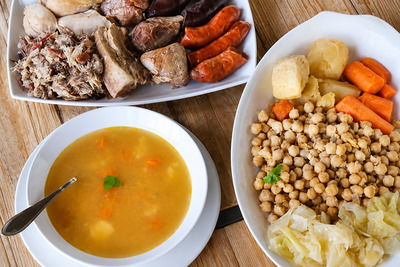
Cocido is one of the most traditional and hearty dishes in Spanish cuisine, especially popular during the autumn and winter months. It is a rich stew that is slowly cooked for several hours with chickpeas, various types of meat, sausages, vegetables, and a flavourful broth.
Almost every region of Spain has its own version of this dish. In Madrid, the famous Cocido Madrileño is prepared; in Andalusia, its closest relative is Puchero Andaluz; while in the north of the country, including Cantabria, Asturias, and parts of the Basque Country, you'll most often find simply Cocido, prepared according to local traditions.
Despite the differences in recipes, the principle remains the same: meat, chickpeas, and vegetables are simmered slowly over a low heat, creating a rich, aromatic broth and exceptionally tender meat. In many restaurants, the dish is traditionally served in two stages: first comes the hot broth with noodles or rice, followed by a separate large platter containing the meat, chickpeas, and vegetables.
If you're travelling around Spain in autumn or winter, be sure to try the local version of cocido. Even if the dish has a different name, every region preserves its defining characteristic — it is true home-style cooking, traditionally enjoyed by Spaniards gathered around a large family table.
Fabada Asturiana
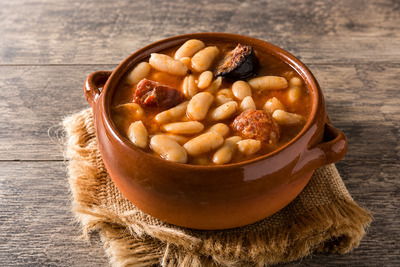
Fabada Asturiana is a famous dish from northern Spain, originating in Asturias. This thick and very hearty stew made with large white beans is considered one of the symbols of traditional Spanish home cooking.
The main ingredients of fabada are fabes beans, chorizo, morcilla (Spanish black pudding), pork belly, and other cured meats. Thanks to the long, slow cooking process, all the ingredients develop a rich flavour, resulting in a thick, aromatic dish that is especially comforting during the colder months.
Although fabada originated in Asturias, it is now prepared throughout almost the whole of Spain. What's more, it is easy to find not only in restaurants but also in supermarkets, where it is sold ready to eat. For many Spaniards, it is one of their favourite home-style meals, requiring nothing more than reheating before serving.
Spanish Lentil Stew (Lentejas Estofadas)
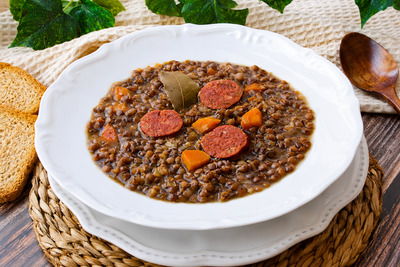
Lentejas Estofadas is one of the most popular dishes in traditional Spanish home cooking. It is a thick lentil stew with vegetables, which, depending on the region, may also include chorizo, pork, bacon, or simply be prepared as a vegetarian dish.
Like cocido and fabada, lentil stew is especially popular during the cooler months of the year. It is slowly simmered over a low heat, allowing the vegetables and spices to fully develop their flavours while the lentils become soft and wonderfully aromatic.
Despite its simple recipe, Lentejas Estofadas can be found throughout almost the whole of Spain — both in traditional restaurants serving a menú del día and in ordinary supermarkets, where it is sold ready to eat. For many Spaniards, it is one of those favourite home-cooked meals that has been familiar since childhood.
Croquetas
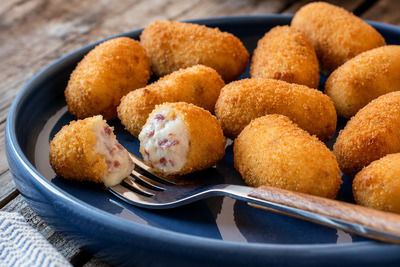
Croquetas are one of the most popular dishes in Spanish cuisine and can be found in almost every bar, restaurant, and tapas bar. Although the recipe originally came from France, it was in Spain that croquetas became a true gastronomic classic.
Traditionally, they are made with a thick béchamel sauce mixed with jamón, chicken, cod, mushrooms, or cheese. The croquetas are then coated in breadcrumbs and fried until golden and crispy, while keeping their filling soft, creamy, and delicious.
In many Spanish families, croquetas first appeared as a practical way to use leftover meat or chicken from cocido and other home-cooked meals. Over time, this simple and resourceful recipe became one of the symbols of Spanish home cooking, and today almost every restaurant prepares them according to its own recipe, so both the flavour and the filling can vary considerably.
If you want to experience authentic Spanish home cooking, be sure to order a portion of croquetas — they are perfect both as a light lunch and as a tapa to enjoy with a glass of wine or a beer.
Fish and Seafood
It is hard to imagine Spain without fresh fish and seafood. The country is bordered by both the Mediterranean Sea and the Atlantic Ocean, which is why seafood plays an important role in the national cuisine.
Every coastal region has its own signature recipes, but many of these dishes have long become popular throughout the country and are among the must-try specialities when travelling around Spain.
Chipirones
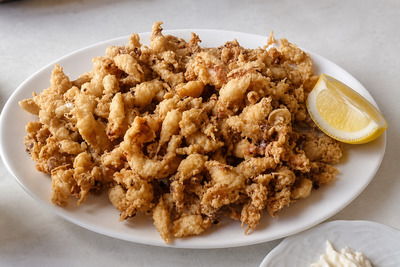
Chipirones are small young squid that are considered one of the most popular appetisers in Spanish cuisine. They are most commonly coated in flour or a light breadcrumb coating and quickly deep-fried until golden and crispy. However, different regions of Spain have their own ways of preparing them: chipirones may be grilled, cooked in their own ink, stuffed, or served with garlic and olive oil.
Although chipirones are especially popular in coastal regions, they can be enjoyed throughout almost the whole of Spain. They are one of those dishes that appear just as often in small family-run restaurants by the sea as they do in traditional tapas bars in major cities.
Chipirones are best enjoyed with a glass of white wine or a cold beer, and thanks to their tender texture and quick cooking time, they have long been a favourite among both locals and tourists.
Galician Octopus (Pulpo a la Gallega)
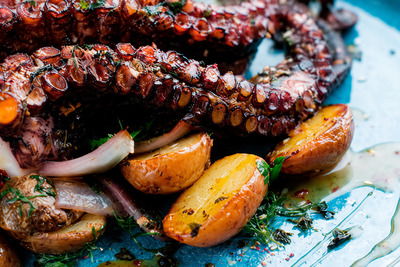
Galician octopus (Pulpo a la Gallega) is one of the most famous dishes of northern Spain, originating in Galicia. Despite its regional roots, it can now be enjoyed throughout almost the entire country, from seaside restaurants to traditional tapas bars.
The dish is prepared very simply: the octopus is boiled until tender, cut into bite-sized pieces, and served on a wooden plate with boiled potatoes. It is generously drizzled with olive oil and sprinkled with coarse salt and sweet paprika, which gives the dish its distinctive flavour and vibrant colour.
If your travels take you to northern Spain, be sure to try the authentic Galician version of this dish. Local people believe that thanks to the freshest seafood and centuries-old cooking traditions, this is where you'll find the finest Pulpo a la Gallega.
Espeto de Sardinas
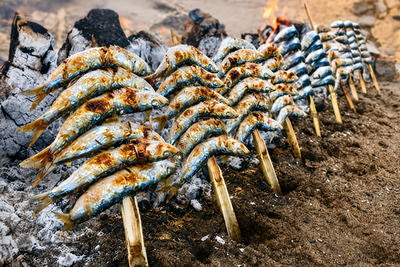
Espeto de Sardinas is one of the most famous fish dishes in southern Spain and a true gastronomic symbol of the Málaga coastline. The dish consists of several fresh sardines threaded onto a long metal skewer and cooked over an open fire.
The main feature of espeto is its cooking method. The fish is grilled over charcoal, often directly on the beach, using old wooden boats filled with sand as a unique barbecue. It is this traditional technique that gives the sardines their delicate smoky flavour while keeping them wonderfully juicy.
Although the Málaga coastline is considered the birthplace of espeto, today it can be enjoyed in almost every seaside resort along the Andalusian coast. It is especially enjoyable to order this dish in one of the beach restaurants, known as chiringuitos, while taking in the views of the Mediterranean Sea. For many visitors, espeto becomes one of the most memorable culinary experiences of their holiday in southern Spain.
Traditional Delicacies
It is impossible to imagine Spain without its famous cured meats and aged cheeses. Many of them have been produced using traditional methods for centuries, while some have been awarded Protected Designation of Origin (PDO) status.
Jamón, chorizo, Manchego, and many other Spanish delicacies can be enjoyed in almost every region of the country. They are served as appetisers, included in tapas, or used as ingredients in a wide variety of traditional dishes.
Jamón
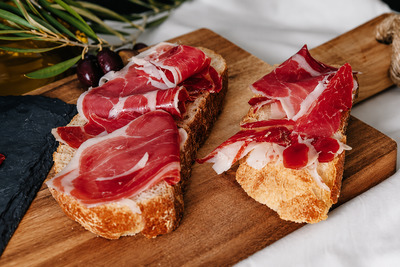
Jamón is, without exaggeration, the greatest gastronomic symbol of Spain. This dry-cured ham can be seen everywhere: in restaurants, tapas bars, butcher's shops, and even ordinary supermarkets. It is served as an appetiser, included in tapas, sandwiches, and many traditional dishes.
There are two main types of jamón. Jamón Serrano is produced from white pigs, while the more expensive and prestigious Jamón Ibérico comes from the Iberian breed of pig. The finest variety is considered to be Jamón Ibérico de Bellota, which is made from pigs that were fed on acorns during the final stage of fattening.
Jamón develops its full flavour when served at room temperature, which is why it is sliced into paper-thin pieces immediately before serving. Every visitor to Spain should try authentic Spanish jamón — it is one of those foods without which Spanish gastronomy would simply be unimaginable.
Chorizo
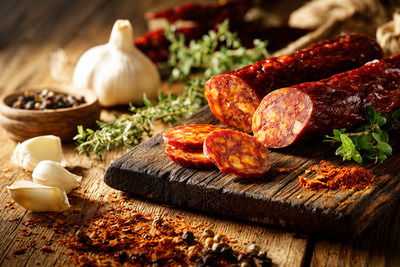
Chorizo is Spain's most famous sausage, made from pork with garlic and paprika. It is the paprika that gives chorizo its rich red colour, distinctive flavour, and helps preserve the sausage for a long time.
There are many varieties of chorizo in Spain: some are intended to be eaten cured or air-dried, while others are used in traditional dishes such as fabada, cocido, lentil stew, or potato stews. Depending on the region, the sausage may be mild or slightly spicy.
You can try chorizo in almost every region of Spain. It is served as an appetiser, added to tapas, sandwiches, omelettes, and hot dishes. Thanks to its distinctive flavour, chorizo has long become one of the country's main gastronomic symbols alongside jamón.
Manchego (Queso Manchego)
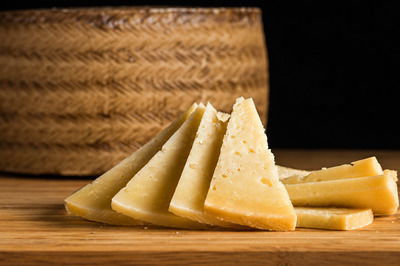
Manchego is Spain's most famous cheese, produced in the historic region of La Mancha from the milk of Manchega sheep. Its history stretches back for centuries, and today it is regarded as one of the country's greatest gastronomic symbols.
Depending on how long it has been aged, Manchego can have a mild, creamy flavour or a richer taste with delicate nutty notes. Younger cheeses have a soft, smooth texture, while mature varieties develop a firmer consistency and a more pronounced aroma.
Manchego is served as an appetiser, included on cheese boards, and paired with jamón, olives, and red wine. You can enjoy this cheese in almost any restaurant or buy it in most supermarkets and specialist cheese shops throughout Spain.
Cabrales (Queso Cabrales)
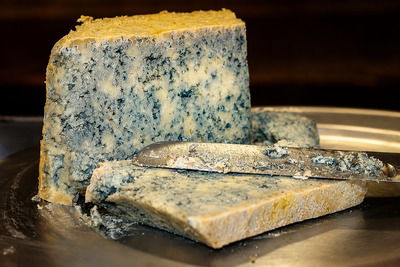
Cabrales is one of Spain's most famous blue cheeses, produced in the mountains of Asturias. It is made from cow's milk or a blend of cow's, sheep's, and goat's milk, and then matured in natural limestone caves with high humidity.
It is precisely this ageing process in mountain caves that gives the cheese its characteristic blue veins, rich aroma, and bold, slightly tangy flavour. Cabrales is considered one of Spain's most distinctive cheeses and is especially prized by lovers of blue cheese.
Cabrales is most often served on a cheese board with crusty bread, nuts, or honey. Although the cheese originates from Asturias, it can now be enjoyed throughout almost the whole of Spain—in restaurants, cheese shops, and large supermarkets.
Of course, Spanish gastronomy is far from limited to these delicacies. Almost every region of the country produces its own cheeses, sausages, and cured meats, many of which have Protected Designation of Origin (PDO) status and are considered a source of great local pride.
Tapas and Traditional Appetisers
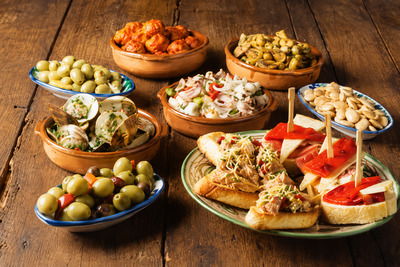
It is impossible to imagine Spanish gastronomy without tapas — small appetisers served in almost every bar and restaurant across the country. For Spaniards, tapas are not simply a type of dish but an entire social tradition. Friends meet in the evening, order several different appetisers and drinks, and spend hours at the table, moving from one bar to another.
There is no single list of tapas. Depending on the region, dozens of different dishes can be served in this role: croquetas, patatas bravas, chipirones, jamón, cheeses, olives, garlic prawns (Gambas al ajillo), small sandwiches, and much more. That is why every establishment has its own unique tapas menu.
One of the most popular cold appetisers is Ensaladilla Rusa — the Spanish version of Olivier salad. It is made with potatoes, tuna, cooked vegetables, eggs, and mayonnaise. Despite its name, Ensaladilla Rusa has long become an integral part of Spanish cuisine and can be found in almost every tapas bar.
If you want to experience the true gastronomic culture of Spain, order several different tapas and share them with your friends. That is exactly how Spaniards themselves prefer to spend their evenings.
Desserts and Sweets
Spanish cuisine is famous not only for its hearty dishes but also for its wide variety of desserts. Different regions of the country have their own traditional sweets, although many of them have long become popular throughout Spain and appear on the menus of most restaurants, cafés, and pastry shops.
From crispy churros served with hot chocolate to creamy rice pudding and caramel custards, Spanish desserts are known for their simple ingredients, homemade recipes, and unforgettable flavours.
Churros
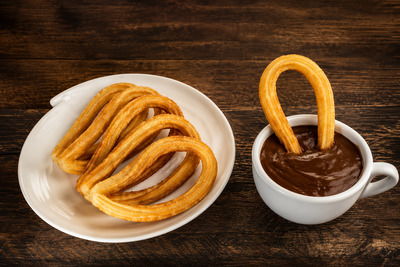
Churros are one of the most famous desserts in Spanish cuisine. They are long strips of choux pastry, fried until golden and crispy, then sprinkled with sugar.
Traditionally, churros are served with thick hot chocolate, into which they are dipped before every bite. For many Spaniards, this has long been a favourite breakfast or afternoon treat, especially at weekends.
You can try churros in almost every town and city across Spain, from small family-run cafés to the famous churrerías, which specialise exclusively in making this dessert. If you are travelling around Spain, be sure to try freshly made churros with hot chocolate — for many visitors, it is one of the country's most memorable culinary experiences.
Crema Catalana
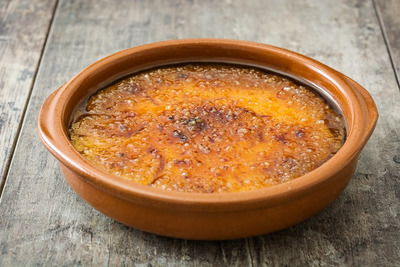
Crema Catalana is one of Spain's most famous desserts, originating in Catalonia. It is a delicate custard made from milk, egg yolks, sugar, cinnamon, and lemon zest, topped with a thin layer of caramelised sugar just before serving.
The dessert's defining characteristic is its contrast of textures: a crisp caramel crust on top conceals a smooth and fragrant custard underneath. This is what makes Crema Catalana one of the most refined yet wonderfully simple desserts in Spanish cuisine.
Today, this dessert can be enjoyed far beyond Catalonia and is served in restaurants and cafés throughout almost the whole of Spain. If you see Crema Catalana on the menu during your travels, be sure to order it freshly prepared while the caramel topping is still perfectly crisp.
Arroz con Leche
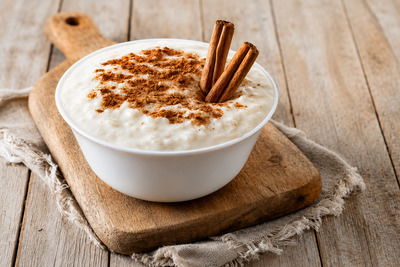
Arroz con Leche is one of Spain's most popular homemade desserts. It is prepared with rice, milk, sugar, cinnamon, and lemon zest, slowly simmered until it reaches a smooth, creamy consistency. Despite its simple ingredients, the dessert is wonderfully aromatic and is considered a true classic of Spanish cuisine.
Arroz con Leche is especially popular in Asturias, where it is regarded as one of the region's gastronomic symbols. Today, however, this dessert can be enjoyed almost anywhere in Spain, from small family-run restaurants to traditional cafés and pastry shops.
In many establishments, the dessert is sprinkled with a thin layer of sugar before serving and lightly caramelised using a culinary torch. The crisp caramel topping pairs perfectly with the creamy rice pudding beneath, making Arroz con Leche one of the favourite desserts of both Spaniards and visitors alike.
Flan
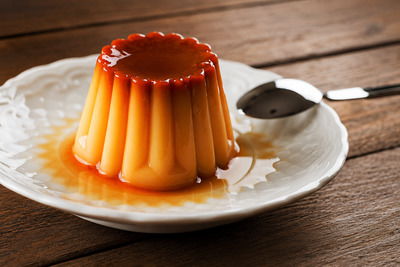
Flan is one of the most popular desserts in Spanish cuisine and can be found in almost every restaurant across the country. It is a delicate caramel custard made from eggs, milk, and sugar, topped with a layer of liquid caramel that gives the dessert its distinctive sweet flavour.
Despite its simple ingredients, a properly prepared flan has an exceptionally smooth, almost airy texture. In some regions of Spain, it is served with whipped cream, fresh fruit, or a small amount of liqueur, although the classic recipe remains by far the most popular.
Flan is considered a true classic of Spanish home cooking and is often included as part of the menú del día — the fixed-price lunch menu offered by many restaurants. It is a light, not overly sweet dessert that Spaniards traditionally enjoy at the end of lunch or dinner.
More Articles About Spanish Gastronomy
If you would like to explore Spanish gastronomy in greater depth, we also recommend reading these articles:
- Traditional Spanish Drinks — sangria, cava, cider, vermouth, and other popular beverages of Spanish cuisine.
- Wine in Spain: Types, Classification, and Wine Regions — how to choose Spanish wine, the differences between ageing categories, and which wine regions are considered the finest.
- Traditional Cuisine of Valencia — the birthplace of paella, rice dishes, and the gastronomy of the Mediterranean coast.
- Traditional Cuisine of Andalusia — gazpacho, salmorejo, tapas, pescaíto frito, and other dishes from southern Spain.
- Catalan Cuisine — the culinary traditions of Barcelona and Catalonia, including regional dishes and desserts.
- Traditional Cuisine of Madrid — Cocido Madrileño, bocadillo de calamares, and other gastronomic symbols of the Spanish capital.
- Traditional Spanish Christmas Dishes — what Spaniards prepare for Christmas, which desserts are served at the festive table, and which dishes are considered essential.

 English
  Español
  Русский