
Christmas is one of the most loved and eagerly anticipated holidays in Spain. During this time, the whole country is filled with a special festive atmosphere: the streets are illuminated with Christmas lights, families gather around large dinner tables, and homes are filled with the aromas of traditional Christmas dishes.
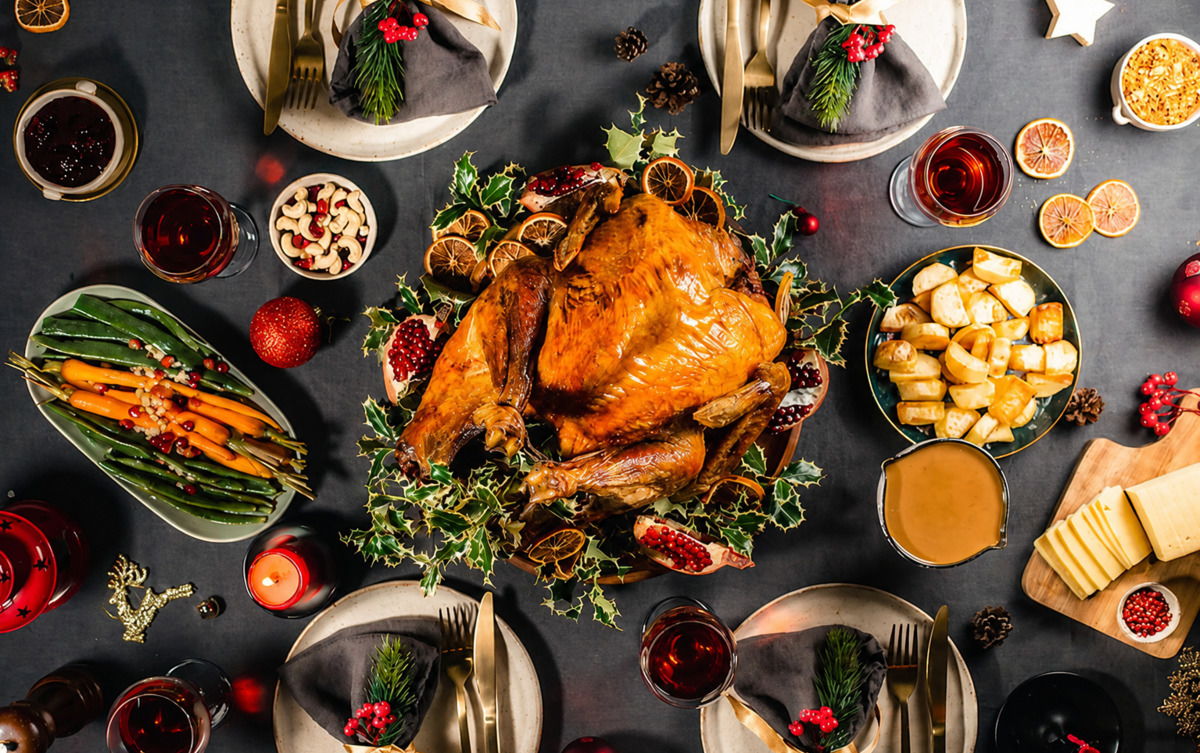
Preparations begin long before the holiday itself. As early as October, shop windows and the shelves of supermarkets begin to fill with Christmas sweets, delicacies, seafood, and other festive treats. It often feels as though the anticipation of Christmas begins well before the celebrations themselves.
As everywhere else, Spanish families prepare for Christmas dinner in different ways. Some happily spend several days in the kitchen, cooking family recipes that have been passed down through generations. Others combine home cooking with ready-made festive appetisers, while some prefer to buy a fully prepared Christmas dinner so they can spend more time with their loved ones.
That's why, in the weeks leading up to Christmas, supermarket displays become a true feast for food lovers, making you want to try just about everything.
What is served on the Christmas table in Spain?
Despite regional differences, a traditional Christmas dinner in Spain usually consists of several courses: cold starters, a hot main course, and traditional Christmas sweets. In coastal regions, fresh seafood and fish also play a central role, and many Spaniards simply can't imagine a festive table without them.
Christmas starters
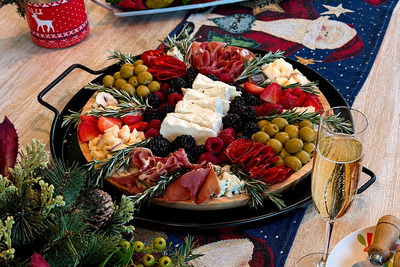 wine or cava. During this time, traditional starters, known as entremeses or aperitivos, are usually served – an essential part of a Spanish Christmas.
These typically include large platters of thinly sliced jamón, mature cheeses, a variety of pâtés, cured sausages, stuffed peppers, anchovies, gourmet preserved delicacies, and, of course, olives. Everything is served with crusty bread, and in some regions also accompanied by homemade aioli or extra virgin olive oil.
These starters serve more than just a culinary purpose. They create that unmistakable festive atmosphere where nobody is in a hurry: guests chat, exchange Christmas greetings, and only then move on to the main hot dishes.
Hot main courses
Every Spanish family has its own Christmas traditions and favourite recipes passed down from one generation to the next. However, the festive table most commonly features roast suckling pig, young lamb, stuffed turkey, and, in coastal regions, fish, seafood, and Galician-style octopus.
Roast suckling pig – cochinillo asado
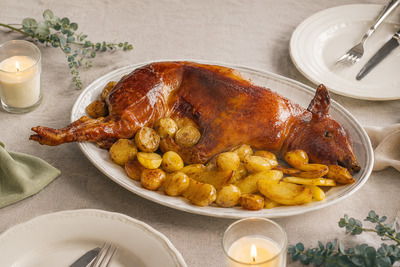
Roast suckling pig (cochinillo asado) is one of the most famous festive dishes in Spanish cuisine. It is especially renowned in Segovia and Ávila, although it is prepared at Christmas in many regions across the country.
Traditionally, the suckling pig is slow-roasted in the oven until the meat becomes incredibly tender, while the skin turns thin, golden, and wonderfully crisp. The result is a dish that is both succulent on the inside and perfectly crunchy on the outside.
It is most often served with roast potatoes, seasonal vegetables, or a light green salad, which perfectly complements the rich flavour of the meat.
Interestingly, some of the famous restaurants in Segovia follow a beautiful tradition: a properly cooked suckling pig is ceremonially carved not with a knife, but with the edge of a ceramic plate. This is the chefs' way of demonstrating just how tender and perfectly cooked the meat is.
Roast lamb – cordero asado
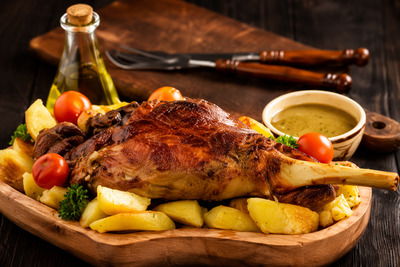
Roast lamb is another of Spain's most famous Christmas dishes and a true symbol of the festive dinner.
Traditionally, young lamb is roasted in earthenware dishes or wood-fired ovens, giving the meat an exceptionally tender texture while creating a delicious golden crust. Today, it is also commonly prepared in home ovens, following the same classic recipe.
This culinary tradition is believed to have originated in the cuisine of Al-Andalus. Roast lamb is usually served with roast potatoes, seasonal vegetables, or a simple green salad so as not to overpower the flavour of the meat.
Roast lamb is especially popular in Castile and León, where its preparation is regarded as a true culinary art. In many restaurants across the region, it is still cooked in traditional wood-fired ovens using time-honoured recipes.
Roast stuffed turkey – pavo relleno al horno
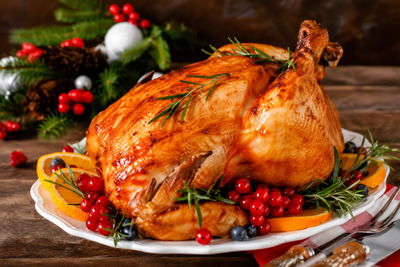
Roast stuffed turkey is another popular Christmas dish in Spain, and almost every family has its own favourite recipe.
Thanks to its size, a single turkey can easily feed a large gathering, which is why it is often prepared for family celebrations. The stuffing may include vegetables, chestnuts, nuts, apples, prunes, dried apricots, mushrooms, or even minced meat, depending on the region and family traditions.
In many Spanish families the stuffing is considered just as important as the turkey itself. Quite often, it is the family's stuffing recipe that is passed down from one generation to the next, becoming one of their most treasured Christmas traditions.
During roasting, the turkey is regularly basted with its own juices or white wine, ensuring that the meat remains succulent while developing a beautifully golden, crispy skin.
Galician-style octopus – pulpo a la gallega
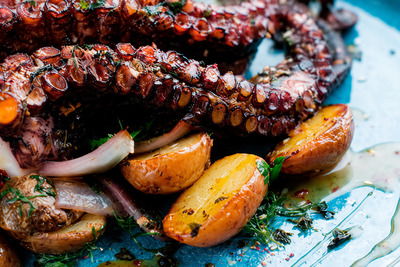
This traditional dish from Galicia holds a special place in the region's Christmas cuisine and has long been famous far beyond its borders. Today, Galician-style octopus can be found in many restaurants throughout Spain, although in Galicia it is regarded as one of the region's greatest culinary treasures.
Octopus is usually served either as a starter or as a main hot dish. Although the recipe appears simple, preparing it properly requires experience to ensure that the meat is perfectly tender.
The secret lies in dipping the octopus into boiling water three times for a few seconds before cooking it fully. Galicians call this technique asustar al pulpo, meaning "to frighten the octopus". It is believed that this prevents the skin from splitting during cooking and gives the tentacles their distinctive curled shape.
Classic pulpo a la gallega is served with boiled potatoes, coarse sea salt, sweet or hot paprika, and fragrant extra virgin olive oil.
Interestingly, octopus was once considered everyday food for Galician fishermen, but today it has become a true delicacy. In the run-up to Christmas, demand is so high that the price of fresh octopus in Spain traditionally rises significantly.
Roast fish – pescado al horno
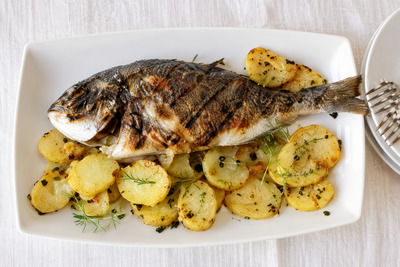
Roast fish is another traditional dish that frequently appears on the Spanish Christmas table. In many families, it is served as the main hot course, especially in the country's coastal regions.
The fish is typically baked with potatoes, garlic, bay leaves, white wine, lemon, and extra virgin olive oil. This simple method of cooking helps preserve its natural flavour and keeps the flesh wonderfully moist.
For Christmas dinner, the most popular choices are European seabass (lubina), gilthead seabream (dorada), or red seabream (besugo). The latter is regarded as one of Spain's most traditional Christmas fish and has been a centrepiece of festive dinners for many years.
Spaniards rarely use a large number of spices when preparing roast fish. Instead, the focus is on the freshness of the fish, high-quality olive oil, and simple Mediterranean ingredients that enhance rather than overpower its natural flavour.
Seafood – mariscos
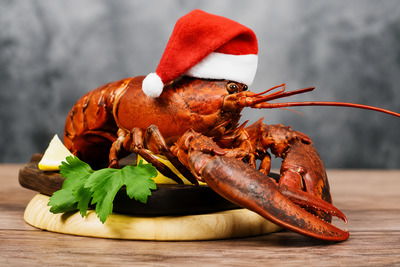
It's difficult to imagine a Christmas table in Spain without seafood. For many families, it is the main festive delicacy, and in coastal regions it often takes the place of meat dishes altogether.
Prawns, langoustines, lobsters, crabs, crayfish, mussels, shellfish, and other seafood are particularly popular. They are usually served in the simplest possible way – boiled or grilled with lemon, olive oil, and just a small amount of seasoning to preserve their natural flavour. They are also used to prepare festive soups, fish stews, and a variety of hot dishes.
Due to high demand for seafood as the festive season approaches, prices are rising, so many Spaniards buy prawns, lobsters and other delicacies in advance and then freeze them until the festive dinner.
For people in Spain, seafood is far more than just a festive treat – it is one of the country's most cherished Christmas traditions, bringing the whole family together around the table and making the festive menu truly special.
Traditional Christmas sweets
What would Christmas in Spain be without its traditional sweets? Throughout December, shop shelves are filled with festive desserts, many of which are only available at this time of year.
The undisputed stars of Christmas desserts in Spain are turrón, polvorones, mantecados, and marzipan. For centuries, these traditional sweets have been an essential part of the festive table, creating the unmistakable atmosphere of a Spanish Christmas.
Turrón
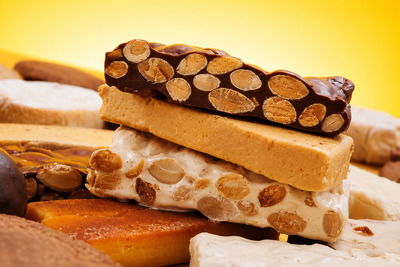
Turrón is probably Spain's best-known Christmas sweet and an essential part of the festive table. Today, you'll find dozens of different varieties in the shops, including chocolate, praline, pistachio, coconut, biscuit, fruit, and many other flavours.
For this reason, many tourists compare turrón to chocolate. In modern Spanish supermarkets, chocolate varieties occupy much of the shelf space, and for most visitors, these are the first versions they try when discovering this traditional Christmas treat.
However, classic turrón is quite different. It is traditionally made from honey, sugar, egg white, and a generous amount of almonds. This original recipe is regarded as the authentic version and has remained an essential part of Christmas in Spain for centuries.
The two best-known traditional varieties are Turrón de Alicante, which is hard and made with whole almonds, and Turrón de Jijona, which is soft and made from ground almonds. Both are considered a true source of pride for the province of Alicante, where they have been produced for several centuries.
Turrón is sold in Spain almost exclusively during the Christmas season. It begins appearing on shop shelves from October, and once the festive period is over, it almost completely disappears until the following year. That's why, for many Spaniards, the taste of turrón is inseparably linked with the atmosphere of Christmas and family gatherings.
Polvorones
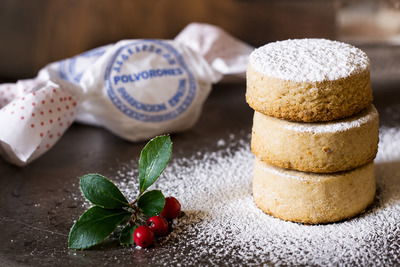
Polvorones are another traditional Christmas sweet found in almost every Spanish home. These crumbly shortbread biscuits are made from flour, sugar, butter (or lard), ground almonds, and cinnamon, giving them their distinctive delicate flavour and a texture that literally melts in your mouth.
The name polvorón comes from the Spanish word polvo, meaning "dust". The name is well deserved, as the biscuits are so crumbly that they easily fall apart at the slightest touch.
Today, you can find polvorones in Spain flavoured with chocolate, lemon, coconut, orange, and many other ingredients, although the classic almond recipe remains by far the most popular.
Many Spaniards gently press a polvorón between their fingers before opening the wrapper. It is said that this helps prevent the biscuit from crumbling too much, making it easier to eat. This small ritual has long become part of the Spanish Christmas tradition.
Mantecados
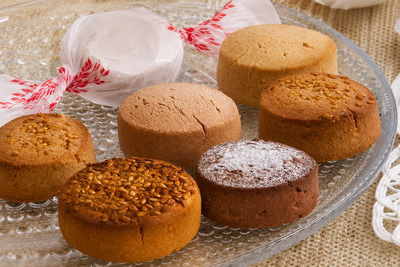
At first glance, mantecados look very similar to polvorones, and many tourists do indeed confuse these two traditional Christmas sweets. However, there are a few subtle differences between them.
Mantecados have a denser, smoother texture, whereas polvorones are much more crumbly and literally melt in your mouth. They are also made from flour, sugar, almonds, and fat, while modern producers often add cocoa, cinnamon, lemon zest, sesame seeds, or chocolate.
Mantecados are believed to have originated in Andalusia several centuries ago, and today they are produced throughout Spain. Like turrón, these sweets only appear in shops in the run-up to Christmas and remain one of the symbols of the festive season.
In many Spanish households, it would be impossible to imagine the Christmas table without a box of turrón, polvorones, and mantecados. These three traditional sweets are most often enjoyed during long family evenings over a cup of coffee, tea, or a glass of sweet wine.
Marzipan – mazapán
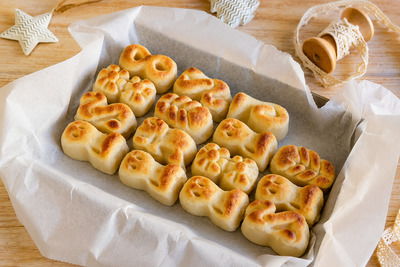
Marzipan is another traditional Christmas sweet without which it is difficult to imagine a festive table in Spain. It is made from finely ground almonds and sugar syrup, giving it a rich nutty flavour and a soft, pliable texture.
Today, marzipan is available in many different forms, including small figurines, filled rolls, sweets, and miniature cakes. Marzipan from Toledo is especially famous, being regarded as one of the finest in Spain and boasting a history that spans several centuries.
Like other traditional Christmas sweets, marzipan appears in shops well before the festive season and remains an essential part of family celebrations. It is served with coffee, tea, or dessert wine, providing the perfect ending to a long Christmas evening spent with family and friends.
More articles about Spanish cuisine
If you're interested in Spanish culinary traditions, we also recommend exploring our other articles on the country's national cuisine, traditional drinks, and regional gastronomic specialities.
- Traditional Spanish dishes – the most iconic dishes of Spanish cuisine that every visitor should try.
- Traditional Spanish drinks – cava, cider, sherry, sangria, vermouth, and other popular Spanish beverages.
- Catalan food – traditional dishes from Catalonia that you can enjoy in Barcelona and other towns and cities across the region.
- Traditional food in Valencia – paella, fideuà, esgarraet, and other specialities of Spain's Mediterranean coast.
- Traditional Andalusian food – chilled soups, fried fish, jamón, and other culinary traditions from southern Spain.
- Traditional cuisine of Madrid – the best-known dishes of the Spanish capital and the country's central regions.

 English
  Español
  Русский