
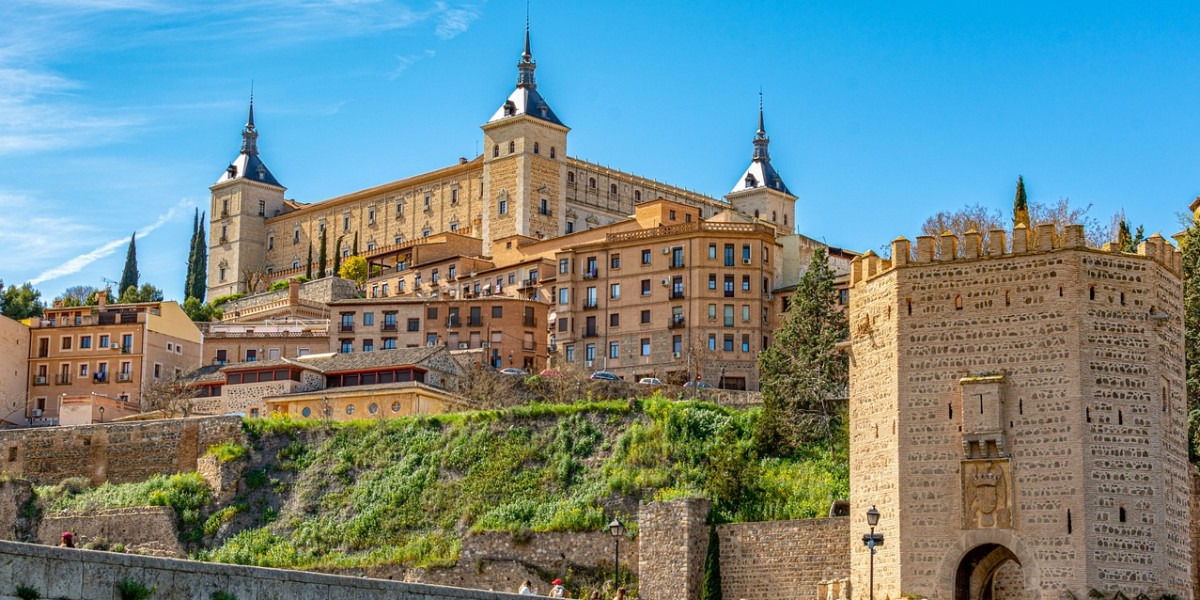
Toledo is one of the most famous historic cities in Spain and a true fortress city, full of unique attractions. It is a magnificent open-air museum, where centuries of history are revealed around every corner, shaped over the last two millennia.
The city is located on a hill surrounded by fortress walls, built during the Roman era and later reconstructed by the Arabs, who gave these walls their current appearance.
These walls also witnessed a rich history, when Toledo served as the capital of Spain for more than 40 years — from 1519 to 1561. The historic center is very impressive, with a special medieval atmosphere that can be felt while walking through the fortress. After all, this is an entire fortress city! There is certainly plenty to explore.
Main Attractions of Toledo
The most iconic landmarks are located in the historic center, close to each other, so you can stroll calmly and unhurriedly while admiring everything along the way. And the photos here turn out amazing! So, where should you start exploring the attractions of Toledo?
Bisagra Gate - Puerta de Bisagra
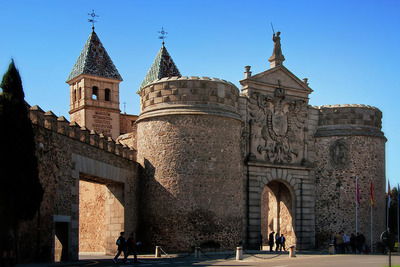
It is convenient to start exploring Toledo’s attractions from the main Bisagra Gate, which leads into the historic city center.
The gate is built into the fortress wall, and the impressive towers above the arch immediately make it clear that you are entering one of the most monumental historic cities in Spain.
Passing through the gate, it is easy to imagine yourself as a character in a medieval movie — the atmosphere here is truly special.
Mezquita del Cristo de la Luz - Mosque of Cristo de la Luz
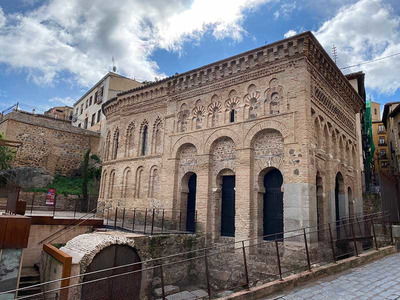
The mosque building was constructed in the 10th century, as reflected in its unusual architecture with Eastern-style arches and a cozy inner courtyard. Admission costs €4. Despite its modest size, it is one of the oldest surviving monuments of the Muslim era in the city.
Visiting the mosque is included in the Toledo Tourist Pass (a combined monument ticket, usually issued as a wristband).
The pass costs €12 and provides access to the following sites:
- Santo Tomé Church
- Mezquita del Cristo de la Luz
- San Ildefonso Church
- Royal College of Noble Maidens
- El Salvador Church
- Santa María la Blanca Synagogue
- Monastery of San Juan de los Reyes
Each of these places costs €4 when visited separately, so the pass can be a convenient option for those planning to explore the interiors of several monuments.
If you prefer exploring the city on foot and discovering it from the outside, you can simply choose the places that interest you most and stroll through Toledo’s historic center.
Zocodover Square - Plaza de Zocodover
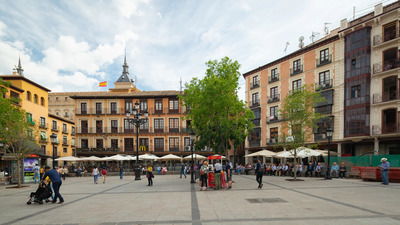
Zocodover Square is the main square of Toledo, located just a 5-minute leisurely walk from the Mezquita del Cristo de la Luz. The name Zocodover has Arabic roots and literally means “animal market”: in the Middle Ages, regular market days were held here, where livestock was bought and sold.
Despite its relatively small size, the square is always lively: tourists and locals meet here, and bars and restaurants serving local cuisine are open. It is a convenient place to relax and a useful landmark when walking around Toledo’s historic center.
Alcázar Fortress - Alcázar de Toledo
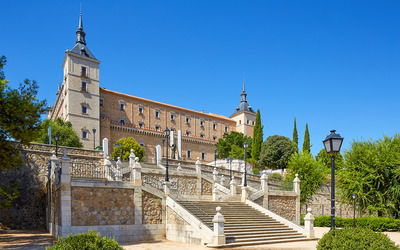
The Alcázar is one of the most recognizable landmarks of Toledo. The fortress is visible from almost anywhere in the city: it is located just a two-minute walk from Zocodover Square, at the highest point of the historic center.
The structure has a strict square shape with watchtowers at the corners and looks impressive even from the outside. Today, it houses the Spanish Army Museum. Entrance is paid but affordable — €5. The exhibitions include weapons, military equipment, historic halls, and even a real helicopter.
Alcántara Bridge - Puente de Alcántara
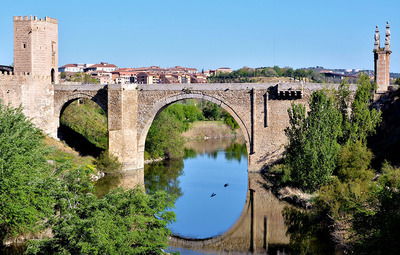
Alcántara Bridge is one of the oldest and most impressive bridges in Toledo. It was built during the Roman era and spans the Tagus River at the foot of the Alcázar fortress. Its two massive arches and stone masonry have been well preserved to this day, despite numerous reconstructions and historical events.
The name of the bridge comes from the Arabic word al-qantara, meaning “bridge” — a reminder of the Muslim period in the city’s history. In the Middle Ages, this bridge was one of the main entrances to Toledo and had great strategic importance for the city’s defense.
Today, Alcántara Bridge is not only a historical monument but also one of the best places for panoramic views of the old town and the fortress walls. It is especially beautiful at sunset, when Toledo’s stone walls are illuminated by warm light.
If you have time, it is worth walking along the path by the Tagus River and reaching San Martín Bridge — another iconic bridge of Toledo, offering equally impressive views of the fortress city.
Cathedral of Saint Mary - Catedral de Santa María de Toledo
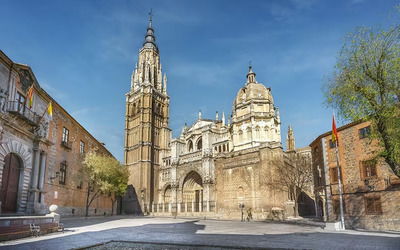
The Cathedral of Saint Mary is one of the main and most significant attractions of Toledo, as well as one of the largest Gothic cathedrals in Spain. Its construction began in the 13th century, and over the centuries the church was enriched with new architectural elements.
The exterior of the cathedral is striking for its abundance of details: pointed arches, sculptures, decorative portals, and a tall bell tower make the building a true masterpiece of Gothic architecture. You will want to stop and admire the facades again and again.
The interior of the cathedral is no less impressive, and in many ways even more so. Luxurious altarpieces, medieval stained-glass windows, chapels, and works by Renaissance artists create the feeling of a true museum beneath the vaults. Of particular value is the painting collection, which includes works by El Greco, Goya, and other masters.
Entrance to the cathedral is paid — €12. Tickets can be purchased at the ticket office or in the shop located opposite one side of the building; it is easy to find while walking through the center.
San Ildefonso Church - Iglesia de San Ildefonso
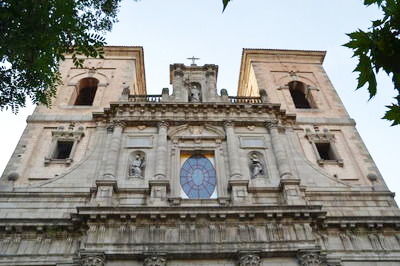
San Ildefonso Church, also known as the Jesuit Church, is located in the very center of Toledo, about a 10-minute walk from the Cathedral. The building was constructed in the Baroque style and stands out clearly against the city’s medieval architecture.
The church interior impresses with its scale and light, while the dome and decorative elements create a sense of space and solemnity. A visit is included in the Toledo Tourist Pass; individual admission costs €4.
One of the main reasons to come here is the observation towers. After climbing to the top, you can enjoy some of the best panoramic views of Toledo: from above, you can clearly see the tiled rooftops, the cathedral, the Alcázar, and the curves of the Tagus River surrounding the fortress city.
El Greco Museum - Museo del Greco
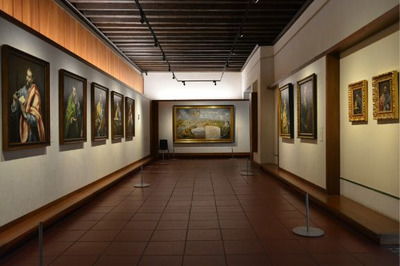
The El Greco Museum is dedicated to one of the most famous artists associated with Toledo. El Greco was born in the 16th century on the island of Crete, but spent most of his life here, where his unique artistic style was formed.
Although the artist was also a sculptor and architect, he gained worldwide fame through his paintings — especially religious scenes with distinctive expressiveness, elongated figures, and an unusual color palette.
The museum is located in the historic quarter and is not only an exhibition space but also an atmospheric place to immerse yourself in the era. Even if you are not a painting enthusiast, visiting the museum helps you better understand Toledo’s cultural role and its significance in the history of Spanish art.
Admission to the El Greco Museum costs €3. On Saturdays after 2:00 pm and on Sundays, admission is free.
Monastery of San Juan de los Reyes - Monasterio de San Juan de los Reyes
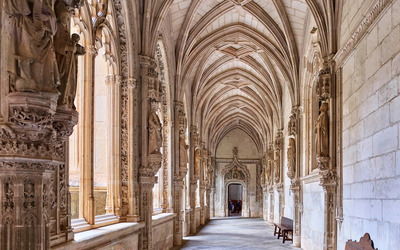
The Monastery of San Juan de los Reyes is one of the most striking Gothic landmarks in Toledo. It was built in 1495 by order of Queen Isabella of Castile, better known in Spain as Isabella the Catholic, to commemorate the victory over Portugal and the strengthening of royal power.
The monastery’s architecture is impressive both outside and inside. Carefully crafted facades, high vaults, elegant arches, and colorful stained-glass windows create an atmosphere of calm and reflection. You will want to walk slowly here, admiring the details and simply enjoying the space.
Special attention should be paid to the inner cloister — the monastery courtyard with arcades, which is considered one of the most beautiful in Toledo. It is often called one of the most atmospheric and photogenic corners of the city.
Entrance to the monastery is paid — €4. The visit is also included in the tourist pass, which is convenient for those planning to explore the interiors of several historic monuments.
Tips for Visiting Toledo
Toledo is a compact city, but due to its hillside location and medieval layout, a trip here requires some preparation. A few practical tips will help make your visit more comfortable.
🚗 Parking in Toledo
Parking in Toledo’s historic center can be challenging: narrow streets, restricted access, and an almost complete lack of free spaces. Driving inside the fortress walls without necessity is not recommended.
The best option is to leave your car at one of the parking areas at the foot of the old town and then go up on foot or by escalators. The most convenient parking lots are located near the escalators and elevators leading to the historic center.
There are also large paid parking lots near the Alcántara and San Martín bridges — from there, it is convenient to start your walk around the city.
🚶♀️ Getting Around the City
The historic center of Toledo is best explored on foot. Distances between the main attractions are short, but keep in mind the elevation changes and cobblestone streets — comfortable shoes are essential.
⏰ How Much Time to Plan
For a relaxed introduction to the city, it is worth setting aside at least half a day, and ideally a full day. This will allow you not only to see Toledo’s main attractions but also to stroll through the streets, take photos, and sit in cafés.
🎟 Tickets and Museums
If you plan to visit several museums and churches, it makes sense to check in advance which sites are included in the the Toledo Tourist Pass. Otherwise, you can limit yourself to exploring the city from the outside — Toledo is impressive even without visiting interiors.
Additional Trip Ideas
Toledo is rarely the only stop on an itinerary — more often, it fits perfectly into a richer journey through central Spain. If you have extra time, it is worth considering several ways to expand your trip.
🚗 Traveling by Car
Renting a car provides more freedom when planning your route and allows you not to limit yourself to a one-day visit. By car, it is easy to combine Toledo with other historic cities in the region, stop in scenic places, and change plans along the way.
If you are considering this option, you can check car rental in advance — this is especially convenient for trips beyond major cities and tourist routes.
🏛 What Else to See Near Toledo
Central Spain is rich in cities with unique history and architecture. After Toledo, it makes sense to continue your journey to the following destinations:
- Madrid Attractions — world-class museums, royal palaces, parks, and lively districts of the capital.
- What to See in Segovia — the famous Roman aqueduct, the old town, and the impressive Alcázar castle.
- What to do in Ávila — one of the best examples of a medieval fortress city with fully preserved walls.
- What to see in Aranjuez — a royal residence with historic gardens and a peaceful atmosphere, ideal for a more relaxed day trip from Madrid.
This route allows you to see different sides of Spain: from the vibrant capital to intimate historic towns, each unique in its own way.

 English
  Español
  Русский