
Seville knows how to celebrate in a way that transforms the whole city. During major celebrations, the streets fill with music, processions, colourful costumes and thousands of people, while familiar squares and historic neighbourhoods become part of a huge urban spectacle.
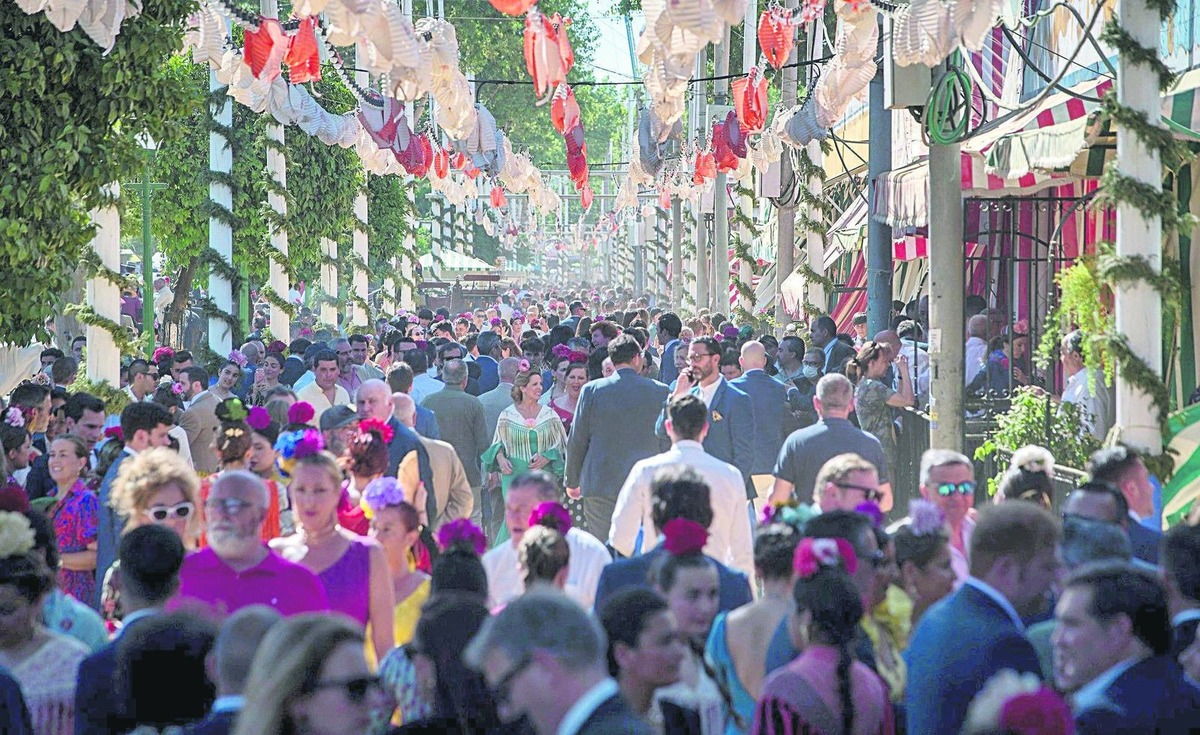
At the same time, Seville's festive life practically never stops: the city celebrates many holidays that take place throughout Spain, but it also has its own events, particularly closely connected with the city's history, culture and traditions. It is these events that turn ordinary dates in the calendar into special days for Seville.
- Seville's Main Festivals — the best-known annual events, for which many travellers specifically choose their travel dates.
- Other Traditional Festivals — important events that reveal Seville's religious, cultural and neighbourhood traditions.
Seville's Main Festivals
Seville's two main festivals show the character of the city in completely different ways, but both attract large numbers of tourists: Semana Santa and Feria de Abril.
Semana Santa — Holy Week
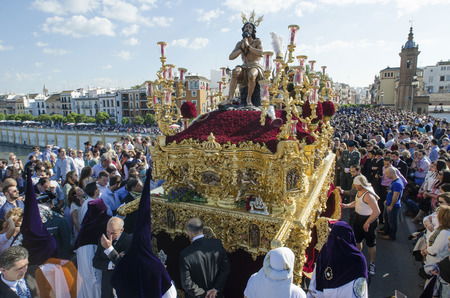
Semana Santa is Holy Week before Easter in Spain, and in Seville it becomes one of the largest and most impressive events of the year. The dates change every year depending on the Easter calendar: Holy Week usually falls in late March or April. In 2026, it took place from 29 March to 5 April.
During these days, numerous religious processions take place on the streets of Seville every day: brotherhoods carry large floats bearing images of Christ and the Virgin Mary out of churches and accompany them through the historic city centre. Music can be heard, the streets fill with people, and during some processions an almost complete silence descends over the surroundings. The Madrugá is particularly famous — the night from Maundy Thursday to Good Friday, when some of the most eagerly anticipated processions take place throughout the city.
For a tourist, Semana Santa is an opportunity to see Seville in a completely different light: solemn, emotional and extraordinarily lively. At the same time, the festival has not only religious but also enormous artistic and cultural significance — the processions feature historic sculptures, music and traditional costumes, while many streets and squares become part of the event itself. If your trip coincides with Semana Santa, you should be prepared for large crowds and changes to the usual traffic through the city centre, but it is precisely for this atmosphere that many travellers specifically choose Seville at this time of year.
Feria de Abril — April Fair
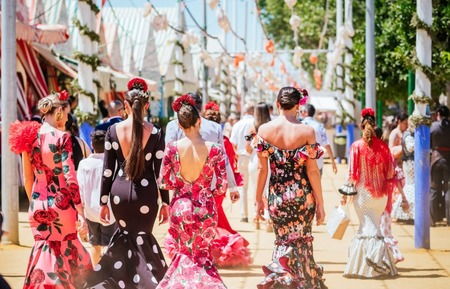
Feria de Abril is the festival when Seville becomes even brighter, livelier and more colourful for several days. Shortly after Semana Santa, the city's life moves to the Los Remedios district, where a huge Real de la Feria appears — a festive city with hundreds of decorated marquees, music, lights and a constant flow of people.
Here, it is difficult simply to walk around like an ordinary tourist: something is constantly happening all around you. Women in colourful dresses, men in traditional costumes, decorated horses and carriages, music and dancing create the very image of Andalusia that many people imagine even before their first trip to Seville. In the evening, the fairground becomes especially transformed — after the traditional alumbrao, when thousands of lights are switched on, the fair's marquees — casetas — fill with music, dancing and conversation.
Feria de Abril takes place shortly after Semana Santa, usually one or two weeks later. In 2026, the fair took place from 21 to 26 April. For tourists, it is a great opportunity to experience festive Seville from the inside, but you should bear in mind that the city is extremely lively during these days. At the same time, not all casetas are open to everyone: some are private, while there are also public marquees that you can enter without an invitation.
Other Traditional Festivals
Seville's festive calendar does not end with the spring celebrations. In different months, the city celebrates other traditional occasions, during which the streets and squares once again fill with music, decorations and local customs.
Corpus Christi — Feast of Corpus Christi
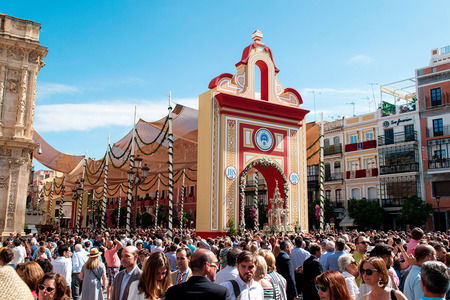
Corpus Christi, or the Feast of Corpus Christi, is a religious celebration of the Catholic Church dedicated to the Eucharist and the veneration of the Body and Blood of Christ. In Seville, it is one of the city's oldest and most significant religious traditions. The festival is celebrated on the Thursday after Trinity Sunday, so its date changes every year; in 2026, Corpus Christi took place on 4 June.
On this day, the centre of Seville is transformed once again: streets and squares are decorated with flowers, fragrant plants, altars and festive canopies, while the main event is the solemn procession that leaves the Cathedral. It passes through the historic centre, accompanied by music and the ringing of bells, while local residents gather in their finest festive clothes.
For tourists, Corpus Christi is an opportunity to see a more ceremonial and peaceful side of Seville. Unlike the lively Feria de Abril, the main impression here comes from the festively decorated streets of the historic centre, the music, the architecture and the solemn atmosphere itself. A cultural programme with concerts and other events also takes place around the main procession, so the festival can be felt throughout the city, not only during the ceremony itself.
Velá de Santa Ana — Triana's Festival
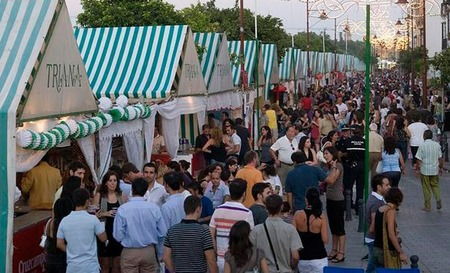
Velá de Santa Ana is a traditional summer festival in Seville's Triana district, dedicated to Saint Anne. It is one of the city's oldest festivals, bringing an atmosphere of traditional festivities, music and local traditions back to the neighbourhood every year. The main celebrations take place at the end of July, with the culmination on 26 July — Saint Anne's Day.
The name Velá is linked to the tradition of festive evening gatherings that take place in the heart of Triana. During the festival, the neighbourhood comes alive around Altozano, Calle Betis and the banks of the Guadalquivir: concerts, performances, cultural and sporting events take place, while in the evenings locals and visitors gather outdoors. A special part of the programme is the traditional cucaña, in which participants try to walk along a sloping pole over the river.
For tourists, Velá is a good opportunity to see Triana not only as a historic district with ceramic workshops and tapas bars, but also as a lively neighbourhood with a strong identity of its own. The festival has a much more local atmosphere than Feria de Abril, and that is precisely why you can feel the character of Triana itself particularly strongly here. In 2026, the main celebrations took place from 14 to 26 July, with the main evening events held from 21 to 26 July. The programme included music, flamenco, traditional competitions and evening events along the banks of the Guadalquivir.
Christmas in Seville
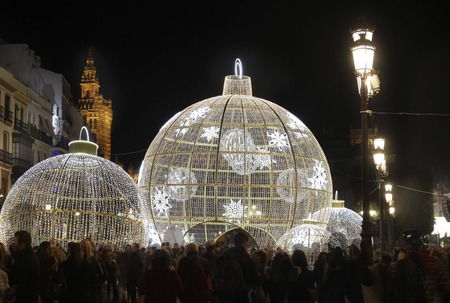
Christmas in Seville is not just a single day, but an entire festive season that usually begins when the Christmas lights are switched on in December and continues until 6 January. During this time, the historic centre and the city's neighbourhoods are decorated with thousands of lights, Christmas markets appear in the squares, and the streets fill with concerts, family activities and the special atmosphere of Christmas in Spain.
One of the main highlights is the Christmas lights. Avenida de la Constitución, Plaza de San Francisco and the central streets around the Cathedral become particularly lively. Christmas markets and fairs are held nearby, where you can find local crafts, gifts and traditional festive products. A special place is occupied by the Feria del Belén near the Cathedral — a traditional fair dedicated to Christmas nativity scenes.
The final part of the festive season is also packed with events: various activities are held for children, while on 5 January the famous Cabalgata de Reyes Magos takes place on the streets of Seville — a Three Kings parade with festive floats, sweets and presents. The following day, 6 January, festive activities continue in the city's neighbourhoods. This is also a particularly enjoyable time to try traditional Spanish Christmas dishes, which become part of the festive table.
What Else to See and Do in Seville
Festivals offer a special way to experience Seville, but throughout the rest of the year the city has just as much to offer. Between festive events, you can explore its historic monuments, enjoy flamenco, visit museums or go on a gastronomic tour.
- What to See in Seville — the city's main attractions, historic neighbourhoods, squares and interesting places worth including in your itinerary.
- Royal Alcázar of Seville — a magnificent palace complex with Moorish heritage, gardens and a rich history.
- Seville Cathedral — one of the city's main symbols, featuring the famous Giralda, historic interiors and the tomb of Christopher Columbus.
- Archive of the Indies in Seville — a historic building and unique collection of documents connected with the era of Spanish maritime expeditions and the New World.
- Flamenco in Seville — where to see traditional tablaos, intimate performances and other types of flamenco shows.
- Museums in Seville — art collections, archaeology, flamenco, Andalusian traditions and unusual museum spaces across the city.
- Where to Eat in Seville and What to Try — traditional dishes, tapas, local sweets and drinks, as well as the city's gastronomic neighbourhoods.
- Street Markets in Seville — atmospheric markets, local produce and an opportunity to experience everyday life in the city.
- Theme Parks and Family Activities in Seville — Isla Mágica, Seville Aquarium and other ideas for family outings and entertainment in the city.

 English
  Español
  Русский