
Oliva — a small town on the Costa Blanca coast that often remains in the shadow of more famous resorts in Valencia, but this is exactly where its special charm lies. It is known for its long sandy beaches, natural dunes, and proximity to the Marjal Pego-Oliva Natural Park — one of the most picturesque places in the region.
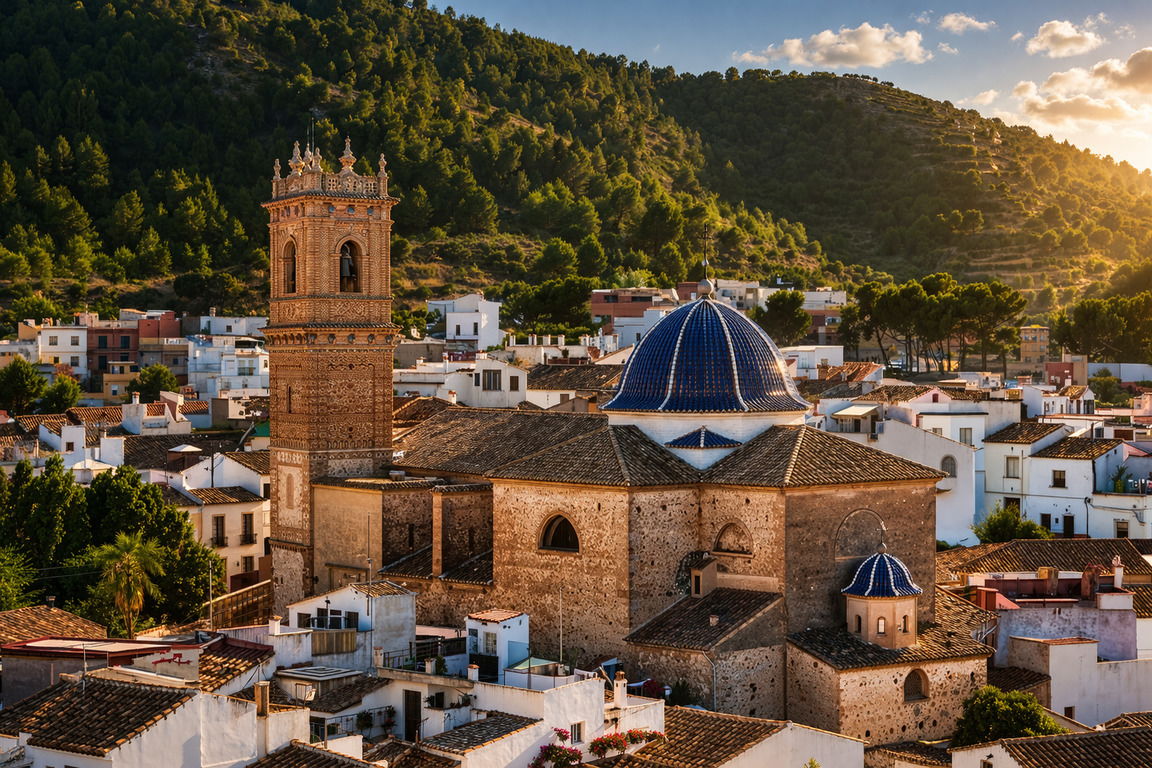
The settlement has a mysterious origin, possibly dating back to the 8th century before the Muslim conquest. Today this can be felt in the narrow streets of the old town, in Moorish districts, and in historic buildings that create an atmosphere of comfort and history. Despite its modest size, the town can pleasantly surprise even experienced travelers.
Oliva is located just 80 kilometers south of Valencia, between the popular resorts of Gandia and Dénia, making it convenient to visit both for a day trip and for a more relaxed seaside holiday. The main attractions of Oliva are located in the historic city center, while special fame has been brought by the spacious beaches of Oliva — long stretches of soft golden sand without dense development and noisy crowds.
In this guide, you will learn what to see in Oliva, which places are worth visiting first, where the best beaches are located, and who this small town suits best — lovers of history, peaceful relaxation, or family travel.
Attractions in Oliva
Thanks to its compact layout, most attractions in Oliva are located close to each other, so walking around the town will not take much time.
It is best to start your sightseeing in the old town (historic center), where the most atmospheric districts, historic streets, and the main historical landmarks are concentrated.
Old Town of Oliva
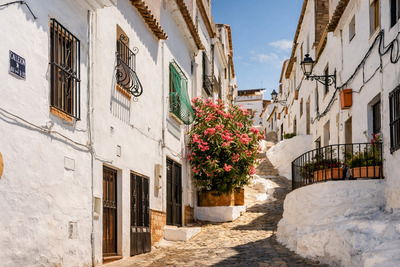
A walk through the old town of Oliva, consisting of three historic districts — Raval, El Pinet, and La Vila Condal — allows you to better understand the history of the town and feel its atmosphere.
Raval District
Raval — a district with Moorish heritage and modest architecture.
This quarter is considered one of the oldest in the town — it was here that after the Christian Reconquista the Moorish population continued to live, which is why the street layout preserved a characteristic eastern structure with narrow alleys and small houses.
Here it is worth visiting:
- Casa Abadia — an example of Mudéjar architecture from the 17th–18th centuries.
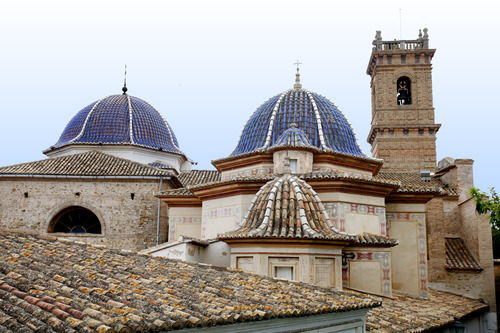
- Sant Roc Church (Parròquia Sant Roc Oliva). The history of the church spans several centuries — construction began on the site of an ancient mosque in 1535 and was completed in 1886. In 1958–1960, the height of the bell tower was increased, and now the church can be seen from afar — it stands out with blue tiled roofs and domes with polychrome drums.
- Tossalet del Doix — the highest point of the town with magnificent views of Oliva and the surrounding orange groves.
- Calle La Hoz — an unusual street with 16th-century houses built directly on the rock and forming a characteristic steep curve.
- Calle Pou d'Alzina — a historic street with traces of Muslim architecture and an ancient well that gave it its name.
El Pinet District
El Pinet (or Guerreria-Pinet) — a later district with a quiet atmosphere and more spacious streets compared to the historic Raval.
This district is located slightly above the historic quarters, offering beautiful views of the town and its surroundings. A walk through El Pinet usually takes place at a calm pace — there are fewer tourists here and more cozy corners for leisurely relaxation.
Here it is worth paying attention to:
- Ermita de San Vicente Ferrer — a small chapel built in 1725 and dedicated to one of the most revered saints of the Valencia region.
- Ermita de San Antonio — a chapel with simple neoclassical decoration typical of later urban buildings.
- Plaza Vista Hermosa — one of the best viewpoints in the district, offering beautiful views of the old town and surrounding hills.
- Plaza de Ganguis — a place associated with a local legend about an underground river along which a brave Moor guided pilgrims to a holy place.
La Vila Condal District
La Vila Condal emerged in the 13th century after the Reconquista, when the town began to actively develop under Christian rule.
This district became the new center of urban life: administrative buildings, fortifications, and major religious structures were located here. Even today, the layout of the quarter reflects the spirit of a medieval town.
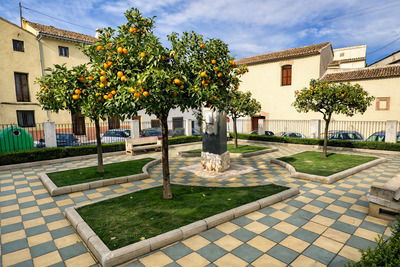
Key points of the district:
- Plaza Alonso — the birthplace of Admiral Gabriel Ciscar, a famous Spanish navigator and scientist.
- Portal de la Virgen María — one of the historic entrances to the town, preserved from the time of the city fortifications.
- City Wall Tower (16th century) — the only surviving tower of the old defensive structures.
- Church of the Assumption of the Blessed Virgin Mary (Parroquia de Santa María la Mayor) — one of the main historic churches of the town, featuring an interesting museum of church ornaments.
And if you happen to walk here on a Friday, be sure to visit the street market near the municipal market — it operates until 14:30 and is located just a few minutes’ walk from the church. Valencian street markets are rightly considered some of the most atmospheric.
Santa Ana Castle
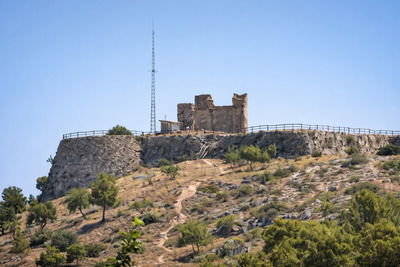
After a walk through the old town, the route naturally leads upward — to the top of Santa Ana Hill. Here, another short climb awaits you — about 80 meters uphill, which takes only a few minutes.
Those interested in history will definitely enjoy this place — even the remaining fragments of fortifications help to imagine what this site looked like several centuries ago. And if history is not your main interest, it is still worth coming up here at least for the stunning views that open from the top.
Santa Ana Castle, built in the 16th century, originally served as part of the town’s defensive system and protected the coast from raids by Barbary pirates. In addition, the fortifications allowed control over the Moorish population of the Raval district after the Christian Reconquista.
Today, fragments of an ancient tower, a rainwater reservoir, and remains of chapel walls have survived from the castle. Although the structure has only partially survived to this day, the site remains one of the best viewpoints in the town.
From the top, a stunning panoramic view opens up: from here you can see Montgó Mountain, the long beaches of Oliva, and the picturesque historic center of the town.
Beaches of Oliva
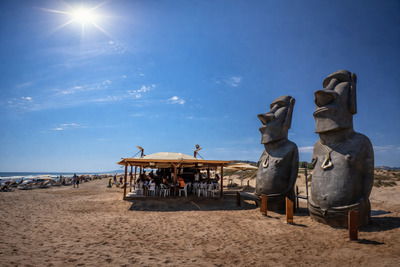
Oliva offers its visitors more than 8 kilometers of magnificent beaches with soft golden sand. Thanks to natural dunes and relatively low development, the coastline here has preserved its natural and peaceful character.
The beaches of Oliva are known for their cleanliness and comfort, making them suitable both for family holidays and for long walks along the sea at any time of the year.
Pau Pi Beach (Playa Pau Pi)
Pau Pi — one of the most popular beaches in Oliva with well-developed infrastructure and convenient access to the sea. There are children's play areas here, as well as facilities for people with limited mobility.
A walk along Avenida del Mar Mediterráneo allows you to experience the atmosphere of resort life: along the promenade there are cafés and restaurants where you can try traditional Valencian food.
Aigua Blanca Beach (Playa Aigua Blanca)
Aigua Blanca combines natural dunes and a well-maintained promenade with beautiful views of the coastline. This is one of the best places for peaceful relaxation and walks along the sea.
Nearby there are restaurants and beach bars where you can spend the evening watching the sunset and enjoy the atmosphere of the Mediterranean coast.
Aigua Morta Beach (Playa Aigua Morta)
Aigua Morta offers an unusual combination of seaside relaxation and the mouth of the Bullent River, making it especially interesting for nature lovers.
Nearby is the residential area of Oliva Nova with golf courses, sports grounds, and an equestrian center, making this area popular among families and active travelers.
What Else to See Near Oliva
If you are traveling around the Valencia region, there are many more interesting places located near Oliva. Below are several ideas for trips and walks around the surrounding area.
- What to See in Gandia — a popular resort town with beautiful beaches and rich history, located just a few kilometers from Oliva.
- What to See in Cullera — a picturesque town with a hilltop castle and long sandy beaches.
- Valencia Attractions — the main places in the city: the historic center, squares, museums, and architectural landmarks.
- City of Arts and Sciences in Valencia — one of the most famous modern architectural complexes in Spain.
- Attractions Near Valencia — interesting towns, natural parks, and travel destinations located not far from the regional capital.
- Amusement Parks in Valencia — the best water parks and family parks in the region.

 English
  Español
  Русский