
Gandia is one of the most interesting cities on the Valencia coast, where the Mediterranean atmosphere combines with a rich history. Here you can see the palace of the famous Borgia family, walk through the streets of the old town, and relax on one of the best sandy beaches in the region.
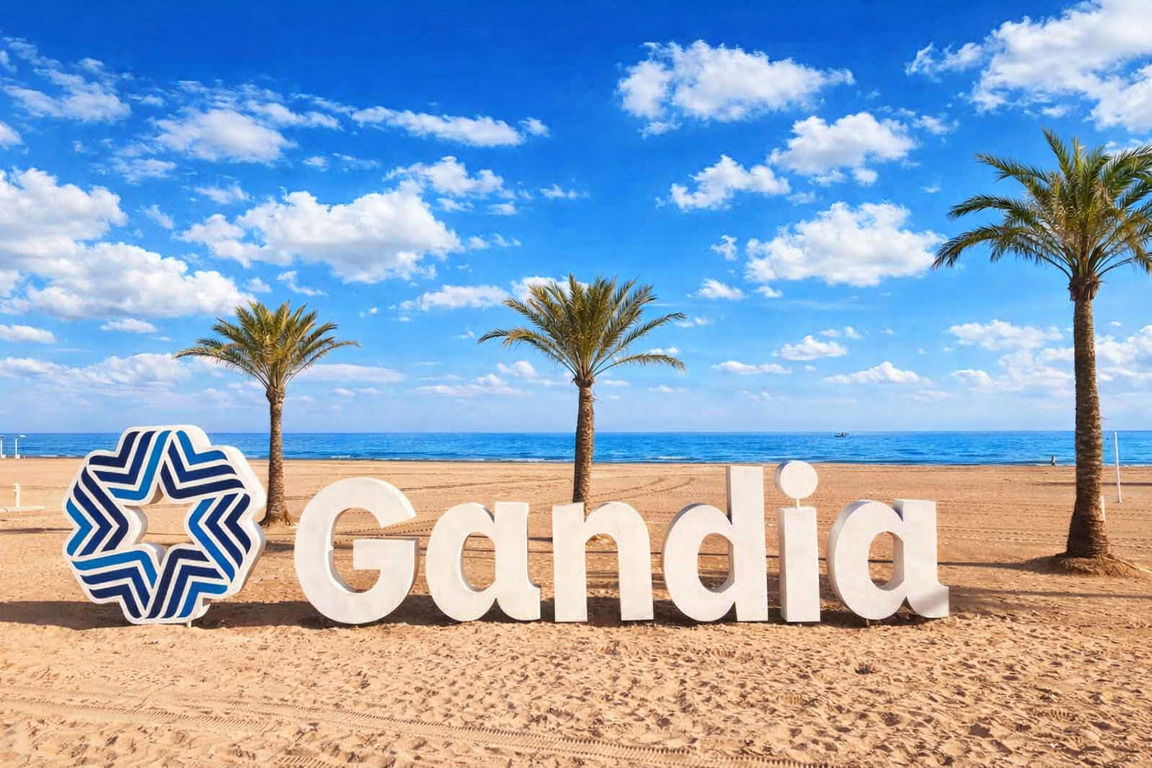
If you are planning a trip to this city, it is worth finding out in advance which attractions in Gandia are worth visiting and which places you should not miss.
Known for its cultural heritage and beautiful beaches, Gandia offers visitors not only sun and sea, but also a real journey through the centuries — following the traces of medieval history, ancient palaces, and Spanish traditions.
The city is perfect for a leisurely walk: many attractions are located close to each other, so during a single walk you can see the historic center, architectural landmarks, and picturesque boulevards.
What to See in Gandia: Main Attractions
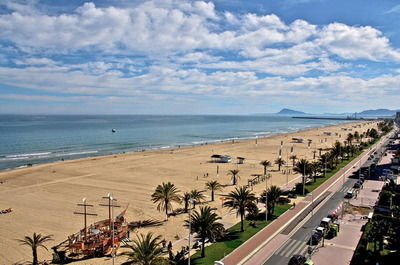
In Gandia you can combine a walk through the old town, visiting historical attractions, and relaxing by the sea. Here are the main places worth visiting:
- Historic Center of Gandia — old town and medieval streets
- Plaza Mayor — the main square of the city
- Collegiate Church of Santa Maria — the Gothic symbol of Gandia
- Borgia Palace (Palacio Ducal de Gandía) — residence of the famous family
- MAGa Archaeological Museum — the history of the region
- Fallas Museum (Museu Faller) — traditions of the famous festival
- Walking areas of Gandia — the main places for strolling in the city
- Paseo de las Germanías — the city’s main promenade boulevard
- Serrano Theatre — a historic theatre from the early 20th century
- Bairén Castle (Castillo de Bairén) — panoramic views of the city and the sea
- Beaches of Gandia — a long sandy coastline
- Marjal de Gandia — a natural park and walking routes
Practical information:
The main attractions of Gandia are the Borgia Palace, the historic center, the Collegiate Church of Santa Maria, the Paseo de las Germanías promenade boulevard, and the sandy beaches of the Valencia coast. The other places are also worth visiting, especially if you have the opportunity to spend more time in the city.
Exploring interesting places in most Spanish cities usually begins with the historic center — and Gandia is no exception. The old town has preserved the atmosphere of past centuries, so it is the best place to start getting to know the city.
Historic Center of Gandia
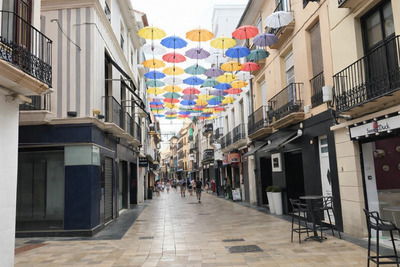
The historic center of Gandia is one of the most atmospheric places in the city. Narrow streets, historic buildings, small squares, and quiet courtyards allow you to feel the true spirit of medieval Spain. It is easy to imagine how centuries ago merchants, monks, and noblemen walked along these streets.
The history of Gandia dates back more than a thousand years. Archaeological findings show that people lived in this area even in prehistoric times, and in the Middle Ages the city became an important cultural and trading center of the region. In the 15th–16th centuries Gandia experienced a real flourishing and was closely connected with the influential Borgia (Borja) family, which gave the world two popes and one saint.
It is in the historic center that the main attractions of the city are concentrated — the majestic Borgia Palace, the Gothic Collegiate Church of Santa Maria, historic museums, and cozy squares. Many buildings here have preserved elements of Gothic and Renaissance architecture, and walking through these streets becomes a real journey into the past.
The heart of the old town is considered to be Gandia’s main square — Plaza Mayor. It is from here that it is most convenient to start exploring the city, as the most important historical monuments and the liveliest corners of the historic center are located around the square.
Plaza Mayor — the main square of Gandia
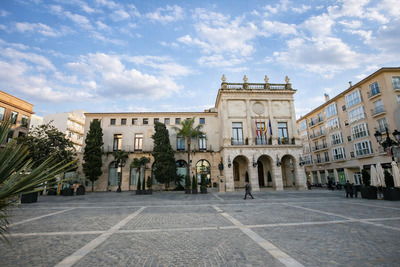
Plaza Mayor is the heart of the historic center of Gandia and one of the liveliest places in the city. This is where you can truly feel the atmosphere of Spanish urban life: people slowly drink coffee on café terraces, restaurants serve paella and seafood, and city festivals and cultural events often take place in the square.
The main building on the square is the city hall (Ayuntamiento de Gandia). The modern building was constructed in the 20th century, but the square itself has a much older history and for centuries has remained the center of the city’s public life.
Plaza Mayor is surrounded by beautiful historic buildings, shops, and small bars, making it a pleasant place to take a short break during a walk through the old town, have a coffee, or simply watch the calm rhythm of life in a Spanish city.
However, the true architectural dominant of the square is the majestic Collegiate Church of Santa Maria, which rises above the historic center of Gandia and is considered one of the main symbols of the city.
Collegiate Church of Santa Maria
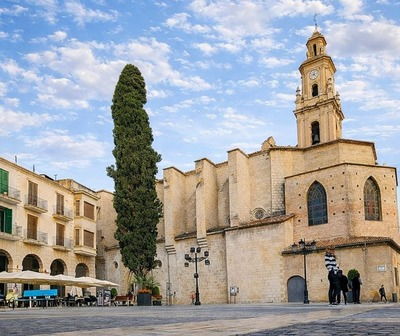
The Collegiate Church of Santa Maria (Insigne Colegiata de Gandía) is one of the main symbols of the city and a magnificent example of Valencian Gothic architecture. The massive stone building with a tall bell tower rises above the historic center and can be seen from many parts of Gandia.
Construction of the church began in the 14th century and continued for several centuries. In different periods the church was rebuilt and expanded, so today its architecture combines Gothic and later elements. Due to its size and importance for the city, it is often called the “small cathedral of Gandia”.
Inside, the church is distinguished by a solemn and restrained atmosphere. High vaults, historic chapels, and works of religious art create a special sense of calm and grandeur. The main altar and decorative interior elements are considered among the most beautiful in the region.
The Collegiate Church is located just a few steps from Plaza Mayor and for centuries has been the spiritual center of the city. Nearby is another important historical attraction of Gandia — the famous palace of the Borgia family, which we will discuss next.
Borgia Palace (Palacio Ducal de Gandía)
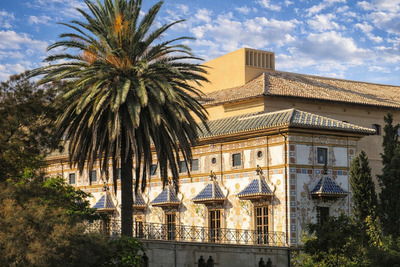
The Borgia Palace is the main historical attraction of Gandia and one of the most famous buildings in the city. This is where the residence of the famous Borgia (Borja) family was located, a dynasty that played a huge role in the history of Spain and the Vatican. Members of this family held high church and state positions, and two of them even became popes — Callixtus III and Alexander VI.
The history of the palace dates back to the 14th century, although it acquired its present appearance in the 15th–16th centuries, when Gandia became the duchy of the Borgia family. The building combines elements of Gothic architecture, Renaissance, and Baroque, while its austere exterior walls conceal surprisingly luxurious interiors.
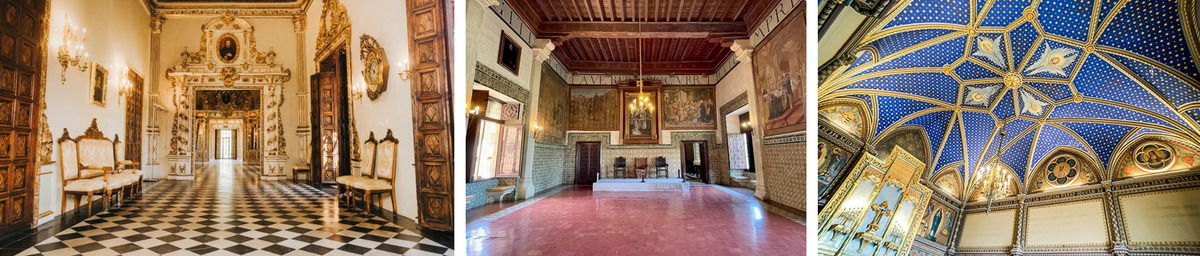
Inside the palace you can see ceremonial halls, antique furniture, frescoes, tapestries, and collections of artworks. Special attention is drawn to the so-called “Golden Hall” (Salón Dorado) with its richly decorated ceiling — one of the most impressive interiors of the palace.
The palace is also connected with the life of Saint Francis Borgia — the great-grandson of Pope Alexander VI. He was born here and later became the Superior General of the Jesuit order and was eventually canonized by the Catholic Church.
Today Palacio Ducal de Gandía is open to visitors and is considered one of the main tourist attractions of the region. The entrance fee is about €8. It is advisable to buy tickets in advance.
After visiting the palace, it is worth continuing your walk through the historic center — very close by there is another interesting place that helps to better understand the history of the region: the archaeological museum of Gandia.
MAGa Archaeological Museum
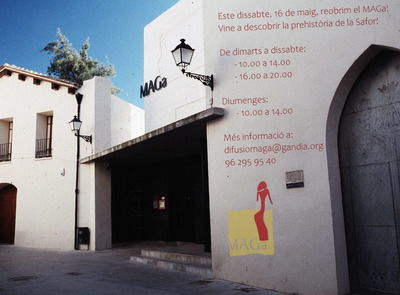
The Archaeological Museum of Gandia (MAGa — Museo Arqueológico de Gandía) is one of the best places to discover the ancient history of the region. The museum was founded in 1972 and is located in the historic building of the former medieval hospital Sant Marc, which itself is an interesting architectural monument.
The museum’s exhibitions tell the story of the thousand-year history of this area — from prehistoric times to the era of the Roman Empire. In the surroundings of Gandia, archaeologists have discovered numerous traces of ancient settlements, including prehistoric human camps and Iberian settlements that existed here long before the arrival of the Romans.
In the museum halls you can see archaeological finds, ancient tools, ceramics, jewelry, and everyday objects that help illustrate how people lived in this territory thousands of years ago.
In addition to the permanent exhibition, the museum regularly hosts temporary exhibitions, lectures, and cultural events, so even local residents often return here again.
Fallas Museum (Museu Faller)

The Fallas Museum (Museu Faller de Gandía) is dedicated to one of the most colorful and unusual celebrations of the Valencia region — the famous Las Fallas festival. Every year in March, the streets of cities are filled with huge papier-mâché figures created by artists and later ceremonially burned during the festival celebrations.
In the museum you can see the so-called ninots indultats — figures that were saved from the fire. Each year one of them, chosen by residents and a jury, is preserved and added to the museum collection. Thanks to this tradition, visitors can trace how the style and themes of the figures have changed over the decades.
The museum exhibition tells not only about the festival itself, but also about its traditions, costumes, music, and history. Many exhibits are dedicated to local fallas — neighborhood communities that create their own compositions every year and participate in festive parades.
Even if you visit Gandia outside the festival season, the museum allows you to feel the atmosphere of this amazing celebration and understand how important it is to the culture of the region.
Walking Areas in Gandia
After exploring the historic center, you can continue your walk through the more modern and lively districts of the city. Gandia has several pleasant pedestrian areas where locals enjoy strolling, relaxing in cafés, and spending evenings outdoors.
One of the most popular places is the wide green boulevard Paseo de las Germanías — a true walking artery of the city.
Paseo de las Germanías
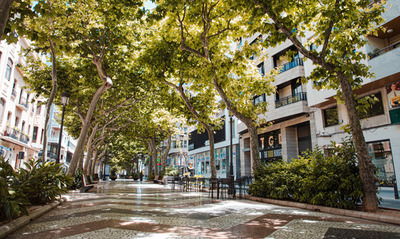
Paseo de las Germanías is the main promenade boulevard of Gandia and one of the most pleasant places for a leisurely walk through the city. The wide avenue with tall trees, fountains, and cozy cafés stretches across the central part of the city and serves as a kind of “green artery” of Gandia.
The boulevard received its name in honor of the historical uprising of craftsmen and townspeople — Germanías, which took place in the Valencia region at the beginning of the 16th century. Today, however, Paseo de las Germanías is associated more with relaxation and urban life: cultural institutions, theatres, shops, and many places where you can take a break during a walk are located here.
During the day it is pleasant to walk along the boulevard in the shade of the trees, and in the evening it comes alive — locals gather on café terraces, street musicians perform, and city events and concerts sometimes take place in the squares.
If you are walking here on a Saturday, you can reach the local market. By the way, Valencia’s markets are considered among the best in the region, and at such a market you can taste local products and experience the true atmosphere of a Spanish city.
Not far from here there is another interesting cultural place in Gandia — the historic Serrano Theatre.
Serrano Theatre
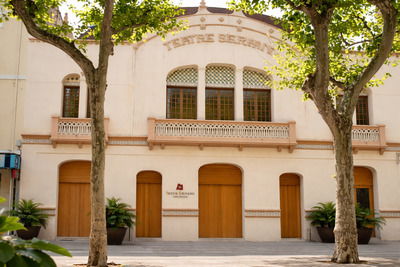
Teatro Serrano is the main historic theatre of Gandia and an important cultural center of the city. It was built in the early 20th century and named after the famous Spanish composer José Serrano, the author of well-known zarzuelas and popular music of his time.
The theatre building is designed in the Valencian modernist style and stands out with its elegant façade and beautiful architectural details. Inside there is a cozy auditorium where theatrical performances, concerts, film screenings, and various cultural events take place.
Today Teatro Serrano remains one of the main cultural spaces of the city. Festivals, performances by local and visiting artists, and screenings of independent films are regularly held here.
After walking along the central streets and boulevards, you can go a little further from the center to see another interesting historical site of Gandia — the ruins of the medieval Bairén Castle, from where beautiful views of the city and the coastline open up.
Bairén Castle (Castillo de Bairén)
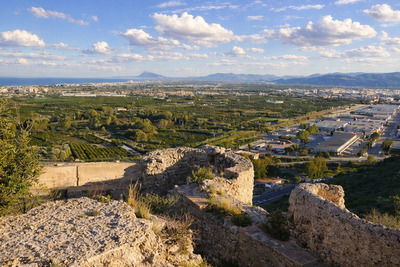
Bairén Castle (Castillo de Bairén) is one of the most picturesque historical sites in Gandia. The ruins of the fortress are located on a hill not far from the city, and from here you can enjoy some of the best panoramic views of Gandia, orange groves, and the Mediterranean coastline.
The fortress was built during the period of Muslim rule on the Iberian Peninsula and played an important strategic role. The castle controlled the coastal plain and the region’s trade routes. After the Christian conquest in the 13th century, the fortress continued to be used, but over time it lost its military importance and gradually turned into ruins.
Today only fragments of the walls and fortifications remain, but the place still attracts lovers of history and beautiful landscapes. It is worth climbing here at least for the panorama: from the top of the hill you can clearly see the city, the surrounding valleys, and the blue line of the sea.
Bairén Castle is located just a few kilometers from the center of Gandia, so many travelers come here by car or hike up along one of the trails. It is an excellent place for a short walk, photographs, and a peaceful break away from the city bustle.
After historical landmarks and panoramic views, it is time to head to the sea — because Gandia is famous for its long sandy beaches.
Beaches of Gandia
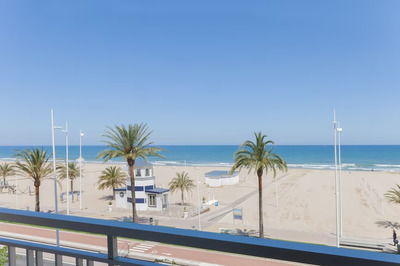
The beaches of Gandia are considered among the best on the Valencia coast and attract thousands of tourists every year. The main city beach — Playa de Gandía — stretches for several kilometers along the coast and is known for its wide golden sand, gentle entrance into the sea, and clean water. Thanks to these conditions, it is perfect for families with children and relaxed swimming.
Many sections of the beach regularly receive the prestigious Blue Flag award, which is granted for water cleanliness, safety, and a high level of infrastructure. Everything needed for a comfortable holiday can be found here: sun loungers, showers, sports areas, water sports schools, and numerous beach bars.
If you prefer a calmer and more natural atmosphere, it is worth heading a little further north — to Playa de l’Ahuir. This part of the coastline is known for its natural dunes and untouched landscape. There is less tourist infrastructure here, but you can see one of the most beautiful and quiet natural coastal landscapes.
Along the main city beach runs the long seaside promenade Paseo Marítimo Neptuno — one of the most pleasant places for evening walks. On one side there are views of the sea and sandy dunes, and on the other side there are restaurants, cafés, and small shops. In summer it becomes especially lively: people walk, listen to music, dine on terraces, and enjoy the sea breeze.
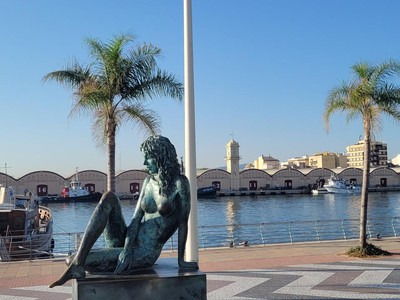
Along the seafront there are many restaurants and cafés where you can try dishes of traditional Valencian cuisine.
Rice and seafood dishes are especially popular — for example paella or the famous fideuà, which is believed to have originated in Gandia. You can learn more about local dishes in the article about traditional food in Valencia.
Marjal de Gandia — a natural park near the city
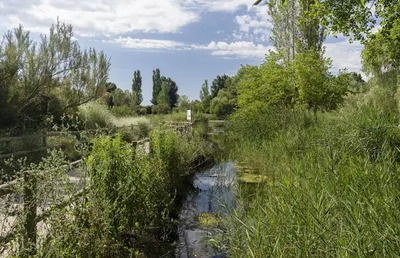
If after exploring the historic center and relaxing on the beach you still have some time left, you can head to the natural area of Marjal de Gandia. This small park is located between the city and the sea and represents a typical natural landscape of the Valencia coast with wetlands, canals, and dense vegetation.
Such territories were once widespread along the entire coastline, but today many of them have disappeared due to urban development. Marjal de Gandia is one of the places where the natural ecosystem of the region has been preserved.
It is pleasant to walk along wooden paths and trails here, observe birds, take nature photos, or simply relax away from the bustle of the city. In the park you can see ducks, herons, and other water birds, while reeds and other plants typical of Mediterranean wetlands grow around.
Marjal de Gandia is especially popular with lovers of peaceful walks, cycling, and nature observation. It is a quiet place where you can finish a busy day in Gandia and discover another side of this resort city — more natural and unhurried.
Useful Information for Your Trip
Gandia is quite a compact city, so many attractions can be visited during a single walk. The historic center is located about 3 kilometers from the beach, so tourists often combine a walk through the old town with relaxing by the sea.
Best time to visit. Gandia can be visited all year round, but the most comfortable weather is usually in spring and early autumn. In May, June, September, and October the temperatures are pleasant and there are fewer tourists than in the peak summer season.
How much time you need. The main attractions of the historic center can easily be explored in a few hours. Many travelers come here for a day trip from Valencia and then spend the rest of the time on the beach or the promenade.
How to get to Gandia. The city is located about 70 kilometers south of Valencia. The most convenient way to get here by public transport is the Cercanías commuter train (line C1), which departs from Valencia Nord station. The trip takes about an hour. Buses also run between the cities, and by car the journey usually takes about 50–60 minutes.
Getting around the city. The historic center is easy to explore on foot — most interesting places are located close to each other. The beach can be reached by bus, car, or bicycle. In summer public transport runs between the city center and the beach.
The atmosphere of the city. Despite the popularity of its beaches, Gandia remains a fairly authentic Spanish city with a rich history and traditions. Here it is easy to combine walks through medieval streets, relaxation by the sea, and discovering local cuisine.
Where to Park in Gandia
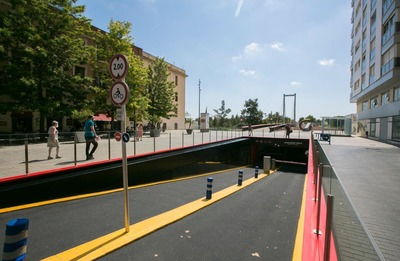
If you arrived in Gandia by car or plan to travel around the region by car, it is most convenient to leave it near the historic center. From here you can easily walk to most of the city’s attractions. If necessary, a car can be rented in advance, for example using the car rental service in Valencia.
There are several covered municipal parking garages in the center. The most convenient are Parking del Centre Històric and Parking del Prado Gandía. They are located close to the old town and are suitable for those planning to explore the historic part of Gandia.
In the area of the Paseo de las Germanías boulevard there are also street parking spaces belonging to the so-called blue zone (Zona Azul). This is paid parking with time limits that usually operates during daytime hours.
If you are looking for free parking near the center, you can leave your car near the shopping complex Centro Comercial Plaza Mayor. There is a spacious parking lot where it is usually easy to find a free space.
From the shopping center to the historic center of Gandia it is about a 15–20 minute walk, so many travelers choose this option to explore the city without searching for parking in the center.
What to See Near Gandia
Gandia is conveniently located on the Valencia coast, so from here it is easy to take short trips to other interesting cities in the region.
- Attractions of Valencia — the main places of the third largest city in Spain.
- City of Arts and Sciences in Valencia — a futuristic architectural complex and one of the most famous symbols of the city.
- Attractions near Valencia — interesting places and cities that can be visited during a trip around the region.
- What to see in Oliva — a cozy town near Gandia with a beautiful historic center and beaches.
- What to see in Cullera — a picturesque resort town with a castle, promenade, and excellent beaches.
- Amusement parks in Valencia — family entertainment and theme parks of the region, including Gandilandia.

 English
  Español
  Русский