
Badalona is a cosy seaside city near Barcelona that combines ancient Roman history, an atmospheric old town, and a beautiful waterfront. Here you can see archaeological monuments, walk through the historic centre, and enjoy views of the Mediterranean Sea.
In this article, you will learn what to see in Badalona in one day, which attractions are worth visiting first, and where it is convenient to park to start your route around the city.
Badalona Attractions — Walking Route
Below is a convenient route through the main attractions of Badalona, which passes through the city's key locations. By following this order of visits, you will be able to explore the historic centre, museums, and waterfront at a relaxed pace in just one day.
- Historic Centre (Dalt de la Vila)
- Iglesia de Santa María
- Plaza de la Constitución
- Museo de Badalona
- Plaza de la Vila
- Carrer del Mar
- La Rambla de Badalona
- Fábrica de Anís del Mono
- Pont del Petroli
Additional information for trip planning:
Most of the popular attractions in Badalona are located close to each other, so it is convenient to start exploring the city from the historic centre. The walk then continues through the old quarter, includes a visit to the museum, and gradually leads to the sea, where the famous waterfront and Pont del Petroli are located. Below is a detailed description of all the places worth visiting during this walk.
Historic Centre (Dalt de la Vila)
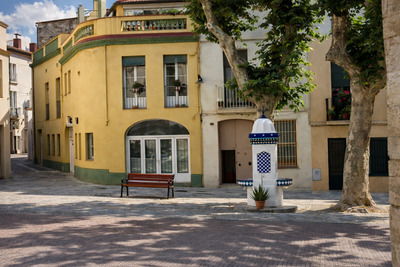
The old town, or the historic and cultural centre of Badalona (also known as Dalt de la Vila), is a charming and quite atmospheric area, perfectly suited for leisurely walks and getting acquainted with the city's history.
It is located on a small hill and partially preserves the layout of the ancient Roman city of Baetulo, founded here more than two thousand years ago.
Here you can enjoy medieval streets and cosy squares, as well as visit several interesting places located close to each other:
Santa María Church - Iglesia de Santa María
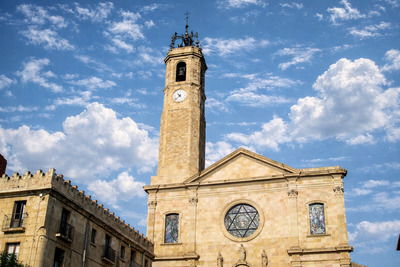
The parish church of Santa María is located in the very centre of the Dalt de la Vila district and is considered one of the most recognizable historic buildings in the old town.
It was built in the 18th century and for a long time remained the only church in Badalona — until 1868, when the city began to expand rapidly.
The building is designed in the neoclassical style and features restrained yet harmonious architecture. The church has a single nave with a semicircular apse and side chapels, and its façade fits organically into the atmosphere of the narrow streets of the historic centre.
Inside, you can see the bell tower decorated with crosses and figures of angels, as well as an old organ. The atmosphere inside the church is calm and slightly solemn, especially in the morning hours when soft light enters through the tall windows.
If the church is open, it is worth stepping inside for at least a few minutes — the interior is well preserved and allows you to feel the atmosphere of old Badalona.
The small square in front of the church is one of the coziest places in the old town, where it is pleasant to make a short stop during your walk. Taking a few steps further along the narrow streets, you will reach the next important point of the historic centre — Constitution Square.
Constitution Square - Plaza de la Constitución
Near the church is Constitution Square — one of the historically significant places in Badalona. At first glance, it may seem rather modest and unremarkable, but it was here that important events in the development of the city took place.
In the past, the first town hall was located on this square, remaining here until 1876. It was from this place that the city's administration began and its civic life was formed.
In the 18th century, the Old Tower (Torre Vella) was built on the square, and it has survived to the present day. Today, the School of Culture is located within its walls, and the tower itself remains one of the oldest buildings in the historic centre.
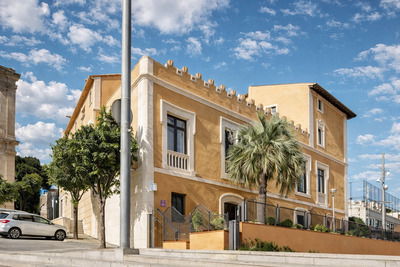
In 1967, a round tower was added next to the old tower, and during construction work, remains of the ancient Roman settlement of Baetulo, which existed here more than two thousand years ago, were discovered.
Among the archaeological finds, the mosaic depicting dolphins and the marble sculpture of the Venus of Badalona are particularly well known. Today, these artifacts can be seen in the city museum, which is located very close by and will be the next stop on our walk.
Badalona Museum - Museo de Badalona
Many remarkable remains of the ancient Roman city of Baetulo have been preserved in Badalona, including the House of the Dolphins, the garden of Quintus Licinius, the House of Eurus, an aqueduct, and the foundation of a Roman theatre. These discoveries help to imagine what the city looked like more than two thousand years ago.
However, the most impressive archaeological sites are located beneath the museum building. In its underground section, you can see the remains of ancient Roman baths and a section of the Decumanus Maximus — the main street of Baetulo, which is considered one of the most significant archaeological monuments of the Roman era in Catalonia.
Walking through the underground galleries of the museum, it is easy to imagine the daily life of the ancient city: the noise of markets, movement along the streets, and the work of craftsmen. This part of the museum usually leaves the strongest impression on visitors.
There is also a permanent exhibition displaying artifacts from Roman Baetulo, including the famous Venus of Badalona found in the Old Tower, elements of the city gates, and a tabula hospitalis — a bronze tablet associated with Roman traditions of hospitality.
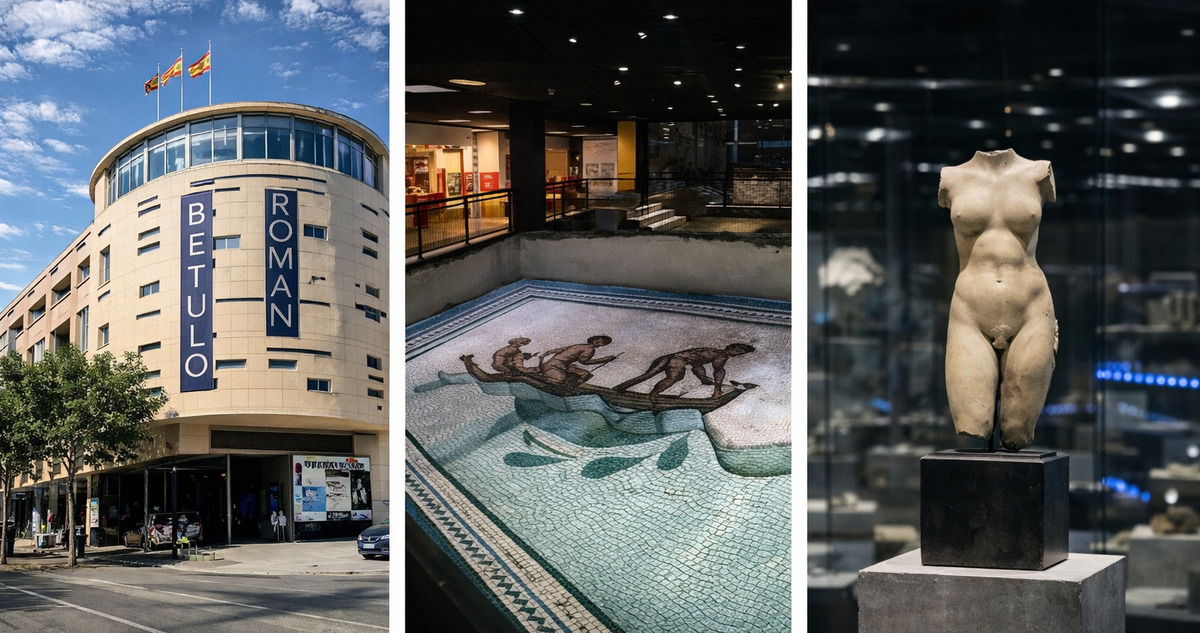
Visiting the museum is especially recommended for those who want to gain a deeper understanding of the Roman heritage of Catalonia and see real archaeological excavations in their natural setting.
The museum offers various tours and themed routes that allow visitors to learn not only about the archaeological heritage but also about the history of the city's development. In addition to the main building, you can also see other sites related to ancient Baetulo.
For example, outside the city centre there is the Iberian settlement of Turó d'en Boscà, and in different districts of Badalona, buildings from the Modernisme and industrialization periods have been preserved.
A visit to the museum allows you to literally touch the past and feel what everyday life in a Roman city looked like. This is one of the most interesting places on the entire walk through Badalona.
Plaza de la Vila Square
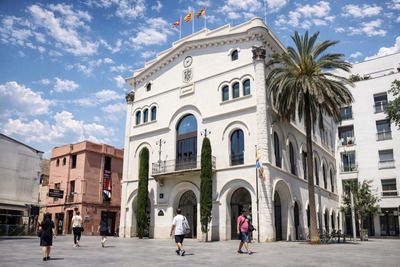
After visiting the museum, the walk continues to Plaza de la Vila — one of the liveliest and most recognizable places in Badalona.
The current town hall (Ayuntamiento) is located here, and the square itself is considered the centre of city life. It is here that the most important festivals, community gatherings, and ceremonial events take place.
For example, the carnival is held on this square, festive decorations are installed, and a large Christmas tree is placed before Christmas. On such days, the square fills with music, lights, and a true festive atmosphere.
Even on ordinary days, it is pleasant to stop here for a few minutes, take a look at the town hall building, and observe everyday city life. The square often becomes the starting point for walks along the central streets of Badalona.
From Plaza de la Vila begins the popular shopping street Carrer del Mar, which leads directly to the sea and is considered one of the most famous pedestrian streets in the city.
Carrer del Mar
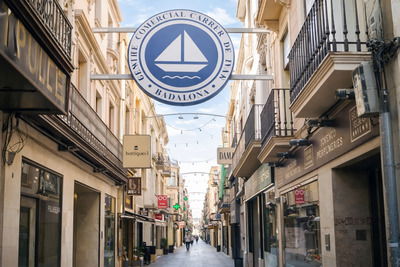
Carrer del Mar is one of the most famous and lively pedestrian streets in Badalona. Residents of nearby districts often come here to take a walk, meet friends, or do some shopping.
The street is always full of people: some leisurely browse shop windows, others visit small boutiques, or take a break in one of the cafés. On Carrer del Mar, you can find both well-known international brands and affordable clothing, making it popular among both locals and visitors.
Pay attention to the architecture of the buildings along the street as well. Among them are interesting historic houses, such as Casa Clarós and Casa Miquel Badia, which give this part of the city a special character.
A walk along Carrer del Mar gradually leads to the sea — the street stretches directly to the La Rambla promenade. As you move forward, the scent of the sea becomes more noticeable, and the open space of the waterfront begins to appear ahead, where this part of the walk usually ends.
La Rambla in Badalona
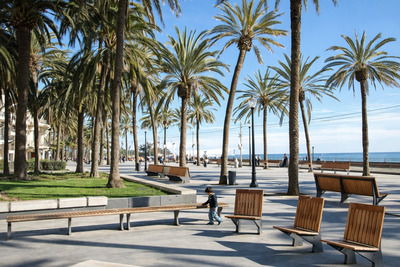
La Rambla is one of the most popular places for walking in Badalona, where locals spend their free time and tourists truly experience the city's seaside atmosphere.
Of course, the name La Rambla immediately brings to mind La Rambla in Barcelona, but the Badalona Rambla has its own unique character. It is a long promenade along a wide sandy beach, lined with palm trees, cosy benches, and numerous restaurants offering Catalan food as well as bars with open terraces.
It is pleasant to simply stroll along the sea, stop for a cup of coffee, or have dinner with a view of the water. During the warm season, the promenade is always lively: children play on playgrounds, cyclists and runners move along the shore, and in the evenings people come here to watch the sunset.
La Rambla is considered the true centre of the city's social life and one of the main attractions of Badalona. From here, it is convenient to continue the walk along the coastline to the next interesting places — the Anís del Mono factory and the famous Pont del Petroli.
Anise Liqueur Factory - Fábrica de Anís del Mono
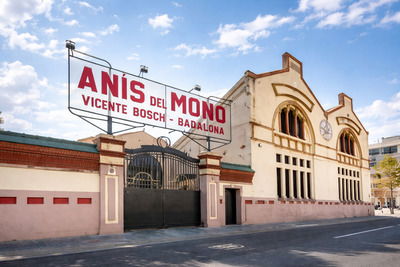
The Anís del Mono factory is one of the most famous historic enterprises in Badalona, producing the well-known anise liqueur for more than 130 years, easily recognizable by its distinctive embossed glass bottle.
Today, the factory periodically opens its doors for guided tours, allowing visitors to look inside the production facilities and learn how this traditional drink is made. To participate, it is necessary to book in advance through the Badalona Museum.
During the tour, you can see original equipment used for anise distillation, some of which has been in operation for more than a century. Of particular interest are the administrative rooms decorated with furniture and décor in the Modernisme style, where historical company documentation has been preserved.
In one of the halls, there is a poster by artist Ramon Casas connected to the first advertising poster competition in Spain — a rare example of how industry and art intersect in the city's history.
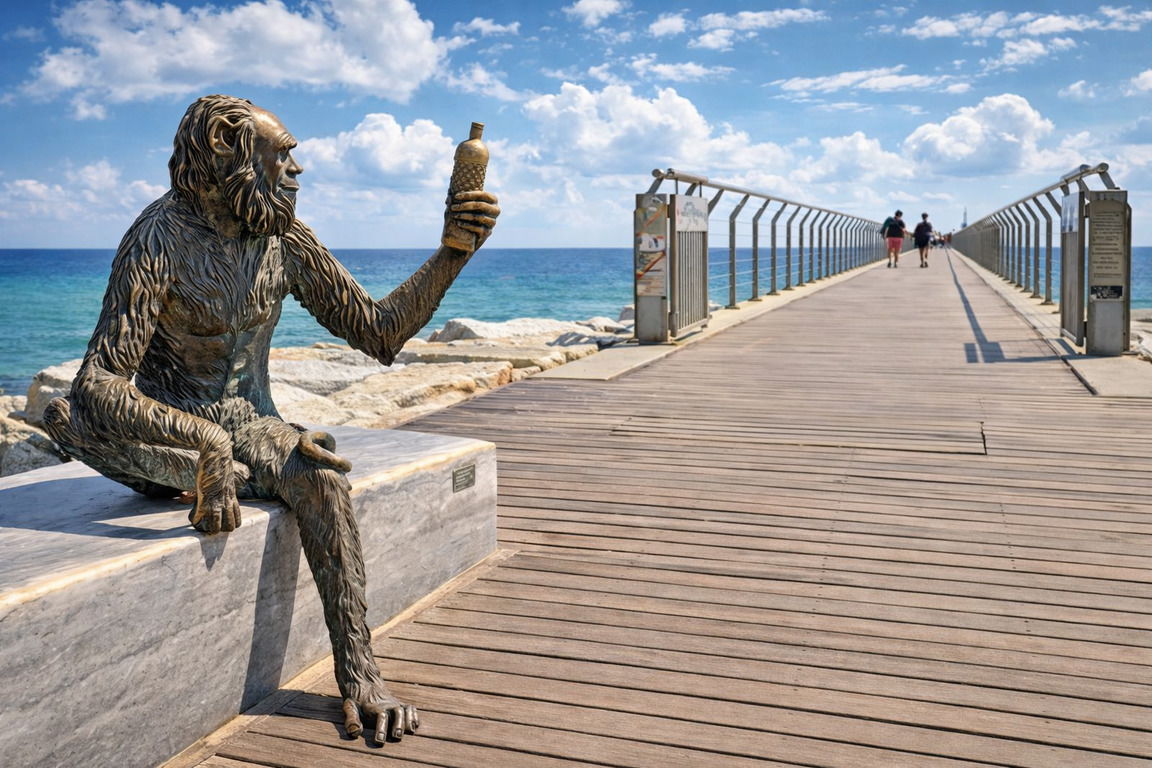
The Modernist complex was built in 1870 by order of entrepreneur Vicenç Bosch and his brother. An interesting legend is associated with the name of the liqueur: it is believed that the brand's symbol became a monkey brought from America on one of the family's ships. It inspired the creation of the unusual logo, which today is known far beyond Spain.
This symbol — a bronze monkey statue — can be seen nearby on the seafront. It has become one of the most recognizable figures along the waterfront and a popular spot for photographs.
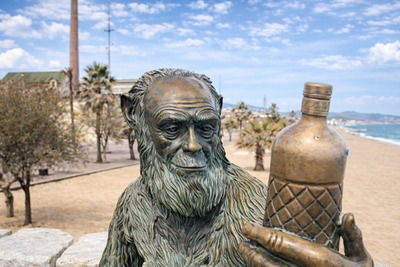
After visiting the factory and the statue, it is convenient to continue the walk along the coastline to the next iconic landmark — Pont del Petroli, one of the most famous symbols of Badalona.
Pont del Petroli
Pont del Petroli is one of the most recognizable symbols of Badalona and the final point of the coastal walk. This place is known for its panoramic views of the sea and the city and is considered one of the best locations for watching sunrises and sunsets.
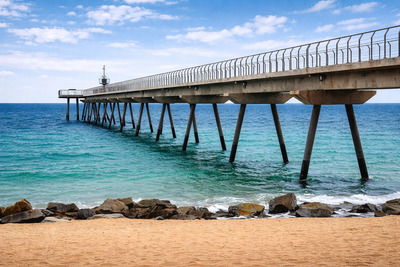
The bridge was built in 1965 and was originally used for unloading petroleum products from tankers. Its length is about 235 meters, and at the end there is an observation platform that once served as a working area and later became a popular place for walking and taking photos.
After industrial use ended, the bridge could have been dismantled, but thanks to the efforts of local resident Josep Valls and strong support from citizens, it was preserved. In memory of the person who managed to save this structure, a memorial plaque was installed at the entrance to the bridge.
Over the years, Pont del Petroli has been repeatedly damaged by strong storms, especially Storm Gloria in 2020, which seriously affected its structure. Currently, the bridge remains closed to visitors, but large-scale restoration work is underway. According to official plans, the renovated Pont del Petroli is expected to reopen to visitors in autumn 2026.
Despite the closure, this place remains popular among locals and tourists. Beautiful views of the bridge, sea, and coastline open from the waterfront, and photographers and lovers of seascapes can often be seen nearby.
Pont del Petroli is also frequently used as a filming location for commercials and music videos. Brands such as Apple and Huawei have chosen it, and Spanish singer Ana Mena filmed one of her music videos here.
Useful Information for Visiting Badalona
When Is the Best Time to Visit Badalona
The best time for walking around Badalona is spring and autumn, when temperatures are comfortable and there is no intense heat. In summer, the city is especially attractive thanks to its beaches and waterfront, although it can be hot in the middle of the day. In winter, Badalona is suitable for relaxed walks through the historic centre without large crowds of tourists.
How Much Time Is Needed to Explore Badalona
One day is usually enough to explore the main attractions of Badalona. During this time, you can walk through the historic centre, visit the Badalona Museum, and stroll along the waterfront to Pont del Petroli.
How to Get to Badalona
Badalona is easy to reach from Barcelona by metro, train, or bus. The fastest option is metro line L2, which runs through the city centre and connects Badalona with Barcelona. You can also use Rodalies commuter trains, which stop at Badalona station.
Car Rental in Badalona
If you plan to visit not only Badalona but also other cities near Barcelona, renting a car can be a convenient solution. By car, it is easy to combine a walk around Badalona with trips to Sitges, Montserrat, or other interesting places in Catalonia.
Most often, cars are rented in Barcelona, for example at the airport or in the city centre, and then visitors travel to Badalona for a day trip. This option allows for flexible route planning and independence from public transport schedules.
More information about car rental options can be found here: Car Rental in Barcelona.
Where to Park in Badalona
Both paid and free parking options are available in the centre of Badalona. A convenient option is parking at the Màgic Badalona shopping centre, where secure parking spaces are available.
You can also use the parking area near the railway station — it is located close to the historic centre and is suitable as a starting point for your walk.
Free parking spaces can be found in the Montigalà area and near shopping centres. On weekdays, it is usually easy to find available spaces there.
Beaches of Badalona
Badalona is known for its long sandy beaches, considered among the most peaceful and spacious near Barcelona. Several equipped beaches with showers, walking areas, and cafés are located along the waterfront.
The beaches are suitable both for relaxing and for walking along the sea. During the warm season, you can often see locals exercising, playing volleyball, or simply relaxing by the water.
If you still have time after walking around the city, it is worth setting aside at least 20–30 minutes to stroll along the shore and enjoy the seaside atmosphere of Badalona.
Is It Worth Visiting Badalona
Badalona is an excellent destination for a day trip from Barcelona. The city combines historical landmarks, an atmospheric old centre, and a beautiful seaside promenade.
Compared to Barcelona, there are fewer tourists here, making the walk more relaxed and comfortable. Badalona is suitable for those who want to see Roman heritage, walk by the sea, and experience life in a Catalan city.
What to See in Badalona with Children
Badalona is suitable for walks with children thanks to its spacious waterfront, beaches, and pedestrian streets. Children usually especially enjoy walking along the sea and visiting the Anís del Mono monkey statue, which is considered one of the most recognizable figures in the city.
There are playgrounds and rest areas along the waterfront where you can take a break during your walk. Children may also find it interesting to visit the Badalona Museum, where they can see real archaeological finds and remains of the ancient Roman city.
Where to Eat in Badalona
Along the La Rambla waterfront, there are many restaurants and cafés where you can try local cuisine and seafood. Many establishments offer terraces with sea views, making lunch or dinner especially enjoyable.
You can also find small cafés and bars on Carrer del Mar and near Plaza de la Vila. These are convenient places to stop during your walk and try traditional Catalan dishes.
Useful Tips for Tourists
The best time for walking around Badalona is morning or evening, especially during the summer months when it can be hot during the day. Comfortable shoes will help you complete the entire route easily, as some streets are paved with stone.
If you plan to walk along the waterfront, it is advisable to bring water and sun protection. On hot days, it is especially pleasant to stop at one of the seaside cafés or rest on a bench in the shade of palm trees.
What to See Near Badalona
If you have more time to travel around Catalonia, it is worth paying attention to other interesting places near Badalona and Barcelona.
- Barcelona: attractions and city route — a detailed route through the main sights of the capital of Catalonia.
- Attractions of Montjuïc Hill in Barcelona — museums, viewpoints, and historic sites on one of the city's most famous hills.
- Tibidabo Hill in Barcelona — panoramic city views and the famous Temple of the Sacred Heart.
- 8 best food markets in Barcelona — where to experience local products and the atmosphere of Catalan cuisine.
- Street markets in Barcelona by days of the week — market schedules, including information about markets in Badalona.
- Best amusement parks and family activities in Barcelona and nearby — a great option for traveling with children.
- 7 best water parks near Barcelona — ideas for active summer recreation.
- Montserrat: mountain and monastery in Spain — one of the most famous places in Catalonia with unique landscapes.
- What to See in Sitges — a popular resort town with beautiful architecture and beaches.

 English
  Español
  Русский