
Barcelona is a city known around the world and a favourite destination for sightseeing, attracting millions of tourists every year. People come here for the famous Sagrada Família, Gaudí's unique architecture, medieval neighbourhoods, the Mediterranean Sea, and an unmistakable atmosphere unlike any other city.
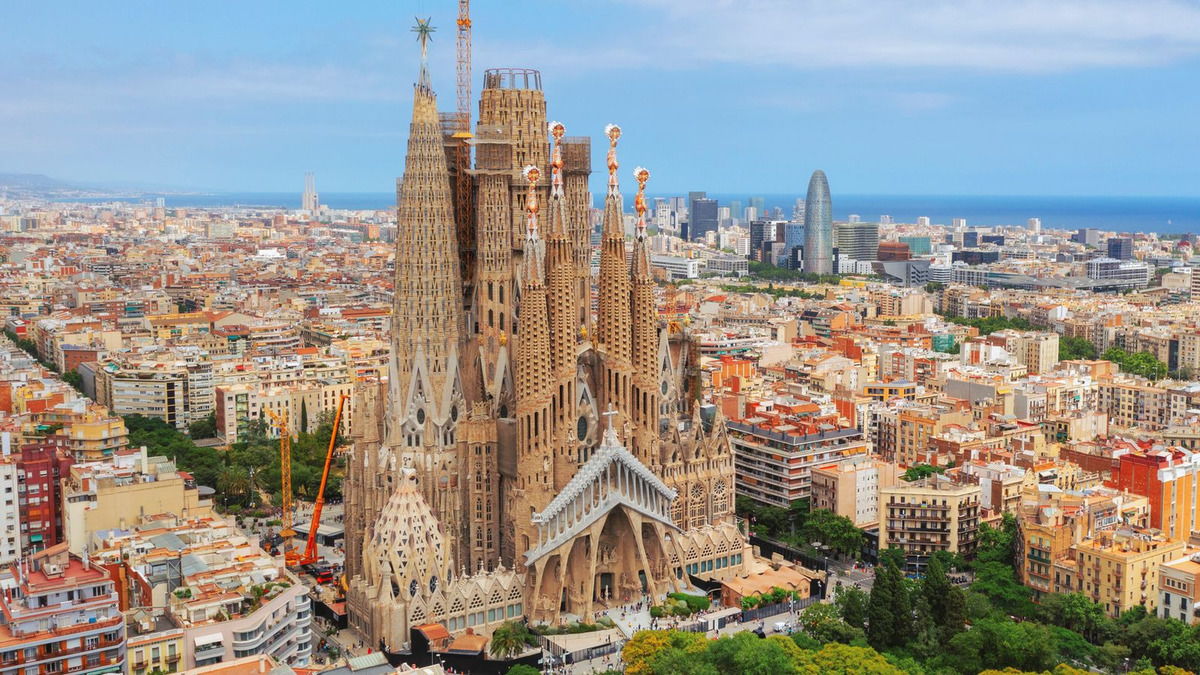
But Barcelona is much more diverse than its familiar tourist image. There are dozens of interesting places to discover — from Gaudí's famous works and the historic centre to markets, parks, the seafront and panoramic viewpoints.
What to see in Barcelona
- Sagrada Familia
- Passeig de Gràcia
- Casa Batlló
- Casa Milà — La Pedrera
- Park Güell
- Gothic Quarter
- La Rambla
- La Boqueria Market
- Barceloneta and the seafront
Sagrada Familia
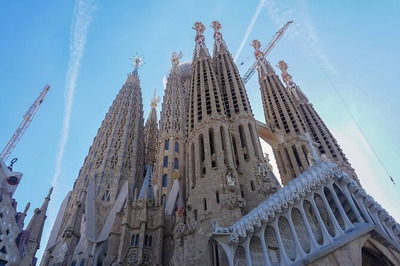
Sagrada Família is the main symbol of Barcelona and one of the world's most famous architectural landmarks. Antoni Gaudí's extraordinary church has long been part of the city's landscape, and for many tourists, discovering Barcelona begins right here.
Construction of the Sagrada Família began in 1882, based on a design by the architect Francisco de Paula del Villar. Just a year later, Antoni Gaudí took over the project and completely changed the original design. The architect devoted a significant part of his life to the project, but he never lived to see it completed.
From the outside, the Sagrada Família immediately attracts attention with its scale and huge number of details. The tall towers can be seen from a long way away, while the façades feature different episodes from biblical history in their sculptures and architectural forms. The contrast between the Nativity Façade and the more austere Passion Façade is particularly striking — you can see this clearly by walking around the church. You could spend hours looking at the many scenes and details, noticing something new each time.
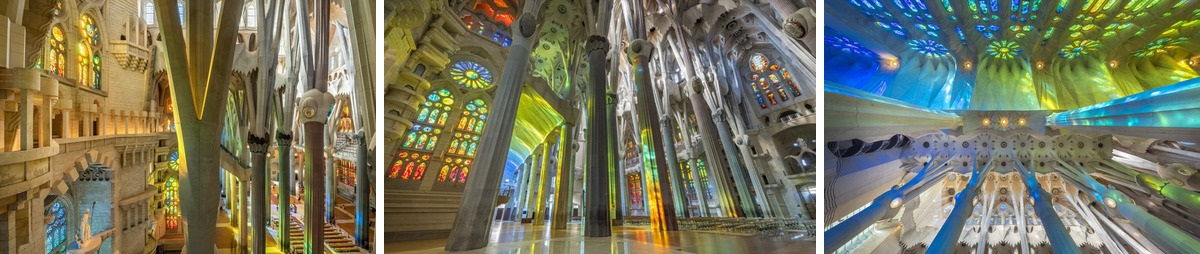
If you wish, you can go inside and see the church from a completely different perspective. The enormous columns resemble tree trunks and seem to transform the space into a stone forest, while the light passing through the colourful stained-glass windows changes the atmosphere of the church throughout the day. It is genuinely worth spending some time here. Even if architecture is not the main interest of your trip, it is easy to spend longer inside the Sagrada Família than you originally planned.
During your visit, you can also see the museum with models and materials related to the history of its construction, and, with the appropriate ticket, climb one of the towers and see Barcelona from above. Visiting the Sagrada Família is not free, with standard tickets starting at around €26–34 depending on the option you choose (tickets that include access to the towers cost more). Before your trip, it is best to check the latest prices and visiting conditions in advance.
Passeig de Gràcia
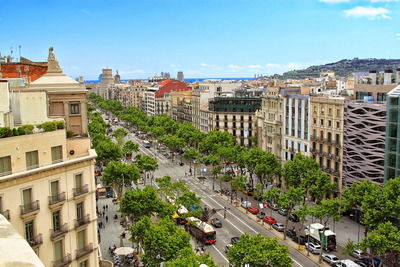
Passeig de Gràcia is one of Barcelona's most famous avenues, where luxury shops and restaurants stand alongside magnificent buildings of Catalan Modernisme. Today, you'll find designer boutiques, restaurants and hotels here, but the avenue is above all interesting for its architecture — as you walk along it, you'll constantly come across unusual buildings and fascinating details.
Once, Passeig de Gràcia connected old Barcelona with the independent town of Gràcia, and by the end of the 19th century it had become a showcase for the wealth of the Catalan bourgeoisie. It was here that wealthy families built luxurious homes, inviting the finest architects of the Modernisme era to design them. Thanks to this, the avenue is now considered one of Barcelona's main architectural streets.
On Passeig de Gràcia, you can see some of the most famous works of Catalan Modernisme. It's particularly enjoyable simply to walk along the avenue and look at the façades, decorative details, unusual balconies and features that are easy to miss if you're in a hurry. Even the paving has its own distinctive design, while the avenue is lined with famous mosaic benches designed by Pere Falqués.
Among the most famous buildings on Passeig de Gràcia are Casa Batlló and Casa Milà (La Pedrera), two celebrated works by Antoni Gaudí located just a few minutes' walk from each other.
Casa Batlló
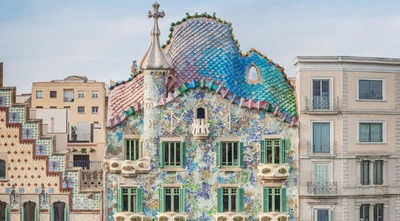
Casa Batlló is one of Antoni Gaudí's most unusual buildings and a true symbol of Catalan Modernisme. Its undulating façade is covered with colourful mosaic, the balconies resemble masks or skulls, and the roof seems to curve over the building like the back of a huge dragon. This is why Casa Batlló is often known as the "House of the Dragon".
It is believed that the image of the dragon is connected with the legend of Saint George, the patron saint of Catalonia. But even without looking for hidden meanings, the façade is worth examining closely: flowing lines, unusual windows, ceramic details and the play of colour make it completely different from the surrounding buildings. Casa Batlló is a particularly good example of how freely Gaudí worked with familiar architectural forms.
The building makes a strong impression even from the outside — you can simply admire it during an ordinary walk along Passeig de Gràcia. But if you wish, you can go inside and see Gaudí's vision continued: there are practically no straight lines, while flowing forms, light wells, stained-glass windows and natural motifs create a sense of living space. Particularly interesting are the main salon, the interior light well, the unusual attic and the famous roof with its fantastical chimneys.
Admission is paid and not cheap — from €29–31. It is, of course, better to buy tickets in advance, especially during the peak tourist season.
Casa Milà — La Pedrera
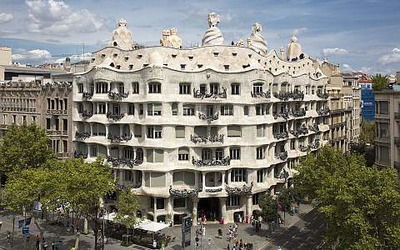
Casa Milà, better known as La Pedrera ("the quarry"), is one of Antoni Gaudí's most unusual works and the architect's last major civil project. Its undulating façade of natural stone is completely unlike a traditional city building, while the wrought-iron balconies and fantastical forms create the impression that the building is moving.
Casa Milà is particularly interesting to look at from the outside: simply walk along the building and you'll notice the unusual shape of the façade and the many details that are easy to miss at first glance. But its main attraction is hidden above — the famous roof with its fantastical chimneys and ventilation towers, which resemble unusual guardians.
If you wish, you can go inside and see just how bold Gaudí's ideas were, not only on the outside but also in the organisation of the building itself. During your visit, you can explore the inner courtyards, see the historic flat and an exhibition dedicated to the architect, and then climb up to the roof. From here, you can enjoy beautiful views of Barcelona, including the Sagrada Família and other buildings in the Eixample.
As with Casa Batlló, the entrance ticket cannot be described as cheap — from €29–31.
Park Güell
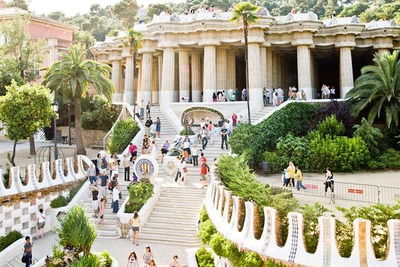
Park Güell is another famous masterpiece by Antoni Gaudí, located on a hill with panoramic views over Barcelona. The park is considered one of the most unusual in Europe for good reason: the natural landscape combines with imaginative architecture and a creative atmosphere, turning a walk through the park into a truly unique experience.
Originally, Gaudí designed a residential development here for wealthy families in Barcelona, but the project was never completed. Today, it is difficult to imagine that anything else could have stood on the site of this unique space covering more than 17 hectares.
As soon as you enter, you'll notice the combination of natural elements and architectural forms. The symbol of the park is the famous mosaic salamander on the main staircase. Further up, you can see 86 columns supporting a large square — the central part of the park with a long, winding bench covered in colourful mosaic. From here, you can enjoy beautiful views over the city.
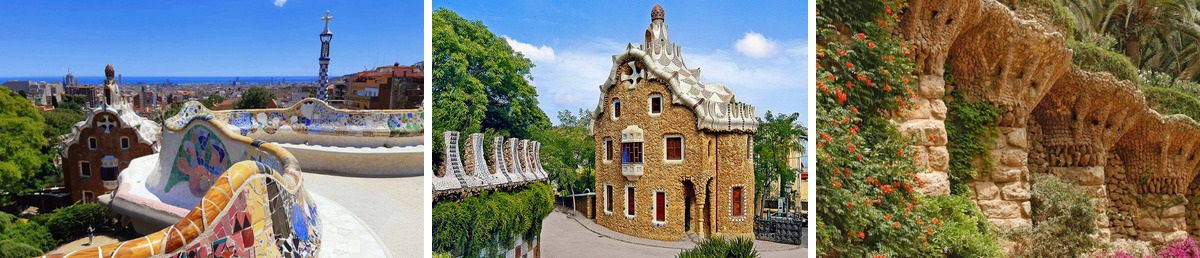
The site is also home to the Antoni Gaudí House Museum, where the architect lived for almost 20 years, from 1906 to 1925. The park used to be open free of charge, but due to the large number of visitors, a paid area was introduced to regulate the flow of tourists, and an entrance ticket now costs around €18–22.
Gothic Quarter
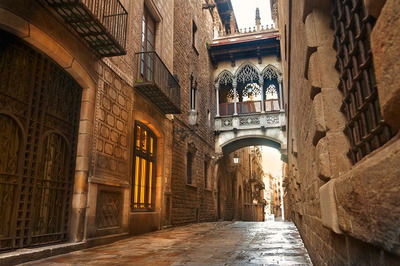
Gothic Quarter is the historic centre of Barcelona, where traces of Roman and medieval history have been preserved alongside modern city life. This is where ancient Barcino, the Roman settlement from which the history of the city began, was located. Today, among historic buildings, old alleyways and squares, you can see remains of the Roman walls, the columns of the Temple of Augustus and medieval palaces.
One of the quarter's main squares is Sant Jaume (Plaça Sant Jaume). In Roman Barcino, the forum was located here, while today the square is the political centre of Catalonia: Barcelona City Hall and the Palau de la Generalitat stand opposite each other. Nearby are the Cathedral, Plaça Reial and the old Jewish quarter of El Call.
At the same time, the Gothic Quarter is worth exploring not only for its famous buildings. If you turn off the main street, you can unexpectedly find yourself in a small square or discover a quiet courtyard. Plaça de Sant Felip Neri near the Cathedral is considered particularly atmospheric — a small corner with a Baroque church, a fountain and traces of the city's distant history.
La Rambla
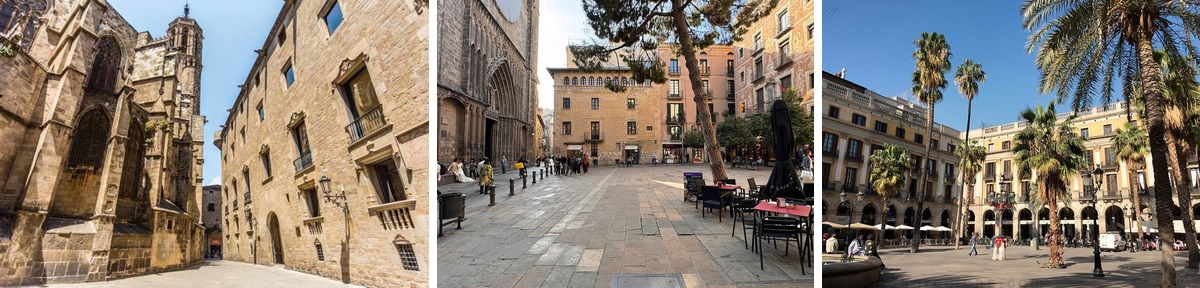
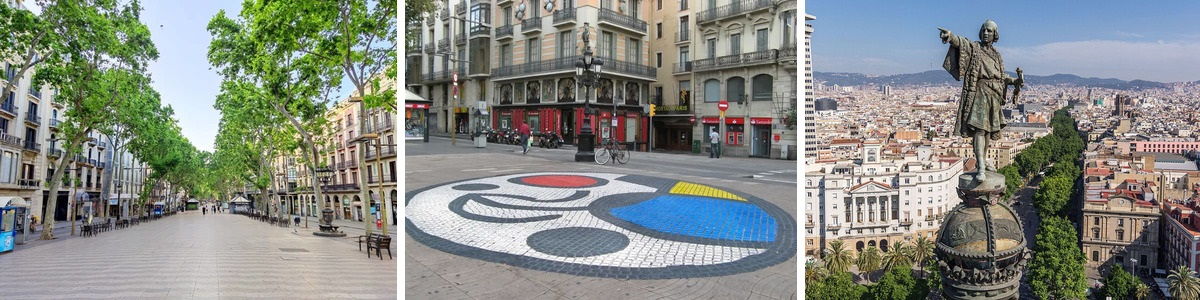
La Rambla is a famous boulevard often referred to as the "heart of the city". It is almost always bustling with life: tourists and locals stroll along, taking photographs of everything around them, street performers entertain passers-by along the boulevard, while flower stalls and numerous cafés line the street.
The boulevard connects Plaça de Catalunya with the old port and runs through the historic part of Barcelona. During a walk along La Rambla, you can visit the famous La Boqueria Market, admire buildings with interesting façades and simply observe the life of the city.
There are usually plenty of people here, sometimes even too many. And yet it is precisely this constant movement and diversity of people that gives La Rambla its distinctive character. On your first trip to Barcelona, it is definitely worth coming here.
La Boqueria Market
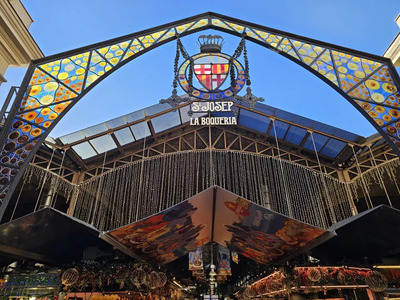
La Boqueria Market is located right on La Rambla and has long been one of Barcelona's best-known food markets. As soon as you enter, you're drawn to the colourful stalls selling fruit, fresh seafood, cured meats and cheeses.
At the market, you can not only buy food but also have a bite to eat on the spot. You'll find freshly squeezed juices, a variety of tapas, jamón and seafood, while in some of the bars you can simply sit down for a few minutes and watch the trading going on around you. It is particularly lively in the first half of the day — this is when people come both to do their shopping and simply to stop by on their way through.
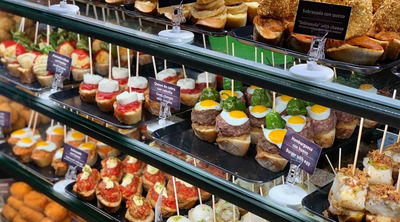
La Boqueria is quite a touristy place, so prices here are not among the cheapest. But it is still worth popping in, even if only for the atmosphere. Even a short stop here fits nicely into a walk along La Rambla — especially if you want to take a break from architecture and see Barcelona from a gastronomic perspective.
Barceloneta and the seafront
Barceloneta is Barcelona's seaside neighbourhood, quite unlike the historic centre. Instead of the narrow streets of the Gothic Quarter, you'll find the sea, a wide beach and a long seafront promenade where it's pleasant simply to walk without any particular destination in mind.
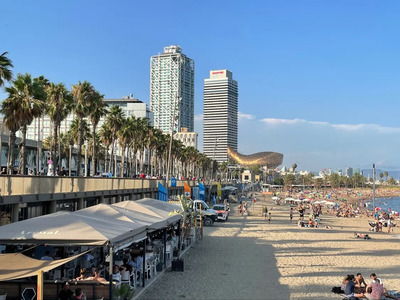
Barceloneta is known for its restaurants and traditional chiringuitos. Here you can try fresh fish and seafood, paella or fideuà. If you fancy a bite to eat after your walk, this is exactly the kind of neighbourhood where finding somewhere suitable is not difficult at all.
It is particularly pleasant here towards the evening: the heat dies down, the seafront comes to life, and the sea and city gradually change their daytime colours for the evening. Even if you don't plan to swim, Barceloneta is well worth taking a short detour to after exploring central Barcelona.
More ideas for walks and things to do in Barcelona
Barcelona doesn't end with its main attractions. If you'd like to see the city from a different perspective, you can head up to Montjuïc, stroll along its famous boulevards, explore the local markets or take a gastronomic break. And if you're travelling with children or looking for entertainment, there are other interesting places that are easy to add to your trip.
- Montjuïc — a large green area with a castle, gardens, museums, Olympic venues and panoramic views of Barcelona.
- La Rambla and Passeig de Gràcia — two famous Barcelona boulevards, each with its own atmosphere, architecture and interesting places to discover along the way.
- Where to eat in Barcelona and what to try — dishes worth trying in Barcelona and the city's best gastronomic areas.
- Barcelona's food markets — a great option if you want to try local produce and tapas and experience authentic city life.
- Barcelona's street markets — flea markets, antique markets and everyday local markets where you can find unusual things and see Barcelona beyond the usual tourist route.
- The best amusement parks and family activities — ideas for family days out and entertainment if you want to take a break between sightseeing trips.
If you'd like to venture outside the city, there are also plenty of interesting places near Barcelona that are perfect for a day trip.
- Tibidabo Mountain — viewpoints, the Temple of the Sacred Heart and an atmospheric amusement park high above the city.
- Water parks near Barcelona — another option for a hot day and a family day out.
- Montserrat — mountain and monastery — one of Catalonia's best-known destinations, with unusual mountain landscapes and panoramic views.
- Sitges — a charming coastal town with beaches, an old town and a relaxed atmosphere.
- Badalona — a less touristy destination very close to Barcelona, where you can combine a walk through the old town with some time by the sea.

 English
  Español
  Русский