
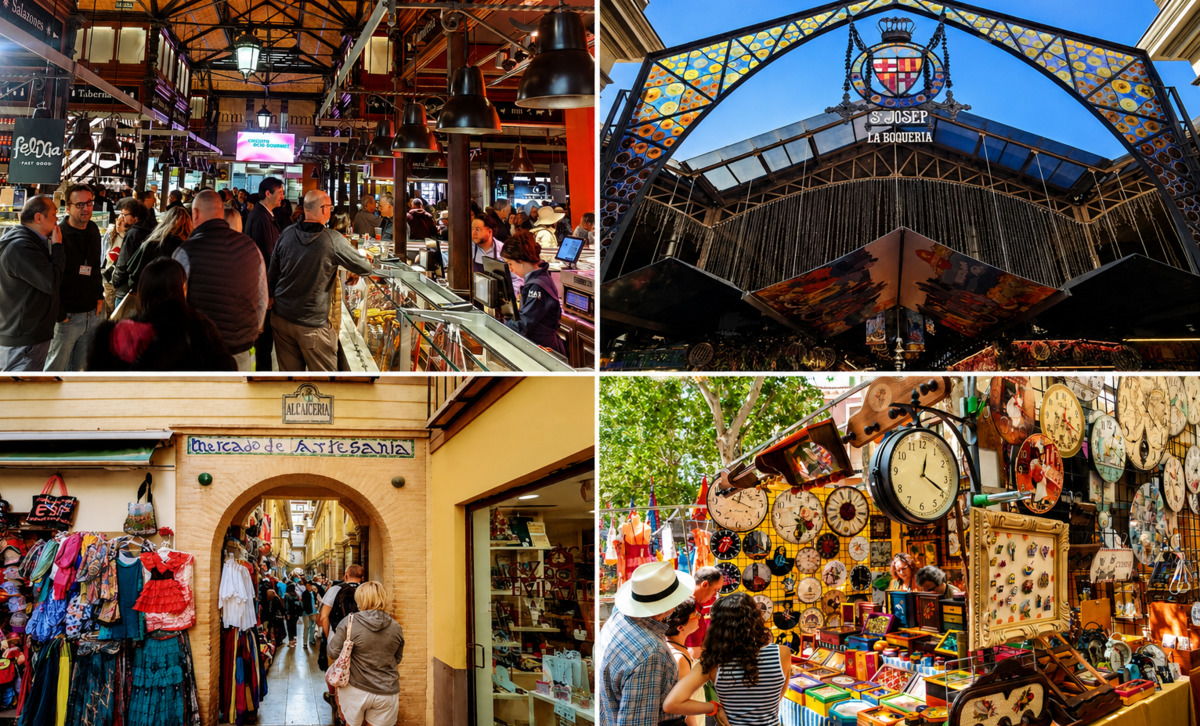
Spain is famous not only for its beaches, architecture and rich history, but also for its unique market culture. Almost every city has market squares, food markets, flea markets or historic trading quarters where commerce has been taking place for centuries.
Markets in Spain are far more than just places to shop. They offer an opportunity to discover local cuisine, experience everyday life in Spanish cities, find unusual souvenirs, antiques and handmade crafts, and gain a much deeper understanding of the region than is often possible in tourist areas.
In this article, we explore some of the most famous markets in Spain — from the legendary food markets of Madrid and Barcelona to historic trading quarters and the country's largest flea markets. Each reflects the character of its region in its own way and offers a different perspective on Spain.
- The Most Famous Food Markets in Spain — legendary markets in Madrid, Barcelona, Valencia, Seville and Málaga, where you can sample local delicacies and discover Spanish cuisine.
- Mercado de San Miguel — Madrid's most famous food market.
- La Boqueria Market — Barcelona's gastronomic icon.
- Valencia Central Market (Mercado Central) — one of the largest food markets in Europe.
- Mercado de Triana — a traditional market in one of Seville's most atmospheric districts.
- Mercado de Atarazanas — Málaga's historic market with authentic Andalusian character.
- Historic Markets in Spain — trading quarters and markets that have preserved the atmosphere of past centuries.
- Alcaicería — Granada's former Arab silk market.
- El Jueves Market — Seville's oldest market with centuries of history.
- The Most Famous Flea Markets in Spain — vintage items, antiques and unique finds.
- El Rastro — Madrid's largest and most famous flea market.
- Els Encants — one of Europe's oldest markets and a symbol of Barcelona.
The Most Famous Food Markets in Spain
Food markets hold a special place in Spanish culture. Many of them began as ordinary produce markets where local residents came to buy fresh vegetables, fish, meat and spices. Over time, some have evolved into true gastronomic centres that attract millions of visitors every year.
Today, these markets offer much more than just food shopping. They provide an opportunity to sample traditional dishes, regional delicacies, seafood, ham, cheeses and wines. They are among the best places to discover just how diverse Spanish cuisine can be from one region of the country to another.
Below are some of the most famous food markets in Spain, which have long become not only places of trade but also important city landmarks.
Mercado de San Miguel — Market in Madrid
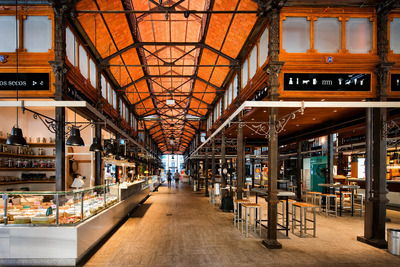
Among the great variety of markets in Spain, Mercado de San Miguel in Madrid undoubtedly deserves special attention.
Located next to Plaza Mayor in the historic centre of the capital, it is considered one of the most famous markets not only in Madrid but in all of Spain. The market’s history dates back to the 19th century, while the current glass-and-iron building was opened in 1916. Today, Mercado de San Miguel remains one of the few historic markets in the city that has preserved its original iron structure.
Over recent decades, the market has undergone a significant transformation, evolving from a traditional food market into a modern gastronomic venue. Around thirty stalls offer visitors the chance to sample ham, seafood, tapas, cheeses, desserts and traditional Spanish drinks. For many visitors to Madrid, a visit to San Miguel serves as a gastronomic introduction to Spain in miniature.
The market's unique atmosphere is particularly noticeable in the evening, when locals and tourists from around the world gather beneath its glass roof. Some come for a glass of wine and a few tapas, while others enjoy a complete culinary experience, moving from stall to stall and sampling a variety of specialities.
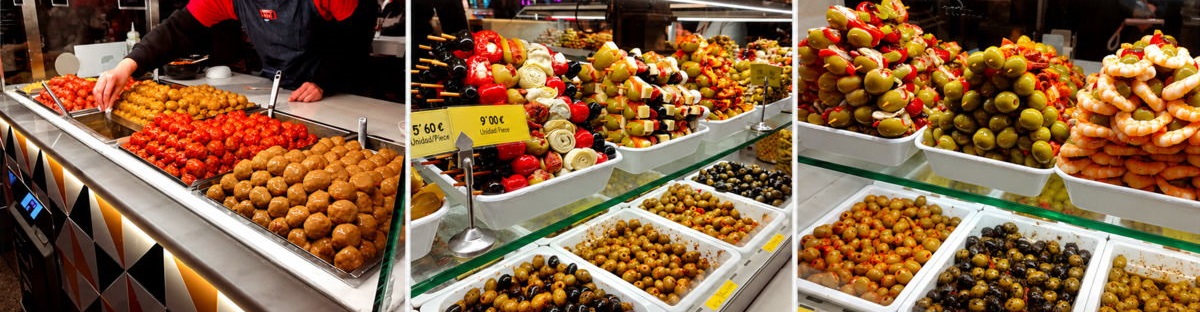
The market is open daily and is almost always busy with visitors. Although local residents can be seen here less frequently than at traditional food markets, San Miguel has long become one of the gastronomic landmarks of the Spanish capital and an essential stop for many travellers exploring Madrid.
La Boqueria — Barcelona's Most Famous Market
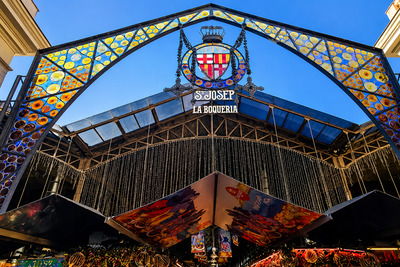
La Boqueria is one of the most famous markets in Europe and an important part of the gastronomic culture of Barcelona.
Located on the famous La Rambla, La Boqueria has long been one of the city's most visited attractions. Although the official Sant Josep Market opened in 1840, trading had taken place on this site since the Middle Ages, when meat and agricultural produce were brought here from the surrounding areas of Barcelona. The market began to take on its modern appearance in the early 20th century, and its famous iron roof was completed in 1914.
The market's main attraction is its incredible variety of products. Colourful stalls filled with fruit, vegetables, ham, cheeses, spices, fresh fish and seafood have become one of the gastronomic symbols of the city. Many products come from different parts of Catalonia, allowing visitors to discover local cuisine in a single location.
The market is home to numerous cafés, bars and small restaurants where visitors can enjoy paella, tapas, fried squid, seafood, Catalan specialities and freshly squeezed fruit juices, which have become one of La Boqueria's signature offerings. For many tourists, the culinary experience is the highlight of their visit.
The atmosphere is particularly vibrant during the first half of the day, when not only tourists but also local residents and chefs from Barcelona's restaurants come here to select fresh ingredients. At this time, the market feels especially lively and offers a genuine glimpse into the city's daily rhythm.
Today, La Boqueria remains not only a place to shop but also one of Spain's leading gastronomic attractions, welcoming millions of travellers from around the world every year.
Mercado Central de Valencia — Valencia Central Market
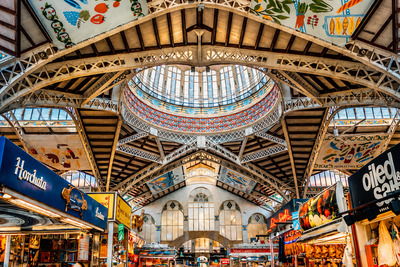
Valencia Central Market is one of the largest food markets in Europe and one of the city's principal architectural landmarks. The building opened in 1928 and is considered one of the finest examples of Valencian Modernisme. Its soaring vaults, stained-glass windows, ceramic panels and enormous dome make it look more like a museum or an early 20th-century railway station than a traditional marketplace.
Mercado Central is home to more than two hundred stalls offering fresh produce from across the Province of Valencia. Particular highlights include fruit and vegetables from local farmers, the region's famous Valencian oranges, spices, cheeses, ham and fresh seafood delivered daily from the Mediterranean coast.
The market remains an important part of everyday life in the city. From early morning, local residents, restaurant and café owners, and anyone who appreciates quality produce and the traditional atmosphere of a Spanish market come here to shop.
Every Monday, a street market takes place around the building, where farmers sell seasonal fruit, vegetables and other produce directly to customers. This makes the area surrounding Mercado Central even more vibrant and lively.
In addition to the food stalls, there are several small cafés and snack bars inside where visitors can enjoy a coffee, sample local pastries or take a short break while exploring Valencia's historic centre. It is this combination of architecture, gastronomy and urban atmosphere that makes Mercado Central one of the most interesting markets in Spain.
Mercado de Atarazanas — Market in Málaga
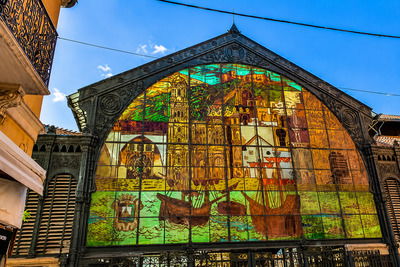
An equally interesting market can be found in Málaga — Mercado de Atarazanas. Opened in 1879, this market combines a traditional Spanish market with modern gastronomic culture. Its architecture is considered one of the most distinctive among Spain's markets.
The name Atarazanas comes from an Arabic word meaning shipyards. During the Middle Ages, this site was occupied by the shipbuilding workshops of Muslim Málaga, and the market's most striking feature remains the preserved 14th-century Moorish gateway. As a result, the market is of interest not only to food lovers but also to those interested in the history of Andalusia.
Atarazanas Market offers an enormous selection of fresh fish and seafood. Málaga is located on the Mediterranean coast, and its fish stalls are considered among the most impressive in the region. The market is particularly lively during the first half of the day, when local residents come to buy the freshest catch.
Inside the market, visitors will find small bars and food stalls where they can order tapas, seafood and dishes prepared from the fresh ingredients displayed on the neighbouring counters. It is also an excellent place to discover traditional Andalusian food, which largely reflects the gastronomic traditions of the Costa del Sol. The bustle of the market stalls, the aroma of spices, the colourful stained-glass windows and the constant flow of shoppers create the atmosphere that makes Atarazanas one of the most characterful markets in Andalusia.
Mercado de Triana — Market in Seville
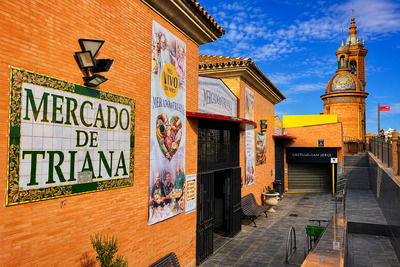
Triana Market in Seville is located in one of the city's most famous and distinctive districts. For centuries, the Triana neighbourhood was home to craftsmen, sailors and ceramic artisans, and today it remains one of the symbols of traditional Seville.
The modern market opened in the 19th century, although trading had existed in this area long before that. Interestingly, the market stands on the site of the former Castle of San Jorge, which once served as the headquarters of the Spanish Inquisition. Today, archaeological remains discovered on the site can still be seen beneath the market building, offering a reminder of its complex past.
The stalls of Mercado de Triana are filled with fresh vegetables, fruit, meat, fish, seafood, olives, cheeses and other products for which Andalusia is famous. Despite its popularity among visitors, the market retains the atmosphere of everyday life and continues to be an important place for local residents.
It is particularly pleasant to visit in the morning, when the stalls are just beginning to come to life and traders are chatting with their regular customers. This gives the market a calmer and more authentic feel than many of Spain's better-known gastronomic venues.
Within the market there are several small bars and taverns where visitors can enjoy tapas, fresh seafood dishes and traditional Andalusian snacks. After visiting the market, many continue their walk through the Triana district, which is considered one of the best places to experience the atmosphere of Seville.
Historic Markets in Spain
Some of Spain’s markets are notable not so much for their stalls as for the history hidden behind their walls and narrow trading streets. Trade has been carried out here for generations, and the markets themselves have long become part of the cultural heritage of their cities.
At these markets, visitors can not only buy souvenirs, antiques or local handicrafts, but also experience the atmosphere of old Spain. Arab trading quarters, medieval streets and centuries-old traditions make these places genuine attractions worth visiting even for those who have no intention of buying anything.
Alcaicería — the Arab Market of Granada
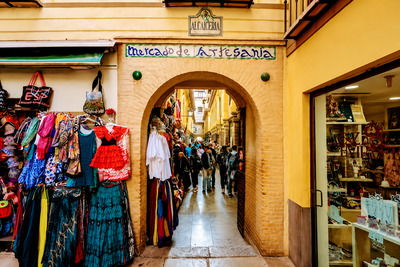
Among all the markets in Spain, a special place belongs to Alcaicería in Granada — a historic trading quarter considered one of the most vivid reminders of Andalusia’s Moorish past.
During the Nasrid Emirate, this area was home to a market specialising in silk and luxury goods from the East. Trade routes connecting Granada with North Africa and other regions of the Mediterranean passed through Alcaicería. Although the original market was considerably larger than the one seen today, its narrow streets still preserve the atmosphere of an old Arab bazaar.
Walking through Alcaicería, it is easy to imagine what Granada was like several centuries ago. Small shops, colourful fabrics, ceramics, handcrafted goods, spices and Eastern influences create a completely different atmosphere from that of traditional Spanish markets.
Today, Alcaicería remains one of the most popular places to buy souvenirs and discover the city’s historical heritage. Even those who do not plan to shop should visit simply for the atmosphere itself — especially when strolling between the Cathedral and Plaza Bib-Rambla in the historic centre of Granada.
El Jueves — Seville’s Oldest Market
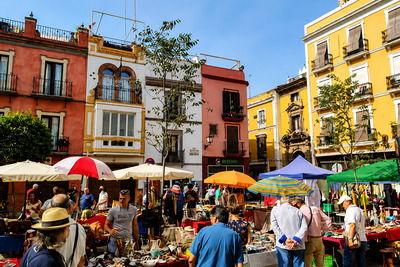
If Alcaicería is a reminder of Granada’s Moorish past, then El Jueves Market offers a glimpse into Seville’s centuries-old trading history. It is considered the oldest market in the city and one of the most famous historic markets in Andalusia.
The market takes its name from the day on which it is held — jueves means “Thursday” in Spanish. According to historical records, trading has taken place on Calle Feria since the 13th century, and the market itself has existed since 1292. For this reason, El Jueves is often described as one of the oldest continuously operating markets in Europe.
Today, the market resembles an open-air flea market. Visitors can find old books, vinyl records, coins, antiques, vintage home décor, photographs and countless unusual objects with their own stories to tell. This is why the market is popular not only with collectors but also with anyone who enjoys atmospheric walks and unique discoveries.
The street itself, Calle Feria, is a major attraction. It is one of Seville’s most authentic streets and, every Thursday, fills with market stalls, conversations between traders and visitors, and an atmosphere that has changed little over the centuries. El Jueves remains a rare example of a historical tradition that continues to thrive in a modern city.
The Most Famous Flea Markets in Spain
In addition to gastronomic and historic markets, Spain has a long tradition of trading in second-hand goods, antiques, vintage items and all kinds of unusual finds. These markets have long been part of urban culture and remain popular with both local residents and tourists.
At flea markets, visitors can discover old books, vinyl records, furniture, paintings, coins, decorative objects, vintage clothing and items that have already been used but have found a second life. It is often here that truly unique pieces can be found — things rarely seen in ordinary shops, from antique postcards and vintage tableware to unusual accessories and interior décor.
A visit to one of these markets often becomes a memorable part of a trip in its own right. The thrill of searching, endless rows of stalls and the possibility of unexpectedly stumbling upon a genuine treasure make flea markets some of the most fascinating urban spaces in Spain.
El Rastro — Madrid’s Most Famous Flea Market
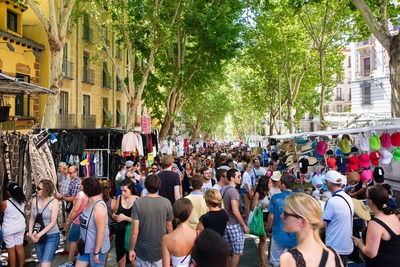
El Rastro is Spain’s most famous flea market and one of Madrid’s most recognisable Sunday traditions. This well-known street market is located in the La Latina district and attracts thousands of visitors every Sunday.
The market’s history spans several centuries. It is believed that trading in this area dates back to the 16th century, and El Rastro takes its name from the tanneries that once operated here. Today, it is considered one of the largest flea markets in Europe.
Every Sunday and on public holidays, more than a thousand stalls are set up here. Visitors can find antiques, vintage clothing, books, vinyl records, old photographs, home décor, collectables and countless unusual treasures that are impossible to predict in advance.
The surrounding streets are equally interesting, lined with antique shops, art stores and small workshops. Many people come here not so much for shopping as for the atmosphere itself: bustling market stalls, street musicians, lively conversations and the feeling of a true Madrid Sunday.
After exploring the market, many visitors head to the bars and tapas venues of the La Latina district, so a visit to El Rastro often becomes more than just a shopping trip — it is a complete introduction to everyday life in the Spanish capital.
Els Encants — One of Europe’s Oldest Flea Markets
If El Rastro is considered Spain’s most famous flea market, then Els Encants in Barcelona is rightly regarded as one of Europe’s oldest markets. Trading on this site has a history spanning several centuries, with the first references to the market dating back to the 14th century.
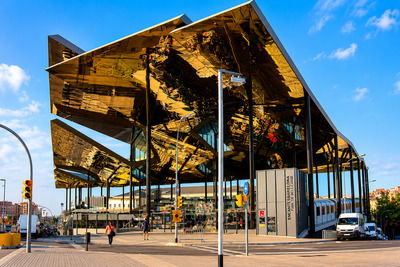
Today, Els Encants remains one of Spain’s most unusual markets. It is instantly recognisable thanks to its modern mirrored roof, which reflects the market stalls, visitors and cityscape, creating a striking visual effect. As a result, the market has become not only a place to shop but also one of Barcelona’s most interesting architectural landmarks.
Among the many stalls, visitors can find vintage furniture, old books, vinyl records, home décor, antiques, collectables, clothing, tableware and the most unexpected objects from the past. It is precisely this variety that attracts both collectors and those who simply enjoy searching for unusual finds.
The auctions are particularly popular and remain an important part of the market’s traditions. Some items are still sold using the traditional bidding system, making a visit to Els Encants even more exciting and unpredictable.
Unlike many of Barcelona’s tourist attractions, the atmosphere of a genuine city market can still be felt here. That is why Els Encants offers a chance to see another side of the city — more everyday, more vibrant and closely connected to its centuries-old trading heritage.
Other Markets in Spain
- Markets in Madrid — gastronomic venue and municipal markets of the Spanish capital.
- Street Markets in Madrid — El Rastro and other popular markets across the city.
- Markets in Barcelona — La Boqueria, Santa Caterina and other popular markets in the city.
- Street Markets in Barcelona — weekly street markets across the city.
- Markets in Valencia — the Central Market and other municipal markets in the city.
- Street Markets in Seville — El Jueves and other markets of the Andalusian capital.
- Markets in Granada — Alcaicería, San Agustín and the largest street markets in the province.
- Street Markets in Alicante — the largest weekly markets in the city and province, where visitors can find food products, clothing, household goods and local delicacies.

 English
  Español
  Русский