
Andalusian food is remarkably simple yet wonderfully diverse. It is based on the region's finest local ingredients: fresh fish and seafood caught along the Andalusian coast, seasonal vegetables, pulses, meat, aromatic spices and the region's world-famous olive oil. For centuries, these local products have been used to prepare dishes that have become gastronomic symbols of southern Spain.
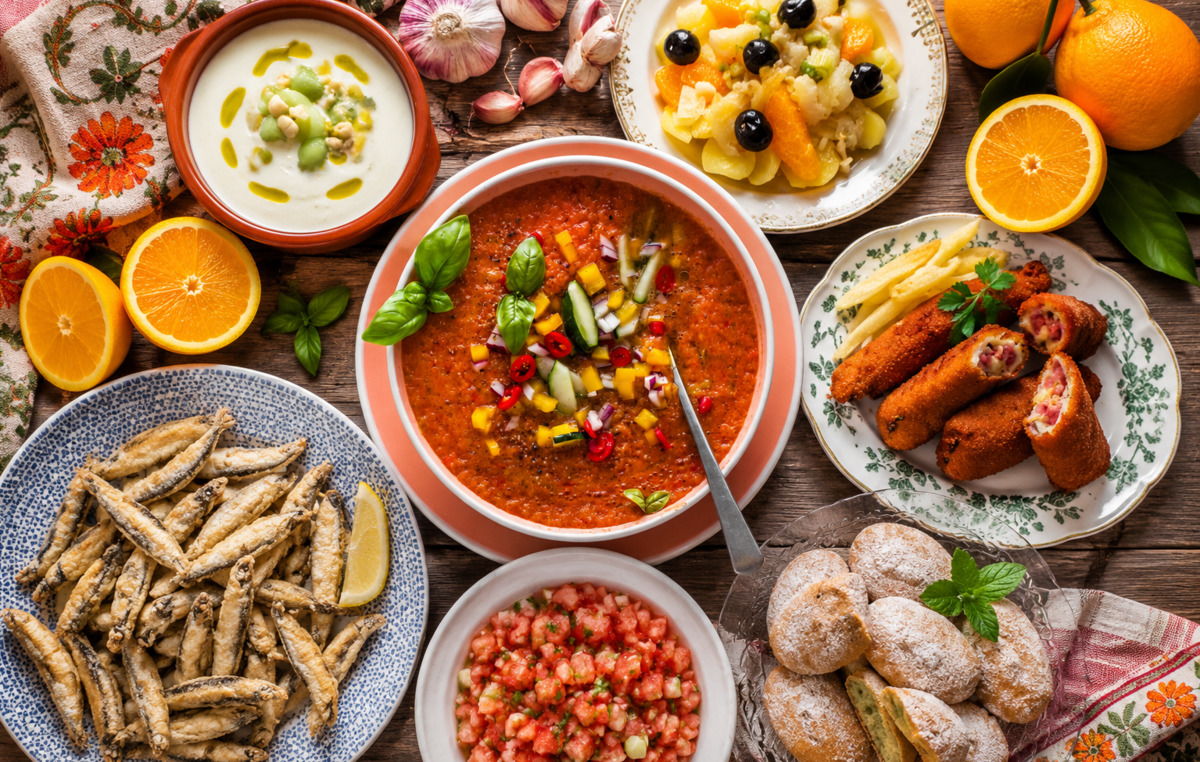
The region's warm climate has played a major role in shaping its cuisine. Andalusia is the birthplace of the famous cold soups gazpacho and salmorejo, while freshly grilled fish cooked over charcoal by the sea and the culture of tapas have become an essential part of Andalusian gastronomy.
Interestingly, it was through the port of Seville that tomatoes, potatoes, maize, sweet peppers and many other ingredients first arrived in Spain after the discovery of the Americas. Over time, they became an essential part not only of Andalusian cuisine but of Spanish gastronomy as a whole.
Each province of Andalusia has its own signature recipes and culinary traditions, yet they are all united by a love of fresh local ingredients and rich natural flavours. Below are the dishes you should definitely try while travelling through southern Spain.
What to Try in Andalusia
Cold Soups
During the hot summer months, cold soups become a true staple of everyday life in Andalusia. They are served in almost every restaurant, family-run café and home, as it is hard to imagine Andalusian food without a refreshing bowl of gazpacho, rich salmorejo or ajoblanco.
Gazpacho
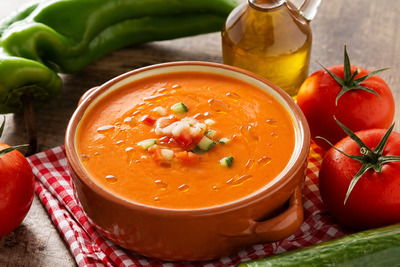
Gazpacho is one of Andalusia's most famous cold soups and perhaps the best-known dish of Spanish cuisine beyond the country's borders. During the hot summer months, locals often refer to it as the "king of soups", as it is difficult to imagine an Andalusian summer without a bowl of well-chilled gazpacho.
Traditional gazpacho is made with ripe tomatoes, sweet peppers, garlic, soaked bread, olive oil and a small amount of vinegar. Onion and cucumber may be added if desired, after which all the ingredients are blended until smooth and chilled before serving.
Interestingly, the earliest versions of gazpacho appeared long before tomatoes were brought to Spain from the Americas. Originally, the soup was made simply from bread, garlic, olive oil, vinegar and water. Its familiar red colour came much later, when tomatoes became an essential ingredient in Spanish cuisine.
Today, gazpacho is served in almost every restaurant across Andalusia. Light, refreshing and highly nutritious, it is the perfect dish for a hot summer's day and is considered one of the great gastronomic symbols of southern Spain.
Salmorejo

Salmorejo is a traditional cold soup from Andalusia, originating in Córdoba. It is often compared to gazpacho, but in both flavour and texture it is a completely different dish. Many Andalusians consider salmorejo to be just as iconic as gazpacho, while in Córdoba it has long been regarded as one of the city's signature specialities.
The main difference between salmorejo and gazpacho is its higher bread content and the absence of water. This gives the soup a much thicker consistency, a smooth creamy texture and a richer tomato flavour.
Traditionally, salmorejo is served well chilled and topped with pieces of cured ham and chopped hard-boiled egg. Despite being more filling than gazpacho, it is wonderfully refreshing on a hot summer's day and is often enjoyed as a complete lunch by local people.
Ajoblanco
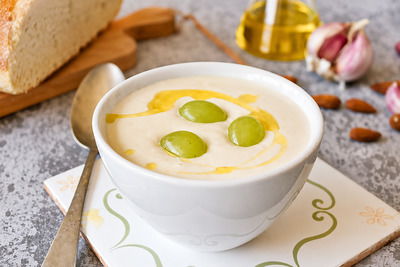
Ajoblanco is a traditional cold soup from Andalusia, particularly popular in the provinces of Granada and Málaga. Thanks to its distinctive white colour, it is often referred to as "white gazpacho", although its flavour and ingredients make it an entirely unique dish.
Ajoblanco is believed to have originated long before gazpacho and salmorejo, at a time when tomatoes had not yet arrived in Spain. Many historians consider it one of Andalusia's oldest soups, preserved in almost its original form to this day.
Originally, this dish was associated with poorer communities. To satisfy their hunger, people soaked bread in water, crushed it with garlic, added raw almonds, a little olive oil and vinegar, creating a simple yet nourishing meal. Over time, the recipe changed very little and has survived almost unchanged to the present day.
Today, ajoblanco is traditionally served well chilled and garnished with grapes or pieces of melon. The unusual combination of smooth almond soup and sweet fruit makes it one of the most distinctive dishes in Andalusian cuisine.
Hot Soups
As the weather turns cooler, hot soups become increasingly common on the menus of Andalusian restaurants. Hearty, aromatic and prepared from simple local ingredients, they remain an important part of the traditional food of southern Spain.
Gazpachuelo
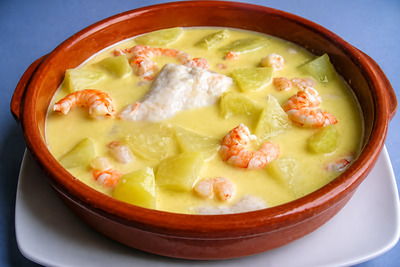
Gazpachuelo is a traditional hot soup from Málaga that was once considered a fishermen's dish. It is prepared with fish stock, potatoes and white fish or other seafood, while its defining feature is the addition of homemade mayonnaise, which gives the soup its delicate creamy flavour.
Originally, gazpachuelo was a simple and inexpensive meal enjoyed by fishermen, who made it using their fresh catch and the most readily available ingredients. Over time, the recipe became popular far beyond Málaga, and today it can be found in many restaurants across Andalusia.
Despite the unusual combination of hot broth and mayonnaise, gazpachuelo is regarded as one of the most traditional dishes of Andalusian food. Its delicate flavour, light creamy texture and the aroma of fresh fish make it an excellent choice during the cooler months.
Traditional Andalusian Sopa de Picadillo
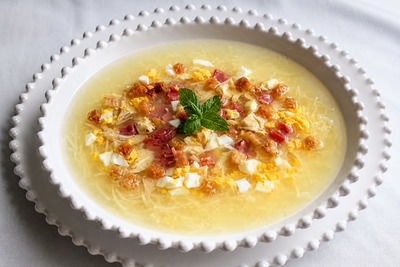
Sopa de Picadillo is one of the best-known homemade soups of Andalusian food. It is traditionally prepared with a fragrant chicken broth, meat, fine noodles and hard-boiled egg. The name comes from the Spanish verb picar, meaning "to chop", as all the ingredients are finely diced before being added to the soup.
Despite its simple recipe, sopa de picadillo is considered one of the most comforting and much-loved homemade dishes in Andalusia. It is especially popular during the winter months and is often served at family lunches and festive gatherings, particularly over the Christmas period.
The soup begins with a rich chicken broth made with a small amount of meat (usually chicken, pork or beef) and vegetables, most commonly carrots and leeks. Once cooked, the meat and vegetables are finely chopped, while the thin noodles are cooked separately in the broth.
Before serving, the broth is ladled into deep bowls and topped with the chopped meat, vegetables and hard-boiled egg. Many families also garnish it with pieces of cured ham and fresh herbs. Thanks to its rich broth and simple homemade ingredients, sopa de picadillo is regarded as one of the most comforting dishes of Andalusian food.
Andalusian Puchero (Puchero Andaluz)
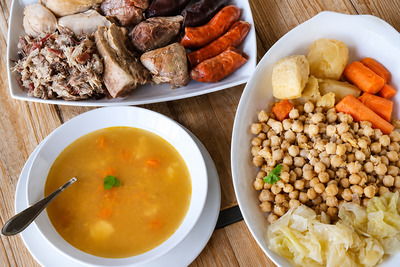
Andalusian puchero is a rich and hearty hot soup from the traditional cuisine of Andalusia, with chickpeas (garbanzos) as its main ingredient. It is one of the region's most filling dishes and is especially popular during the colder months.
Puchero is slowly cooked over several hours using different types of meat, chickpeas and seasonal vegetables. For an even richer flavour, chorizo or cured ham is often added to the broth. The result is a generous quantity of aromatic stock and tender meat, usually enough to feed a family for several meals.
For this reason, puchero has long been considered the perfect family meal. Traditionally, the strained broth is served first with rice or fine noodles, followed by the meat, chickpeas and vegetables as a separate course. Any leftovers are often used to prepare other dishes the following day, and this practical approach remains one of the hallmarks of traditional Andalusian home cooking.
Similar soups can be found in other regions of Spain, but Andalusian puchero is regarded as one of the best-known versions. Thanks to its distinctive way of serving and its rich flavour, it remains one of the great symbols of traditional home cooking in southern Spain.
Fish and Seafood
Andalusia is bordered by both the Mediterranean Sea and the Atlantic Ocean, which is why fresh fish and seafood play such an important role in the region's cuisine. They can be seen every day at local fish markets, while many coastal restaurants prepare their dishes using catches brought ashore only a few hours earlier.
From the famous charcoal-grilled fish to fried anchovies and seafood, no introduction to Andalusian food would be complete without sampling the bounty of the sea.
Espeto de Sardinas
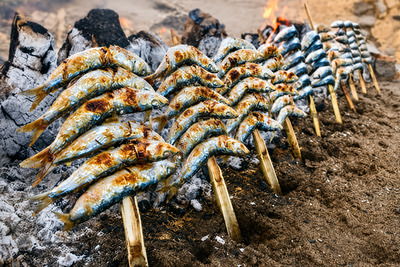
Espeto de Sardinas is one of the most iconic dishes of Andalusian food, particularly popular along the coast of Málaga. It consists of several fresh sardines threaded onto a long skewer and grilled over charcoal. For the people of Málaga, espeto is much more than a dish – it is a true symbol of summer, the sea and the Mediterranean way of life.
Traditionally, espeto is cooked over an open fire, often directly on the beach, using old fishing boats filled with sand as improvised barbecues. This unique cooking method gives the fish a delicate smoky flavour while preserving its natural taste and succulent texture.
Espeto is considered to be at its very best from May to August, when sardines are at their fattiest, juiciest and most flavoursome. Although the dish can be ordered throughout most of the year, it is during the summer that it truly becomes one of the gastronomic symbols of the Andalusian coast.
The best place to try authentic espeto is at the beachside restaurants known as chiringuitos, which line the entire Andalusian coastline. Here, the sardines are grilled over charcoal just a few metres from the sea, following traditional methods that give the dish an especially fresh and authentic flavour.
Pescaito Frito
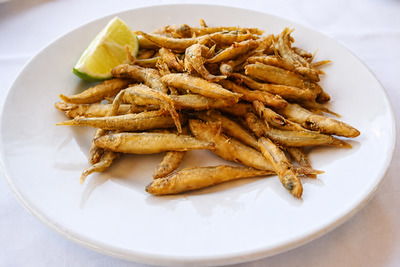
Pescaito Frito is one of the best-known dishes of Andalusian food, with a history dating back several centuries. It is believed that the tradition of frying small fresh fish in olive oil began here as early as the 13th century, and today pescaito frito can be found in almost every restaurant and tapas bar across southern Spain.
The dish consists of small fish or seafood, lightly coated in flour and quickly deep-fried. This cooking method creates a light, crispy coating while keeping the fish wonderfully tender and juicy inside.
Anchovies, whitebait, squid, young hake and other small white fish are among the varieties most commonly used. Pescaito frito is served piping hot with lemon wedges and without heavy sauces, allowing the fresh flavour of the sea to take centre stage.
Although pescaito frito can now be enjoyed throughout much of Spain – including Valencia, Catalonia, the Balearic Islands and the Canary Islands – Andalusia is widely regarded as its birthplace. Here, it has long been an essential part of the local food culture and remains one of the most popular choices for lunch or dinner along the coast.
Meat Dishes
Although Andalusia is best known for its fish and seafood, meat dishes are just as popular throughout the region. This is particularly true in the inland provinces, away from the coast, where the cuisine has traditionally been heartier and more homely.
Flamenquín

Flamenquín is a popular meat dish originating from Córdoba, one of Andalusia's provinces. It is certainly not the lightest option on the menu, but it is well worth trying during a trip to southern Spain. The dish is believed to owe its name to its golden, crispy coating, said to resemble the fair hair of the Flemish people (flamencos).
Flamenquín consists of a thin slice of pork loin wrapped around a slice of cured ham, sometimes with the addition of cheese, before being coated in breadcrumbs and deep-fried until golden brown. The result is wonderfully crisp on the outside while remaining juicy and tender inside.
It is most commonly served with chips, salad or homemade mayonnaise. Simple, hearty and full of flavour, flamenquín perfectly reflects the character of traditional Andalusian cuisine, where high-quality local ingredients and uncomplicated yet delicious flavour combinations are highly valued.
Stuffed Artichokes (Alcauciles rellenos al estilo andaluz)
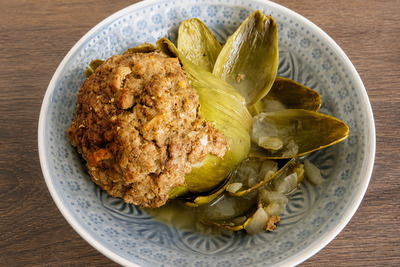
Stuffed artichokes are a traditional hot dish of Andalusian cuisine, especially popular in spring when fresh artichokes are in season. At that time of year, they can be found on the menus of many family-run restaurants and traditional taverns across the region.
The trimmed artichokes are filled with minced meat, usually mixed with garlic, fresh herbs and aromatic spices, before being slowly braised in a casserole or deep frying pan until tender. Some versions of the recipe also include white wine or meat stock in the sauce, giving the dish an even richer flavour and aroma.Stuffed artichokes are an excellent example of simple yet beautifully balanced Andalusian cooking, where fresh seasonal vegetables are just as important as meat. They are often served as a main course, although smaller portions are also commonly offered as a warm starter or tapa.
Chicken in Garlic Sauce (Pollo al ajillo)
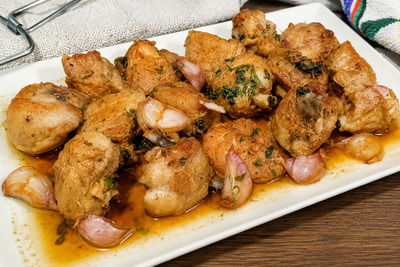
Chicken in Garlic Sauce (Pollo al ajillo) is one of the best-known dishes of traditional Andalusian home cooking. Despite its simple name, it is one of the most aromatic recipes from southern Spain and has been prepared by Andalusian families for generations.
The chicken pieces are first browned in olive oil until golden, then slowly cooked with plenty of garlic, white wine, bay leaves and fragrant herbs. This gives the meat an exceptionally tender texture, while the rich sauce is perfect for mopping up with fresh bread.
Today, Pollo al ajillo is prepared throughout Spain, but it is in Andalusia that the dish is regarded as a true classic of home cooking. If you're looking to try something simple, hearty and genuinely traditional, Pollo al ajillo is an excellent choice.
Tapas of Andalusia
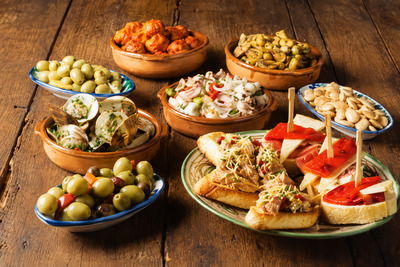
Tapas are small dishes that are an essential part of Andalusia's food culture. For local people, tapas are much more than simply something to eat – they are a way of life. Friends meet in bars, order drinks and several small plates, sampling different flavours while enjoying each other's company.
Several legends surround the origin of tapas. According to one of the best-known stories, the tradition began in the 13th century under King Alfonso X of Castile, who ordered that small snacks should be served with wine to prevent soldiers from becoming intoxicated too quickly. Another version claims that drinks were covered with a slice of bread or a small piece of food to protect them from dust and insects. It is believed that this is where the word tapa, meaning "lid" or "cover" in Spanish, originated.
Today, the culture of tapas remains one of the hallmarks of Andalusia. In some bars, a small tapa is still served free of charge with a drink, although this tradition has not survived everywhere and varies depending on the city and the individual establishment. In more traditional bars and taverns, visitors can enjoy dozens of different tapas, including fried squid, prawns, croquettes, cured ham, Spanish omelette, olives, cheeses, small salads and many other specialities.
If you're not sure what to order, choose several different tapas instead of one large main course. It is one of the best ways to discover traditional Andalusian food and experience the atmosphere of local bars just as the Spanish do.
Salads
Andalusia's warm climate has made fresh vegetables an essential part of the local cuisine. Salads here are prepared with ripe tomatoes, cucumbers, sweet peppers, onions, olives, fish and, of course, the region's world-famous olive oil.
These refreshing dishes are perfect for hot summer days and are often served as a light meal on their own or as an accompaniment to fish, meat and other traditional regional specialities.
Pipirrana
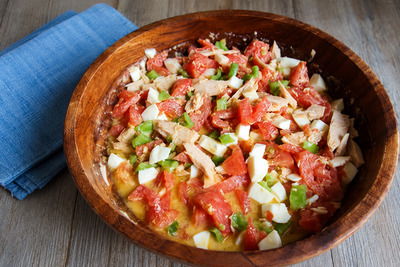
Pipirrana is a traditional refreshing salad from the province of Jaén, perfectly suited to Andalusia's hot climate. Thanks to its simple ingredients and vibrant flavour, it has long been one of the region's gastronomic symbols.
The classic recipe contains just a handful of ingredients: peeled ripe tomatoes, green pepper, hard-boiled eggs and tuna. However, the true secret of pipirrana lies in its dressing. Extra virgin olive oil, a piece of green pepper, garlic, salt and cooked egg yolks are carefully crushed together in a mortar to create a rich, aromatic sauce that brings all the ingredients together.
As people in Jaén like to say, pipirrana should always be served with fresh bread, because it is simply impossible to resist soaking up the delicious juices left at the bottom of the plate. In some parts of Andalusia, cucumber or green olives are also added, giving the salad extra layers of flavour.
Málaga Salad (Ensalada malagueña)
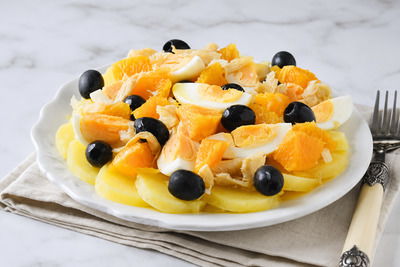
Málaga salad is one of the city's best-known traditional dishes, especially popular during the hot summer months. Its unusual combination of sweet citrus fruit and salted fish may seem surprising at first, but this contrast is precisely what has made the salad one of Málaga's gastronomic icons.
The main ingredients are oranges, boiled potatoes and salted cod. Before being used, the cod is carefully soaked to remove the excess salt, giving it a delicate flavour that pairs perfectly with the sweetness of ripe oranges.
In some modern variations of the recipe, the cod is replaced with tuna. The salad is completed with hard-boiled eggs, onion, olives and extra virgin olive oil, creating a fresh, well-balanced dish full of Mediterranean flavour.
Desserts and Traditional Sweets
The desserts of Andalusia are quite different from those found in other regions of Spain. This is largely due to centuries of Arab influence, which is why local pastries and sweets so often feature honey, almonds, cinnamon, aniseed, sesame seeds and other aromatic spices.
Many traditional recipes date back several centuries and have been carefully passed down from generation to generation. Some sweets are available throughout the year, while others appear only during religious celebrations and local festivals. All of them, however, remain an important part of Andalusia's gastronomic heritage.
Pestiños
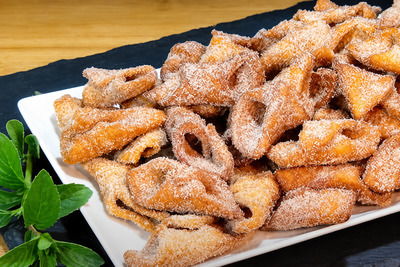
Pestiños are one of Andalusia's best-known traditional sweets, especially popular during the Christmas season and Holy Week. The recipe is believed to have Arabic origins, and its ingredients clearly reflect the influence of Middle Eastern cuisine.
Pestiños are small pieces of dough fried in olive oil until golden and crisp. Sesame seeds and aniseed are often added to the dough, while the finished pastries are either dusted with sugar or generously coated with fragrant honey.
During Christmas and Semana Santa, pestiños can be found in almost every bakery across Andalusia. Crispy on the outside, soft on the inside and infused with the flavours of honey and spices, they have long become one of the symbols of festive baking in southern Spain.
Alfajor
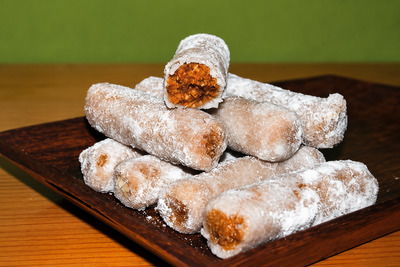
Alfajor is another of Andalusia's best-known traditional sweets and is also especially popular during the Christmas season. Like many local desserts, it has Arabic roots, which can easily be recognised in its combination of honey, nuts and aromatic spices.
The classic Andalusian alfajor consists of a dense sweet mixture made from almonds, walnuts, honey and breadcrumbs, flavoured with cinnamon, aniseed, sesame seeds and other spices. The mixture is shaped into small cylinders before being rolled in icing sugar.
Alfajor pairs perfectly with a cup of coffee or tea. Its rich flavour and satisfying texture mean that even a small piece is enough to appreciate the character of this traditional Andalusian sweet.
Piononos de Santa Fe
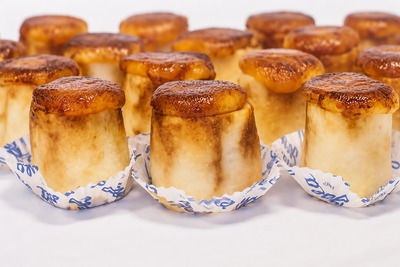
Piononos are a famous dessert originating from the town of Santa Fe, just outside Granada. They are small sponge cake rolls soaked in sweet syrup, filled with delicate pastry cream and finished with a thin caramelised topping.
The dessert takes its name from Pope Pius IX (Pío Nono). According to one popular theory, its cylindrical shape symbolises the papal tiara, while the lightly caramelised top represents the Pope's headwear.
Today, piononos are regarded as one of the gastronomic symbols of the province of Granada. They are served well chilled and are usually sold individually, making them the perfect choice for a small sweet treat or a dessert to enjoy with a cup of coffee.
Amarguillos
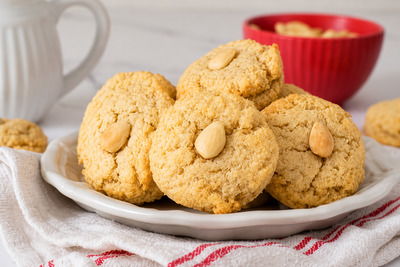
Amarguillos are traditional almond biscuits for which the town of Medina-Sidonia, in the province of Cádiz, is especially famous. Like many other Andalusian sweets, they have Arabic origins and have remained an important part of the local culinary tradition for centuries.
The biscuits are made from marzipan dough with the addition of bitter almonds, which give them their characteristic subtle bitterness and a more distinctive flavour. Despite their simple ingredients, amarguillos are wonderfully aromatic and literally melt in your mouth.
Many families in Medina-Sidonia still prepare amarguillos using old recipes that have been passed down from generation to generation. They are especially popular during the Christmas season and other family celebrations.
Of course, these are only a few of Andalusia's traditional sweets. Almost every town and even the smallest village has its own signature recipes, many of which have existed for centuries. So, when travelling through southern Spain, don't hesitate to visit small family-run bakeries – they are often the best places to discover the region's most authentic desserts.
More Articles About Spanish Gastronomy
If you enjoyed learning about the traditional food of Andalusia, we also recommend exploring the culinary traditions of other regions of Spain and discovering more about the country's traditional dishes, wines and drinks.
- Traditional Spanish Dishes — an overview of the country's best-known dishes to try in different regions of Spain.
- Wine in Spain: Types, Classification and Wine Regions — learn how to understand Spanish wines and discover which ones to try during your travels.
- Traditional Spanish Drinks — sherry, sangria, cava and other popular drinks of Spain.
- Traditional Food in Madrid — hearty dishes from the Spanish capital and the culinary traditions of central Spain.
- Traditional Food in Valencia — paella, horchata, rice dishes and the gastronomy of Spain's eastern coast.
- Catalan Food — traditional dishes of Barcelona and the culinary specialities of Catalonia.

 English
  Español
  Русский