
A holiday in Valencia is not only about the sea, beaches and the historic centre, but also a chance to discover some of the best traditional food in Spain. Most visitors come here to try paella, but the region's culinary traditions are far richer and more diverse.
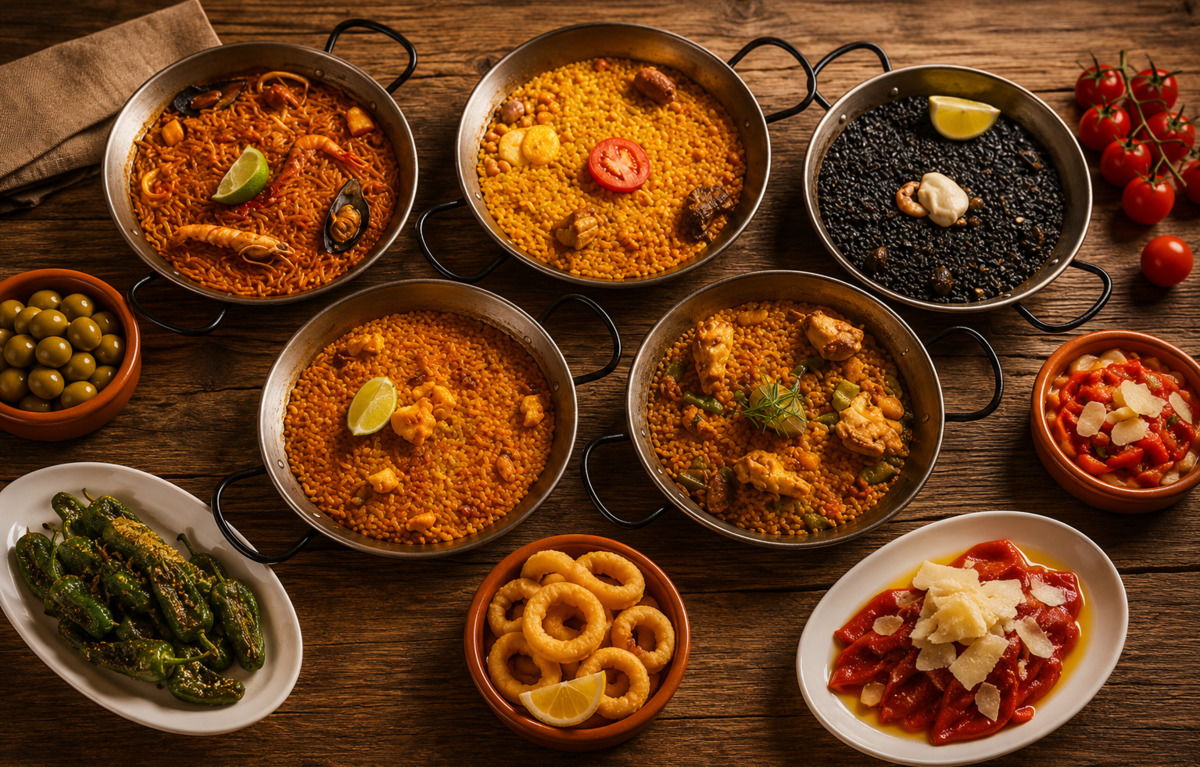
Alongside its famous rice dishes, Valencia is renowned for its fresh seafood, unique appetisers, homemade pastries and refreshing drinks, many of which are rarely found elsewhere in Spain.
Valencian cuisine has been shaped by the Mediterranean Sea, fertile farmland and Spain’s largest rice-growing region. Below are the dishes and drinks you should try to truly experience the gastronomy of the region.
What to Try in Valencia
The best way to discover Valencian cuisine is by visiting traditional restaurants and family-run taverns, where dishes are prepared using local recipes. Another memorable experience is exploring street markets and food markets, where you can sample fresh local produce, appetisers and regional delicacies.
Main Valencian Dishes
The hallmark of Valencian cuisine is its rice dishes, prepared here according to dozens of traditional recipes. However, the region’s gastronomy extends far beyond paella alone. Local specialities also include fish, seafood and freshwater eel dishes that have long been an integral part of Valencian culinary tradition.
Valencian Paella — Paella Valenciana
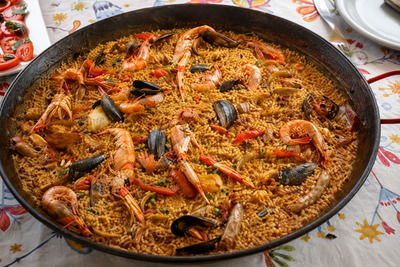
Paella Valenciana is the signature dish you should try during your trip to Valencia. It was here that its classic recipe originated, and locals proudly regard paella not merely as a national dish but as an essential part of their cultural heritage. Today, most of the rice produced in Spain is still grown around the Albufera Natural Park, just outside the city.
Authentic paella valenciana is traditionally cooked over an open fire in a wide, shallow pan known as a paellera. The classic recipe includes chicken, rabbit, green beans, tomatoes, saffron, olive oil and the local white bean known as garrofó. In some villages, snails or artichokes are still added, depending on family traditions and the season.
If this is your first time trying paella in Valencia, don't be surprised if it looks nothing like the familiar tourist versions loaded with seafood. Authentic Valencian paella is valued above all for the rich flavour of the rice, which absorbs the aromas of the meat, vegetables and spices.
Interestingly, the people of Valencia rarely cook or order paella in the evening. By tradition, it is served at lunchtime, especially on Sundays, when the whole family gathers around the table. In many restaurants, paella is prepared only after it has been ordered and is usually served for a minimum of two people. So, if you want to enjoy it at its very best, it's worth planning this meal in advance.
Fideuà
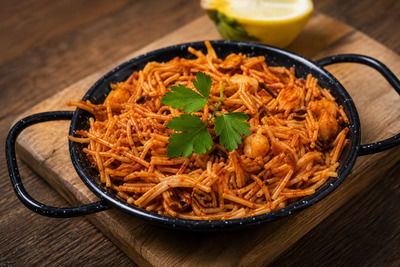
Fideuà is one of Valencia's most famous dishes and the main rival to paella. At first glance, the two dishes look very similar, but instead of rice, fideuà is made with short, thin noodles called fideos, giving it a completely different texture and flavour.
According to one of the most popular versions of its origin, fideuà was created in the early 20th century in the coastal town of Gandia. Legend has it that local fishermen once replaced rice with noodles, and the new recipe became so popular that it quickly spread along the entire Valencian coastline.
Fideuà is traditionally prepared with squid, prawns, mussels and fish. The noodles are first lightly toasted and then cooked in a rich fish stock, allowing them to absorb the full flavour of the seafood and spices.
Like paella, fideuà is served directly in a large pan, and almost every restaurant accompanies it with homemade aioli. If you've already tasted authentic Valencian paella, be sure to order fideuà as well—many visitors say it becomes the highlight of their culinary experience in Valencia.
Arroz Negro
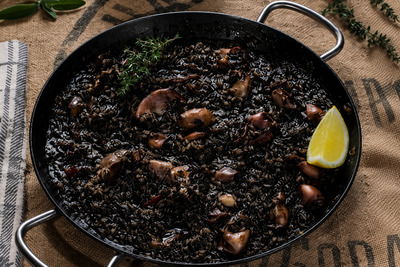
Arroz negro is one of the most distinctive dishes of Valencian cuisine and unlike anything else you are likely to try. Its deep black colour may come as a surprise at first, but it is the cuttlefish ink that gives the rice its rich seafood flavour and unmistakable aroma, making it a favourite among locals.
Arroz negro is traditionally prepared with cuttlefish, squid, prawns and other seafood. Like paella, it is cooked in a wide, shallow pan, allowing the rice to absorb the rich fish stock evenly while maintaining its perfect texture.
It is almost always served with homemade aioli. The delicate garlic flavour perfectly complements the rice and makes the dish even more enjoyable. Despite its unusual appearance, cuttlefish ink does not have an overpowering taste—it simply enhances the flavour of the seafood without overwhelming the other ingredients.
If you enjoy seafood and want to try something truly different, arroz negro is an excellent choice. Many visitors say it becomes one of the most memorable culinary discoveries of their trip to Valencia.
Arroz al Horno
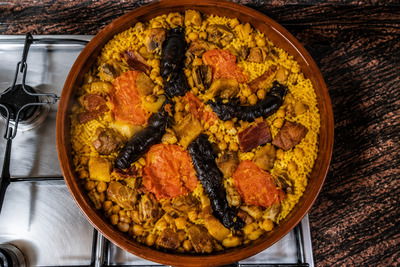
Arroz al horno is another traditional Valencian dish, whose name literally means "oven-baked rice". Unlike paella, it is not cooked over an open fire but baked in a ceramic dish, giving the rice a wonderfully rich flavour and creating an appetising golden crust on top.
Historically, arroz al horno originated as a homemade dish. After preparing a meat stew or cocido, families would use the leftover stock, meat and chickpeas, add rice, and bake everything together in the oven. Over time, this simple family recipe became one of the symbols of Valencian cuisine.
Today, the dish typically includes rice, pork ribs, sausages, chickpeas, potatoes, tomatoes, garlic and aromatic spices. Some recipes also include morcilla (Spanish black pudding), which gives the dish an even richer flavour.
While paella is often associated with festive family lunches, many Valencians consider arroz al horno to be true comfort food. It is commonly found in small family-run restaurants that continue to cook it according to traditional recipes. It's an excellent choice for anyone wishing to discover a lesser-known yet highly authentic side of Valencian cuisine.
All i Pebre
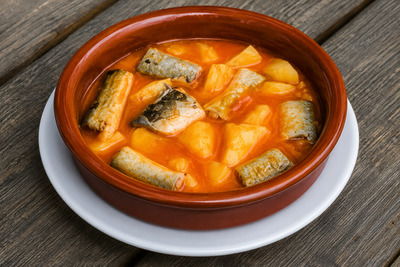
All i pebre is one of the most authentic dishes of Valencian cuisine and is especially popular around the Albufera Natural Park. It was here, where freshwater eel has been caught for centuries, that this traditional recipe originated. Local people have carefully preserved it for generations.
The name All i pebre means "garlic and pepper" in the Valencian language. The main ingredients are eel, garlic, paprika, olive oil and potatoes. However, the dish's defining feature is its rich, aromatic sauce, made from garlic, fried bread, almonds, paprika and fish stock.
Traditionally, all i pebre is cooked in an earthenware pot, where the eel is slowly simmered until it absorbs the rich flavours of the sauce. As a result, the dish becomes wonderfully aromatic, while the potatoes soak up all the juices and are every bit as delicious as the fish itself.
If you'd like to try a lesser-known yet truly traditional Valencian dish, make sure to order All i pebre. It is particularly delicious in the small restaurants around the Albufera, where the recipe has remained part of the local culinary heritage for centuries. And don't forget to order some fresh bread—it's perfect for mopping up every last drop of the delicious sauce.
Appetisers and Tapas
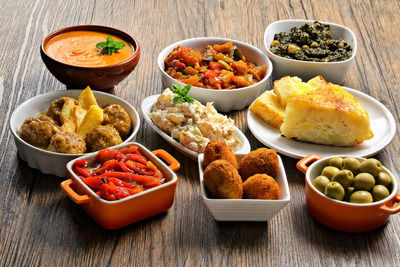
Alongside its famous rice dishes, Valencian cuisine is also renowned for its wide variety of appetisers and tapas. Tapas are small portions of different dishes, usually ordered several at a time so you can enjoy a range of flavours. They may include olives, small sandwiches with jamón or chorizo, classic Spanish favourites such as patatas bravas, Spanish tortilla, croquettes, fried Pimientos de Padrón, as well as seafood dishes like Gambas al ajillo (garlic prawns) or Anillas de calamar (fried squid rings).
Step into almost any bar or traditional tavern in Valencia, and you'll almost certainly find dozens of these tapas displayed on the counter or in a glass showcase. In many restaurants, tapas even have their own dedicated section on the menu.
Interestingly, many of the traditional Valencian appetisers described below are also commonly served as tapas. It's an excellent way to discover the local cuisine and sample several different dishes during a single lunch or dinner. Among the most popular Valencian specialities are Esgarraet, Titaina, Coca Valenciana, Ensaladilla Rusa and fried Pimientos de Padrón, all of which can be found on the menus of most bars and traditional restaurants.
Esgarraet
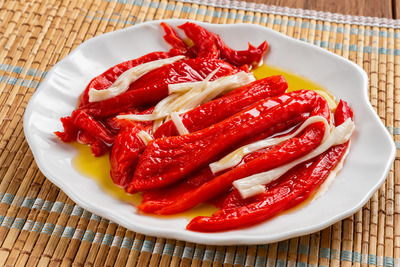
Esgarraet is one of the best-known cold appetisers in Valencian cuisine. Its name comes from the Valencian word esgarrar, meaning "to tear into strips". This refers to the traditional way roasted red peppers and salted cod are torn by hand before serving.
The classic recipe includes roasted red peppers, salted cod, garlic and extra virgin olive oil. Sometimes the dish is complemented with black olives or thin slices of cured tuna known as mojama, which add an even richer flavour to the appetiser.
Esgarraet is usually served chilled as a tapa or light appetiser. It is often accompanied by fresh crusty bread, perfect for soaking up the fragrant olive oil left on the plate.
If you enjoy simple dishes made with fresh ingredients, be sure to try esgarraet. Despite its small number of ingredients, this appetiser perfectly captures the essence of Mediterranean cuisine and has long been one of Valencia's culinary hallmarks.
Titaina
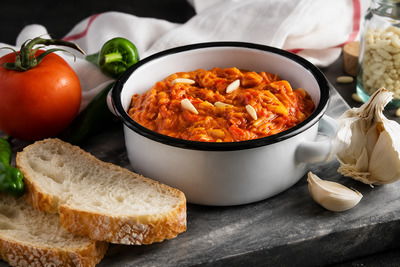
Titaina is another traditional appetiser of Valencian cuisine, especially popular in the historic fishing district of El Cabanyal. It was here that the recipe originated many years ago and, to this day, it remains one of the area's best-known culinary specialities.
The dish is based on ripe tomatoes, garlic, green and red peppers, pine nuts and olive oil. All the ingredients are slowly simmered before salted tuna is added. In the traditional recipe, the most prized cut of the fish—the belly, known as tonyina de sorra—is used, giving the dish its rich Mediterranean flavour.
Titaina can be served either cold or warm. It is spread on fresh bread, served as a tapa, or used as a filling for traditional cocas or small sandwiches.
If you happen to be exploring the El Cabanyal district, be sure to visit one of the local taverns and try titaina there. It is a wonderful example of simple home cooking that has remained an important part of Valencia's culinary traditions for generations.
Coca Valenciana
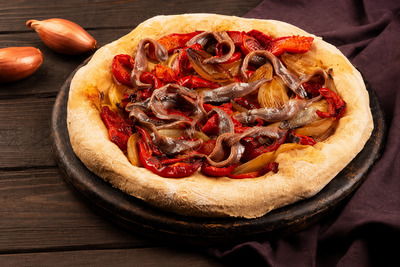
Coca Valenciana is a traditional Valencian baked speciality that is often compared to Italian pizza. It is also made with a thin base and a variety of toppings, but cheese is rarely used, while fresh seasonal ingredients take centre stage.
The history of coca is quite simple. In the past, families would not throw away leftover bread dough. Instead, they rolled it out into a thin flatbread, topped it with vegetables, fish or whatever ingredients they had available, and baked it in the oven. Over time, this practical homemade recipe became one of the most popular dishes in Valencian cuisine.
Today, there are many different varieties of coca valenciana. The toppings may include roasted vegetables, tuna, anchovies, sardines, sausages, onions or even sweet ingredients. For this reason, both savoury and sweet versions of coca can be found throughout Valencia.
Coca is commonly served in bakeries, small cafés and traditional taverns as a light snack or tapa. If you'd like to try something simple yet truly homemade, be sure to order this dish—it perfectly reflects the spirit of Valencian cuisine, where even the simplest recipes have evolved into cherished culinary traditions.
Ensaladilla Rusa
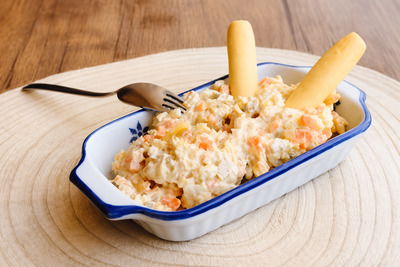
Ensaladilla rusa is the Spanish version of Olivier salad, most commonly served as a tapa. It is one of the most popular cold appetisers in Spain, and It's hard to find a bar or restaurant where it does not appear on the menu.
Although ensaladilla rusa can be enjoyed throughout the country, in Valencia it is especially popular as a tapa—a small appetiser served with drinks before the main meal. For many Spaniards, it is an essential part of any visit to a bar.
Spaniards often compare this salad to the Olivier salad familiar in many other countries, and the two do indeed have much in common: boiled potatoes, carrots, eggs and mayonnaise. However, instead of sausage or meat, the traditional Spanish recipe uses canned tuna, and it often includes green peas and olives as well. It is the tuna that gives ensaladilla rusa its distinctive flavour.
This simple yet much-loved Spanish dish is a perfect introduction to the culture of tapas and pairs wonderfully with a glass of cold beer or vermouth.
Pimientos de Padrón
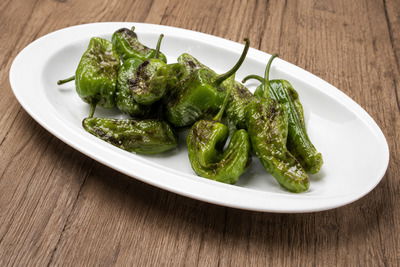
Pimientos de Padrón are small green peppers fried in olive oil and sprinkled with coarse sea salt. They are among Spain's most popular appetisers, although they originally come from the area around the town of Padrón in Galicia, where this variety of pepper was first cultivated. Over time, this simple dish of fried peppers became a true classic of Spanish cuisine, and today it can be enjoyed in almost any bar in Valencia.
There is a well-known Spanish saying: «Unos pican y otros no» — "Some are hot, others are not." That's where the fun lies: most of the peppers are mild, but every now and then you'll come across one that's genuinely spicy, and there's no way of knowing which one it will be.
Pimientos de Padrón pair perfectly with a glass of cold beer, vermouth or wine and are ideal for sharing. If you visit a Spanish tapas bar for the first time, you'll almost certainly spot this dish on nearby tables—it really is that popular with the locals.
Valencian Desserts and Drinks
After a hearty paella or fideuà, many people are in no rush to finish their meal. Valencians like to end lunch with a cup of coffee or, on hot days, a glass of their famous horchata. Add a traditional pastry or one of the region's local desserts, and your introduction to Valencian cuisine will be truly complete.
Horchata
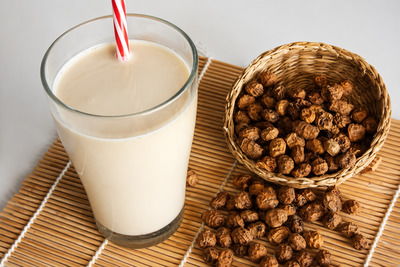
Horchata is Valencia's most famous traditional drink. This refreshing non-alcoholic beverage is especially popular during the hot summer months. Although tiger nuts have been known since the time of Arab rule on the Iberian Peninsula, it was Valencia that became the birthplace of modern horchata and remains its main production centre.
The drink is made from tiger nuts (chufa), which are grown around Valencia, particularly in the area of Alboraia. The tiger nuts are ground, mixed with water and a small amount of sugar, then chilled and served ice cold. Horchata has a smooth, mildly sweet, nutty flavour and is wonderfully refreshing in warm weather.
In many traditional horchaterías, horchata is served with fartons—long, light pastries that were specially created for dipping into the drink. This combination has long been one of Valencia's most recognisable culinary traditions.
Even if you're only visiting the city for a few days, be sure to find time to enjoy a glass of freshly made horchata. It's one of those flavours that many travellers forever associate with summer, sunshine and the atmosphere of Valencia.
Fartons
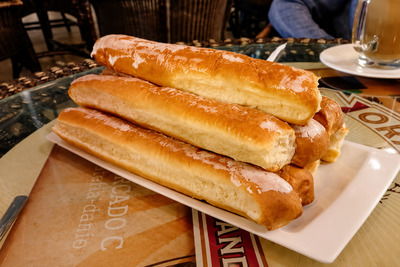
Fartons are traditional Valencian sweet pastries in the shape of long, light finger rolls, specially created to accompany horchata. Their elongated shape makes them perfect for dipping into a tall glass of this refreshing drink, which is why they are now considered its ideal companion.
Fartons first appeared in the town of Alboraia, the birthplace of Valencia's famous horchata. They are made from a light yeast dough and, once baked, are coated with a thin layer of sweet icing, making them even softer and more delicate.
These soft, elongated pastries, with their light texture and subtle sweetness, are sure to win you over. They are served in almost every horchatería in Valencia, as well as in many bakeries and cafés.
Even if you don't usually have a sweet tooth, be sure to try fartons with horchata. Together, they have remained one of Valencia's most recognisable culinary traditions for decades.
Pumpkin Fritters (Buñuelos de Calabaza)
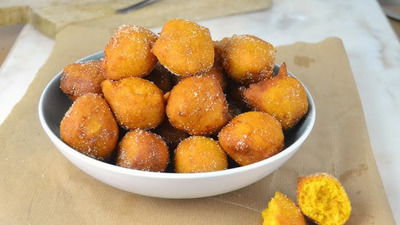
Pumpkin fritters are one of Valencia's most beloved traditional desserts. They are especially popular during the famous Las Fallas festival, when small stalls appear all over the city, frying them fresh right in front of passers-by.
The dough is made with roasted pumpkin purée, giving the fritters their wonderfully soft, airy texture and beautiful golden colour. Once cooked, they are usually dusted with sugar and are sometimes served with hot chocolate.
Although Buñuelos de calabaza are most closely associated with the Las Fallas festival, they can also be enjoyed at other times of the year in some of Valencia's traditional cafés and pastry shops.
If you spot pumpkin fritters on a menu or in a display case, don't miss the opportunity to try them. They are one of those desserts that are best enjoyed while still hot, when the outside is lightly crisp and the centre remains wonderfully soft and fluffy.
Coca de Llanda
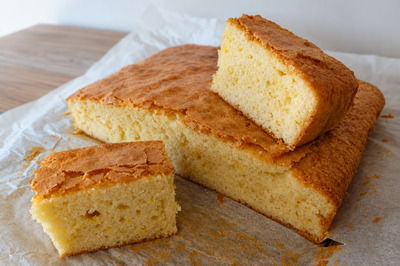
Coca de llanda is one of Valencia's most popular homemade desserts. It is a soft, light sponge cake with delicate hints of lemon and cinnamon that has been prepared by Valencian families for generations as a breakfast treat, afternoon snack or accompaniment to family tea.
The name of the dessert comes from the Valencian word llanda, meaning a metal baking tray, in which the cake is traditionally baked. Before baking, the batter is usually sprinkled with sugar, which forms a thin, crisp crust—one of the defining characteristics of Coca de llanda.
Despite its simple ingredients—flour, eggs, milk, vegetable oil, sugar and lemon zest—this dessert is known for its wonderfully light texture and homemade flavour. That's why it can often be found not only in bakeries but also in small family-run cafés throughout Valencia.
If you'd like to try a traditional Valencian pastry that locals genuinely love, be sure to look out for Coca de llanda. It is best enjoyed with a cup of coffee or tea and is perfect for a leisurely breakfast or an afternoon snack.
More Traditional Food to Try in Spain
Valencian cuisine is just one part of Spain's rich culinary heritage. Every region of the country has its own cooking traditions, signature dishes and local products, making a journey through Spain a true gastronomic adventure.
If you'd like to explore Spanish cuisine in even greater depth, we also recommend reading:
- Traditional Spanish Dishes — the best-known dishes of Spanish cuisine that are well worth trying during your travels around the country.
- Traditional Spanish Drinks — wines, cava, cider, sangria and other beverages that accompany Spanish cuisine.
- Wine in Spain — wine styles, classifications and Spain's main wine-producing regions.
- Catalan Food: 12 Traditional Dishes You Must Try — what to try in Barcelona and other cities across Catalonia.
- Traditional Andalusian Food — gazpacho, salmorejo, fried fish, tapas and other specialities from southern Spain.
- Traditional Cuisine of Madrid — the capital's best-known dishes and the culinary traditions of central Spain.
Spain is famous not only for its architecture, beaches and natural beauty, but also for its remarkable culinary diversity. The more you travel around the country, the more you realise that every region has its own unique flavour.

 English
  Español
  Русский