
La Rambla and Passeig de Gràcia are not just streets in Barcelona, but two iconic boulevards that reveal the city from completely different sides. One is noisy, lively and full of emotion. It is filled with music, street performers and the atmosphere of the old city. The other is elegant and architectural. Here, flamboyant modernism, designer shop windows and the masterpieces of Antoni Gaudí turn an ordinary walk into a real journey through the history of European art.

Plaça de Catalunya connects these two routes and makes a convenient starting point for a walk. From here, you can choose Passeig de Gràcia with its modernist façades and famous Gaudí houses, or walk down La Rambla towards the old port, La Boqueria Market and the historic neighbourhoods. And if you feel like continuing further, you can extend the route to the Arc de Triomf and Parc de la Ciutadella.
Plaça de Catalunya is located right in the centre of Barcelona and serves as a kind of starting point for exploring the city on foot. From here, it is easy to choose your direction: turn onto Passeig de Gràcia, walk down La Rambla or head along Ronda de Sant Pere towards the Arc de Triomf and Parc de la Ciutadella.
Passeig de Gràcia — modernist architecture and shopping

Passeig de Gràcia is one of the most famous and elegant avenues in Barcelona, connecting Plaça de Catalunya with the Gràcia district. The boulevard, around 1.6 km long, creates a sense of luxury and architectural diversity: here you will find boutiques of world-famous brands, designer shops, historic buildings and some of the most famous masterpieces of Catalan modernism.
Today, Passeig de Gràcia is considered Barcelona's main «shop window», but originally it was a country road connecting the old town with the village of Gràcia. In the 19th century, the avenue was transformed into a prestigious street where wealthy families began building luxurious mansions, inviting the finest architects of their time.
When walking along Passeig de Gràcia, it is worth paying attention not only to the building façades but also to other details of the street: original street lamps, mosaic paving tiles with Gaudí's distinctive pattern and elegant modernist elements of the urban landscape. All of this creates the atmosphere of an open-air architectural museum.
The main reason tourists want to visit Passeig de Gràcia is the opportunity to see several masterpieces of Catalan modernism in one place. Among them, Casa Batlló and Casa Milà (La Pedrera) stand out in particular — two famous works by Antoni Gaudí located just a few minutes' walk from each other.
Casa Batlló
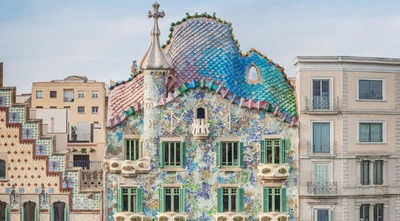
Casa Batlló is one of Antoni Gaudí's most recognisable masterpieces and a true gem of Catalan modernism. The building immediately attracts attention with its unusual façade, featuring flowing lines, colourful mosaic and balconies reminiscent of masks. The roof, with its scaly silhouette, is often associated with the image of a dragon, which is why the house is often called the «dragon house».
Casa Batlló is located in the so-called «Block of Discord» (Illa de la Discòrdia) — a small section of Passeig de Gràcia where several famous modernist buildings created by different architects stand side by side. This makes it particularly interesting not simply to look at Gaudí's house, but to compare it with the neighbouring buildings.
If you would like to see Casa Batlló from the inside, the house has preserved unusual interiors with flowing lines, coloured glass and organic forms characteristic of Gaudí.
Casa Milà (La Pedrera)
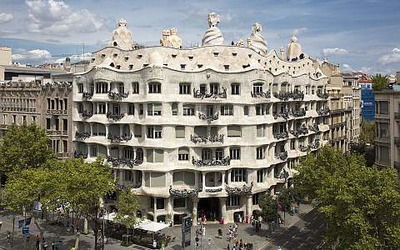
Casa Milà, also known as La Pedrera, is one of Antoni Gaudí's boldest and most innovative projects. The building stands out for its undulating stone façades, unusual wrought-iron balconies and lack of straight lines: the entire space seems to be in constant motion.
The house was built between 1906 and 1912 and became a true architectural experiment for its time. Thanks to features such as the open-plan layout of the floors and natural ventilation, Casa Milà was considerably ahead of many residential buildings of its era.
The rooftop is particularly striking: this is where the famous sculptural chimneys and ventilation towers are located, their forms resembling fantastical warriors. From the terrace, you can enjoy beautiful views of Passeig de Gràcia and central Barcelona.
If Passeig de Gràcia is associated with modernist architecture, designer shop windows and understated elegance, La Rambla shows a completely different side of Barcelona. This famous boulevard is a symbol of urban life, energy and constant movement, where history intertwines with street culture, gastronomy and the atmosphere of a major tourist centre.
La Rambla — Barcelona's liveliest street

La Rambla is not just a famous boulevard, but a true symbol of Barcelona. There is always movement here: tourists, locals, artists, musicians, street performers and an endless stream of people create the feeling of a great urban spectacle.
The boulevard begins at Plaça de Catalunya and stretches for approximately 1.2 kilometres to Port Vell, where a 60-metre-high monument to Christopher Columbus stands. In essence, it is a straight line from the heart of the city to the sea — a walk combining history, gastronomy and street culture.
La Rambla is a place of contrasts: during the day it is noisy and colourful, while in the evening it becomes romantic and atmospheric. It is one of those streets where it is not only about «what to see», but also about simply walking, observing and soaking up the atmosphere of the city.
During your walk along La Rambla, pay attention to the following places: many of them are easy to miss if you do not know where to look:
Canaletes Fountain (Fuente de Canaletas)

Canaletes Fountain is one of the first places you will see as you walk down from Plaça de Catalunya onto La Rambla. At first glance, it is a small drinking-water fountain decorated with lanterns and Barcelona's coat of arms. But for local residents, it has a special significance.
This is where supporters of FC Barcelona traditionally gather to celebrate major victories. During important matches and championships, the area around the fountain fills with thousands of fans — the place has long been a symbol of football celebrations and urban solidarity.
The fountain is also associated with a popular tourist legend: it is said that if you drink water from Canaletes, you will definitely return to Barcelona. That is why many travellers stop here not only for a photo, but also for a small «return ritual».
La Boqueria Market

There are many markets in Barcelona, but La Boqueria has long been one of the most famous. The market's official name is Mercat de Sant Josep de la Boqueria. Trading has taken place on this site since the Middle Ages, while the modern market began to take shape in the 19th century.
Walking along La Rambla, it is impossible to miss its striking entrance with its metal structure and stained-glass elements. Inside is a true gastronomic kaleidoscope: fresh fruit and vegetables, jamón, seafood, cheeses, sweets, spices and countless food stalls.
It is always lively here. Some people come for fresh produce, while others simply want to see the market or grab a bite at one of the bar counters. You can try tapas, seafood, jamón and other dishes here, while also taking a short break during your walk along La Rambla.
Miró Mosaic (Pavimento Miró)

As you walk along La Rambla, it is worth looking not only around you from time to time, but also at your feet. Right on the boulevard you will find the Joan Miró mosaic — a work by the famous artist incorporated into the pavement.
This circular mosaic pattern with bright colours and abstract forms was created as a symbol of welcoming visitors to the city. Interestingly, thousands of tourists walk across this spot every day without even realising that they are walking over a work of art by one of Barcelona's most famous artists.
Pavimento Miró is a small but interesting detail of La Rambla that is easy to miss during a walk. So here it really is worth looking down at your feet for a moment.
Royal Square (Plaza Real)

During your walk along La Rambla, it is also worth visiting Royal Square (Plaza Real) — it is just a few steps from the boulevard. The symmetrical façades of the buildings, palm trees, arcades and central fountain create a completely different atmosphere here from the busy La Rambla.
Particular attention should be paid to the street lamps around the square — they are one of Antoni Gaudí's early works. The decorative lamps, with their distinctive details, were among the architect's first urban commissions and are now considered part of his early artistic heritage.
In the evening, Plaza Real becomes very lively: restaurants, bars and terraces open, and music fills the square. That makes it convenient to include the square in a walk along La Rambla as a place to stop for a while and relax.
Human statues

One of the most recognisable features of La Rambla is its living human statues — street performers in colourful and unusual costumes who turn a walk along the boulevard into a real open-air theatre. Along the way from Plaça de Catalunya towards the sea, you can encounter characters in all kinds of guises: from historical figures and fantasy heroes to mysterious sculptures with original visual effects.
An interesting fact is that these performers work here officially. Barcelona City Council holds a selection process and issues special permits, so only those who have passed the competition can perform on the boulevard. Most of the time, they stand completely still, coming to life only in response to donations or reactions from spectators — and this is precisely what creates the sense of intrigue and attracts the attention of passers-by.
Human statues usually work in two shifts — approximately from 10:00 to 16:00 and then from 16:00 until late in the evening. The best time to take a good look at the characters and take photographs is in the morning, when the flow of tourists is not yet too heavy.
Wax Museum (Museo de Cera Barcelona)

In the southern part of La Rambla, not far from the Columbus Monument, you will find the Wax Museum. The updated exhibition combines the classic museum format with modern multimedia elements.
The museum has more than 20 themed rooms and sets featuring historical figures, film characters, celebrities and cultural figures from different eras. Many of the exhibits are highly detailed, while the rooms themselves are designed as individual scenes.

The museum can be a good stop at the end of your walk along La Rambla, especially if you would like to vary the route a little and go inside rather than immediately continuing towards the port.
Where else to go from Plaça de Catalunya
If after walking along La Rambla and Passeig de Gràcia you would like to go a little further, Plaça de Catalunya makes it easy to continue your route towards the old town and central districts of Barcelona. There is less tourist hustle and bustle here, and the atmosphere of the walk gradually changes: wide avenues give way to quieter streets and urban neighbourhoods.
Ronda de Sant Pere — a walk to the Arc de Triomf
Ronda de Sant Pere begins at Plaça de Catalunya and leads towards the Arc de Triomf. Along the way, you can visit the Paradox Museum and then continue towards the Arc de Triomf and Parc de la Ciutadella.
Paradox Museum

Almost at the beginning of the avenue, you will find a modern interactive space — Paradox Museum Barcelona. More than 70 exhibits are dedicated to visual illusions, optical effects and scientific paradoxes that literally «trick» your perception.
Mirror rooms, upside-down spaces and unusual installations make the museum interesting for both adults and children. It is located just a 5–6-minute walk from Plaça de Catalunya and can be a good first stop before continuing your walk.
Continuing along Ronda de Sant Pere, after approximately 15–20 minutes you will reach Barcelona's photogenic Arc de Triomf.
Arc de Triomf in Barcelona

The Arc de Triomf was built in 1888 as the main entrance to the World's Fair. Made of red brick in the Neo-Moorish style, it differs from classical European triumphal arches and has long been one of Barcelona's recognisable symbols.
The arch stands at the beginning of the wide pedestrian promenade Passeig de Lluís Companys. Along the way, you can see the monument to the lawyer Rafael Casanova, who played an important role during the War of the Spanish Succession.
Parc de la Ciutadella

Just a few minutes' walk beyond the Arc de Triomf lies one of Barcelona's most beautiful parks — Parc de la Ciutadella. This green space provides a pleasant contrast to the busy city centre.
Here you will find picturesque paths, a boating lake and the monumental Cascada Monumental fountain, in the design of which a young Antoni Gaudí took part. The park is also home to historic botanical pavilions — the Hivernacle greenhouse and the covered Umbracle gallery.
The park is ideal for a leisurely stroll or a relaxing break after a busy route along Barcelona's central boulevards.
Where to go next after walking along Barcelona's boulevards
After La Rambla and Passeig de Gràcia, you can continue exploring Barcelona in many different directions — head to a viewpoint, visit a market, stroll through a park or find an interesting place for lunch.
- Barcelona sightseeing guide — if you are planning a route around the city, this guide brings together the most important places to include in your first trip.
- Barcelona's food markets — a continuation of the Boqueria theme: the city's markets where you can try local produce, tapas and other dishes.
- Street markets in Barcelona — vintage items, designer goods, antiques and atmospheric markets that are a great addition to walks around the central districts.
- Where to eat in Barcelona and what to try — what is popular to eat in the city, which dishes and products are worth trying and where to look for good places to eat.
- Tibidabo Mountain — one of the city's best panoramic viewpoints overlooking Barcelona, worth visiting after exploring the historic centre.
- Montjuïc attractions — parks, museums and viewpoints for a walk away from the tourist bustle of the city centre.
- Best theme parks and family activities in and around Barcelona — ideas for family days out and entertainment if you would like to add some variety to a typical sightseeing programme.
- Barcelona transport — how to get around the city conveniently, which tickets to choose and how to save money on travel.

 English
  Español
  Русский