
The Royal Palace of Madrid is the official residence of the Spanish monarchy and one of the largest working royal palaces in Europe. For almost three centuries, it has hosted state ceremonies, official receptions, and ceremonial events connected with the Spanish Crown. At the same time, the palace is no longer the permanent residence of the royal family, allowing visitors to explore its magnificent interiors.
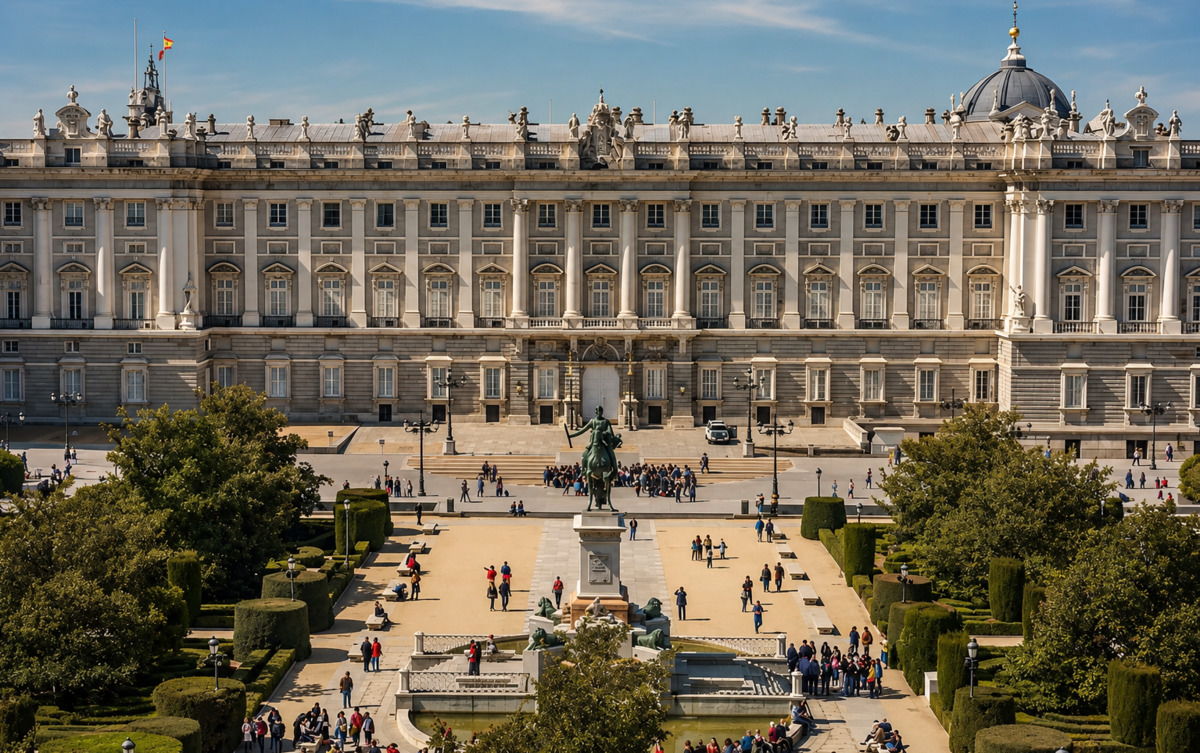
Built in the 18th century on the site of the old Alcázar, which was destroyed by fire, the Royal Palace became a symbol of a new era in Spanish history. Its monumental façade, magnificent staircases, lavishly decorated state rooms, the Throne Room, the Royal Chapel, and one of the finest armoury collections in Europe make it one of Madrid's most impressive landmarks.
Visiting the palace is an opportunity not only to admire its luxurious interiors but also to imagine what life at the Spanish royal court was like over the course of several centuries. Every room was designed for specific ceremonies, receptions, and state occasions, while the numerous works of art, frescoes, tapestries, and decorative art pieces tell the story of the Spanish monarchy better than any textbook.
History of the Royal Palace
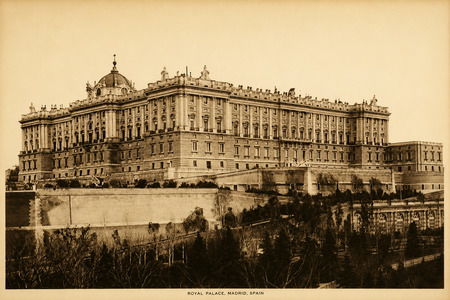
Today, it is hard to imagine that an entirely different fortress once stood on the site of the Royal Palace. The history of this part of Madrid spans more than a thousand years and reflects almost every key period of Spanish history — from Muslim rule and the medieval kings to the Bourbon dynasty, which gave the city one of the most magnificent palaces in Europe.
From a Moorish fortress to a royal residence
The first fortifications on this site appeared as early as the 9th century, when Madrid was under Moorish rule. A fortress was built here to protect the approaches to Toledo, and after the Reconquista it passed into the hands of the Castilian kings, gradually becoming the Alcázar — the royal residence of the Spanish monarchs.
Over the following centuries, the Alcázar was rebuilt and expanded on numerous occasions. However, on Christmas Eve in 1734, a devastating fire broke out in the palace. The blaze raged for several days and almost completely destroyed the old building along with numerous works of art and royal collections. After this disaster, King Philip V decided not to restore the Alcázar but instead to build an entirely new palace worthy of one of Europe's most powerful monarchies.
The Bourbon Palace
Construction of the new Royal Palace began in 1738 by order of Philip V, the first Spanish king of the Bourbon dynasty. The project was designed by the Italian architect Filippo Juvarra, but after his death the work was continued by Giovanni Battista Sacchetti, who brought his predecessor's main ideas to life. The result was a magnificent late Baroque palace with elements of Neoclassicism, inspired by the finest European royal residences while developing its own unique character.
Over the following decades, each new monarch made changes to the interior decoration, expanded the art collections, and embellished the state rooms. As a result, the Royal Palace today is not only an 18th-century architectural masterpiece but also a remarkable chronicle of the Spanish monarchy, with every era leaving its own mark.
Why the king does not live here
Despite its status as the official residence of the Spanish monarchy, King Felipe VI and his family do not live here permanently. Instead, they reside at the Zarzuela Palace, located on the outskirts of Madrid. This decision was made in the second half of the 20th century, when the royal family chose a more private residence for everyday life.
The Royal Palace continues to serve as the venue for official state functions. It hosts state receptions, ceremonial events, the presentation of credentials by foreign ambassadors, and other official occasions. At all other times, most of the palace is open to visitors, allowing everyone to admire interiors that remain an active part of Spain's state ceremonial life.
What awaits you inside
The Royal Palace of Madrid impresses visitors not only with its size but also with the richness of its interiors. Behind its austere façade lie dozens of state rooms adorned with marble, gilding, frescoes, and works of art. As you explore the palace, it feels as though you are moving from one historical era to another, gradually discovering the world in which the Spanish royal court lived for several centuries.
Most of the rooms have retained their original purpose and decoration. Visitors can admire the magnificent Grand Staircase, the Throne Room, the Royal Chapel, luxurious reception rooms, and collections of armour, clocks, porcelain, and tapestries. Even if you have already visited Europe's great palaces, the Royal Palace of Madrid is sure to impress with its scale and the variety of its interiors.
The Grand Staircase
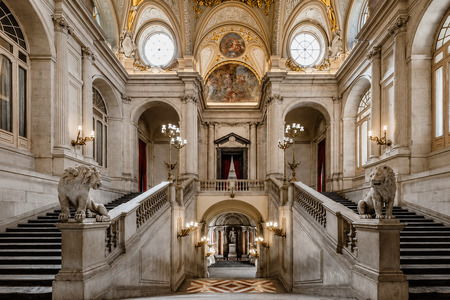
Your visit begins with the famous Grand Staircase, one of the most spectacular spaces in the entire palace. Built from a single type of marble, it was designed not merely as a way of moving between floors but as a symbol of the greatness of the Spanish monarchy. From your very first steps, it becomes clear that the palace was created for grand ceremonies and official state receptions.
As you make your way upstairs, take a moment to admire the spaciousness, the natural light, the magnificent decorative details, and the ceiling frescoes. It is here that many visitors first appreciate the true scale of the palace, and this unforgettable first impression sets the tone for the rest of the tour through its magnificent state rooms.
The Throne Room
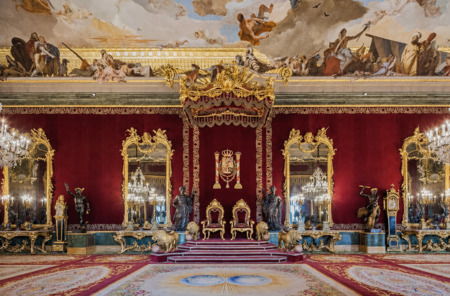
The Throne Room is considered the most famous and ceremonial room in the Royal Palace. It was here that official ceremonies, receptions for foreign ambassadors, and other important state occasions took place. The interior has remained virtually unchanged since the reign of Charles III, allowing visitors to see it almost exactly as it appeared several centuries ago.
Particular attention is drawn to the ceiling frescoes, richly decorated walls, enormous bronze chandeliers, and the two royal thrones placed beneath an opulent canopy. Every detail of this room emphasises the grandeur of the Spanish monarchy, making it one of the most impressive spaces in the palace.
The Royal Armoury
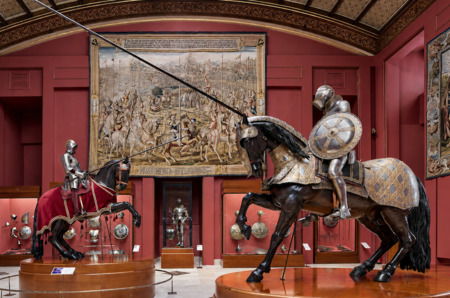
One of the palace's greatest treasures is the Royal Armoury. It is regarded as one of the finest collections of historic weapons and suits of armour in Europe, offering visitors a fascinating insight into the arms and armour used by Spanish monarchs and members of noble dynasties.
The collection includes richly decorated swords, spears, shields, tournament armour, and ceremonial weapons from different periods. Of particular interest are the suits of armour belonging to Emperor Charles V and King Philip II — true masterpieces of armour-making created by the finest European craftsmen of the 16th century. Even visitors with little interest in military history are often impressed by the scale of the collection and the extraordinary craftsmanship on display.
The Royal Chapel
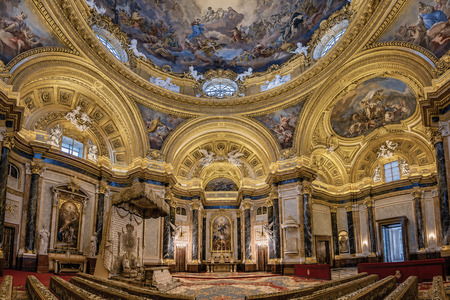
The Royal Chapel occupies a special place within the palace complex. It was the setting for religious ceremonies connected with the Spanish royal family, while its architecture and lavish decoration reflect the importance of this sacred space. The soaring dome, marble finishes, and elegant decorative details create an atmosphere of tranquillity that contrasts noticeably with the grandeur of the palace's ceremonial state rooms.
Particular attention is drawn to the historic organ and other musical instruments that were used during religious services and state ceremonies. Thanks to its unique combination of architecture, music, and art, the chapel remains one of the most fascinating rooms in the Royal Palace.
State rooms and royal apartments
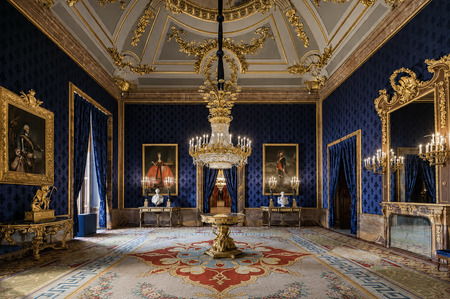
As visitors make their way through the palace, they pass a magnificent enfilade of state rooms and royal apartments, each decorated in its own distinctive style. Ceiling frescoes, enormous tapestries, elegant furniture, porcelain, and decorative details provide a vivid impression of what life at the Spanish royal court was like throughout different periods of history.
Many of these rooms were used for official audiences, grand receptions, and meetings with foreign ambassadors. Today, they have preserved their historic appearance, making a walk through these magnificent interiors feel like a journey through time, with each room revealing another chapter in the history of the Spanish monarchy.
The gardens and the square in front of the palace
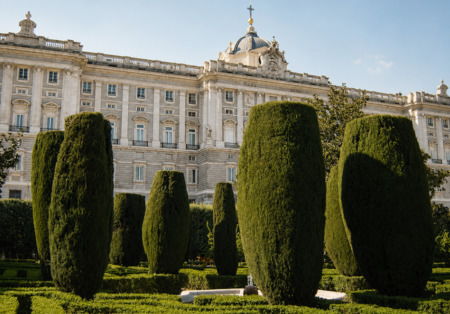
After exploring the palace interiors, it is well worth taking some time to stroll around the surrounding grounds. Plaza de Oriente and the nearby Sabatini Gardens offer beautiful views of the palace's main façade, while the western side provides panoramic views over Casa de Campo Park and the Manzanares River valley.
Just a short walk away stands Almudena Cathedral, Madrid's principal Catholic cathedral, which forms a harmonious architectural ensemble with the Royal Palace. Thanks to their close proximity, it is easy to continue your walk and discover several of the Spanish capital's most iconic landmarks in a single visit.
The Royal Palace is remarkable not only for its magnificent interiors and outstanding art collections. It is also a place where visitors can gain a deeper understanding of the history of the Spanish monarchy, see the setting in which state ceremonies were held, and discover what life at the royal court was like over several centuries. For this reason, a visit to the palace remains one of the highlights of any trip to Madrid.
Royal Palace tickets
Visitors can choose between standard admission tickets and guided tours, which provide a deeper insight into the history of the Spanish monarchy and the palace's magnificent interiors. Those who prefer to explore independently can opt for an audio guide, while visitors wishing to discover several of Madrid's top attractions can choose combination tickets that include admission to the Royal Palace along with other popular sights across the city.
The Royal Palace is one of Madrid's most visited attractions, so during the peak tourist season and on public holidays, queues at the entrance can be quite long. To avoid lengthy waiting times, it is best to purchase your tickets in advance and choose a morning time slot for your visit. If you would like to explore the interiors at a leisurely pace and take photographs without large crowds, it is worth arriving either shortly after opening or later in the day.
What else to see in Madrid
- Top attractions in Madrid — discover the Spanish capital's most iconic sights, essential for anyone visiting one of Europe's most beautiful cities for the first time.
- Prado Museum — explore one of Europe's finest collections of paintings, featuring masterpieces by Velázquez, Goya, Bosch, Titian, Rubens, and many other great artists.
- Santiago Bernabéu Stadium — visit the legendary home of Real Madrid, explore the club museum, and experience the famous Bernabéu Tour.
- Madrid Wax Museum — see lifelike figures of celebrities, historical figures, and famous film characters in one of the city's most popular museums.
- Museum of Illusions Madrid — an interactive museum featuring optical illusions, unusual rooms, and fascinating hands-on exhibits for both children and adults.
- Warner Park Madrid — one of Spain's best theme parks, offering exciting rides, live shows, and themed areas inspired by famous films.
- Theme parks in Madrid — an overview of the best amusement parks to enjoy with the whole family during your visit to Spain's capital.
- Where to eat in Madrid and what to try — discover the best dishes of Madrid's cuisine, local culinary traditions, and the top places to sample Spain's most famous specialities.

 English
  Español
  Русский