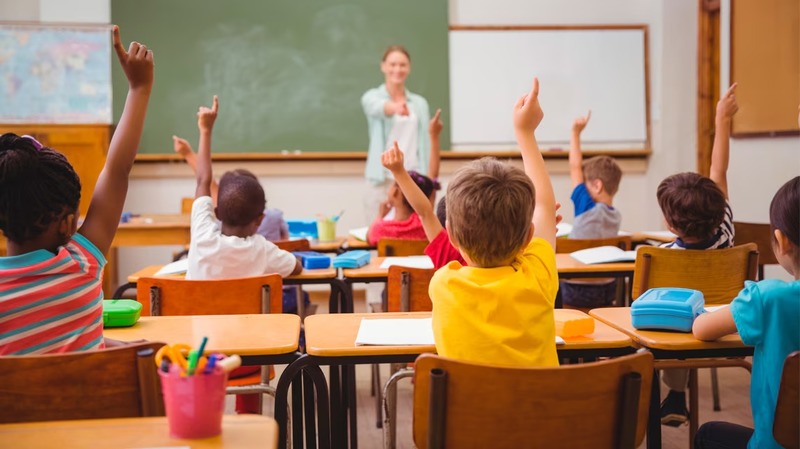
Questions about children's education are very important when preparing to move to Spain.
Primary and secondary education is obligatory here from the ages of 6 to 16.
Early childhood education in Spain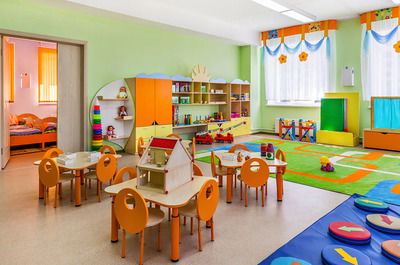
From 0 to 3 years old — nursery school
Some parents send their children to nursery school (guardería infantil) from as early as six months to three years of age. This is at the parents' choice and depending on their financial situation.
The monthly fee for a child attending nursery school is approximately €200–500
There are social assistance and programmes that allow parents to cover part of the costs.
From 3 to 6 years old — preschool education
From 3 to 6 years old, the second cycle begins — preschool education.
Although this stage is not obligatory, almost all children of this age attend preschool (escuela infantil).
This is the optimal time for obtaining basic knowledge about the world and social adaptation.
Все дети этого возраста могут бесплатно посещать такие учреждения, которые обычно находятся при школах.
School education in Spain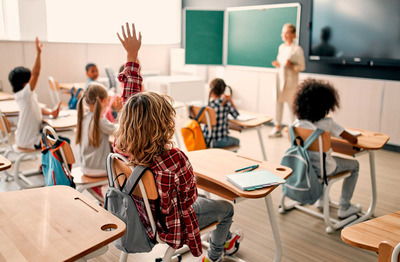
From 6 to 12 years old — primary school (colegio)
Primary education (educación primaria) in Spain lasts from 6 to 12 years.
For admission to school, the year of birth of the child is important, not the number of full years at the time of starting school.
For example, children born in January and December of the same year will attend the same class, despite the difference of almost a year.
This is one of the distinctive features of the education system in Spain.
From 12 to 16 years old — secondary school (instituto)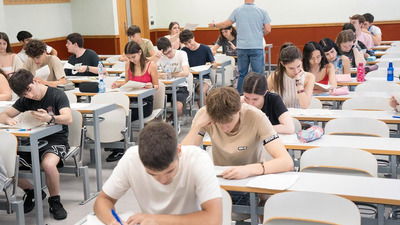
The word instituto is often confusing, but in Spain it refers to a secondary school.
Children aged 12 to 16 study here as part of compulsory secondary education.
Educación Secundaria Obligatoria (ESO).
From 16 to 18 years old — Bachillerato or Formación Profesional
This stage lasts two academic years and serves as preparation for further study.
After completing ESO, students can choose between:
-
Bachillerato — high school with a focus on university
-
Formación Profesional — two-year professional education
Higher education in Spain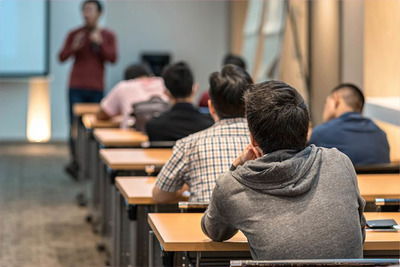
From age 18 — Higher Education (University)
After completing the previous stages of study, graduates have two options:
-
enrol in university (studies last 4–6 years depending on the specialisation),
-
or continue studying on advanced vocational training courses.
Types of schools in Spain: public, semi-private, private
Public schools
Most children in Spain attend public schools. (colegios públicos).
Education is free and 100% funded by the state.
Educational programmes and rules are established at the national level.
Semi-private schools
Semi-private schools (colegios concertados) are partly funded by the state and partly by parents.
The cost of study is approximately €800–1,000 per year.
These schools are run by private non-profit organisations.
Private schools
Private schools (colegios privados) are fully funded by parents.
The cost of study ranges from €6,000 to €12,000 per year and depends on a variety of factors.
Such schools offer:
-
personalised approach,
-
more intensive programmes,
-
modern equipment,
-
sometimes accommodation options.
International schools in Spain
International schools (colegios internacionales) are mainly private educational institutions offering international educational programmes.
Children can study:
-
according to their country's programme,
-
or according to international systems recognised worldwide.
Not only foreigners study at such schools — many Spaniards also choose them for their high level of education and international diplomas.
The grading system in Spain
Previously, Spain used a 10-point system.
Since 2023, schools have switched to a new assessment system:
-
1–4 — Insuficiente (unsatisfactory)
-
5 — Suficiente (satisfactory)
-
6 — Bien (good)
-
7–8 — Notable
-
9–10 — Sobresaliente (outstanding)
Teachers are understanding towards children, and two or three unsatisfactory grades do not always mean that a child will have to repeat the year.
📌Useful information when moving to Spain with children
- Moving to Spain: pros and cons
- Applying for a NIE before and after moving
- Property prices in Spain
- Transport and food costs in Spain
Textbooks in Spain (libros escolares)
Textbooks in Spain are considered to be among the most expensive.
At the same time, schools operate:
-
financial aid programmes,
-
or free textbooks that must be returned at the end of the academic year.
This usually applies to students who are already enrolled in school.
💡 It is important to note that each autonomous community in Spain has its own educational programmes and textbooks.
If a child joins school in the middle of the academic year, you will most likely have to buy the books yourself.

 English
  Español
  Русский