
The San Juan festival in Spain is one of the brightest and most magical nights of the year, filled with the glow of bonfires, the sound of waves, and the atmosphere of lively celebrations. On the night of June 23 to 24, fires are lit across the country, music fills the air, and ancient rituals are performed, symbolizing purification, renewal, and hope for a happy future.
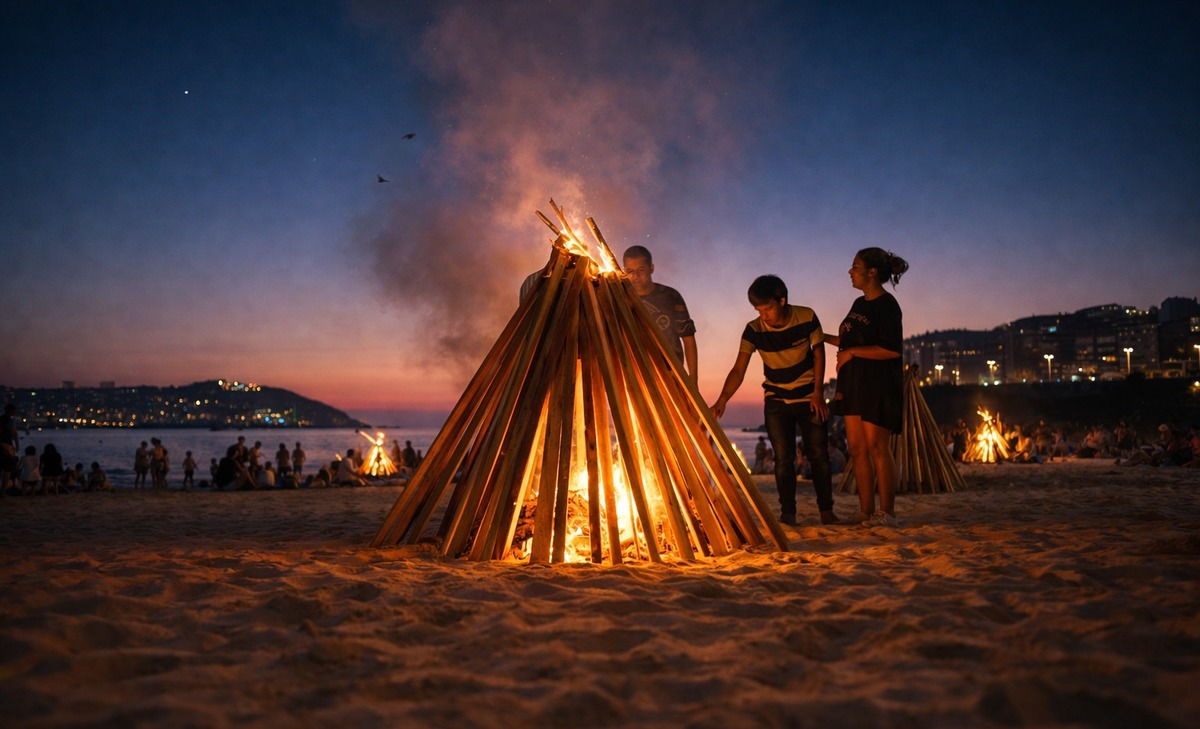
The Night of San Juan is associated with the summer solstice, which falls on June 21, as well as with the birthday of Saint John the Baptist, giving the celebration a special religious and cultural meaning.
Contents of the article:
When the San Juan Festival Takes Place
The San Juan festival in Spain takes place annually on the night of June 23 to 24. The main celebrations begin in the evening of June 23 and continue until dawn. This night is considered the shortest of the year and is symbolically connected with the summer solstice, which falls on June 21.
In some regions, the celebrations may last for several days. For example, in Alicante, the Hogueras de San Juan festival begins around June 20 and continues until June 24, ending with the grand burning of festive figures.
Historical Roots of the Festival
San Juan has ancient roots dating back to pagan times. The celebration is associated with the solar cult and rituals intended to drive away evil spirits, as well as to bring luck and health. The earliest references to the festival can be found in ancient Greek and Roman sources. The constant symbol of San Juan is the bonfires lit throughout the country, as well as water rituals aimed at purification.
In Spanish culture, the San Juan festival combines Christian and pagan traditions. Christians celebrate the day of Saint John the Baptist, who, according to tradition, was born on June 24 — exactly six months before Jesus Christ.
However, many customs that have survived to the present day have pagan origins. This combination of ancient rituals and religious traditions makes San Juan a unique and especially beloved festival in Spain.
How the San Juan Festival Is Celebrated in Spain: Traditions and Customs
On the evening of June 23, people across Spain gather on beaches, in parks, and in town squares to welcome the Night of San Juan. In different regions of the country, traditions may vary, but the main elements of the celebration remain fire, water, and collective outdoor festivities.
These customs are passed down from generation to generation and create a special festive atmosphere. Despite regional differences, most traditions share symbols of purification, renewal, and hope for good luck in the coming year.
Bonfires on San Juan
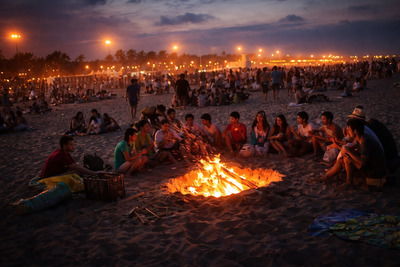
One of the most noticeable elements of the San Juan festival is the tradition of lighting bonfires. From early evening, throughout Spain, you can see flames rising as people gather around them, sing songs, socialize, and dance. Usually, the bonfires burn throughout the night and become the center of the festive atmosphere, bringing together families, friends, and neighbors.
It is believed that the fire on the Night of San Juan has special purifying power. It symbolizes the sun, warmth, and renewal, and also helps to get rid of everything negative accumulated during the year. According to ancient beliefs, the flame protects against evil spirits, illnesses, and misfortune, and also brings health and well-being to the home.
In many regions, it is customary to throw old items, paper with written wishes, or symbolic objects related to the past year into the fire. Such a ritual represents saying goodbye to worries and hoping for happy changes. People believe that together with the fire, old problems disappear, making room for new opportunities and fortunate events.
Bonfires also symbolize hope for the future. On this night, people make wishes, dream of love, health, and success, and the fire becomes a symbol of the beginning of a new stage. It is believed that the light of the bonfire brings good luck, strengthens life energy, and helps welcome summer with new hopes and positive changes.
Jumping Over the Bonfire
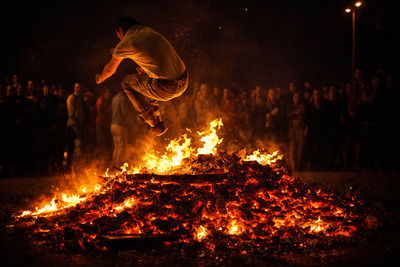
Jumping over the bonfire is one of the most famous and spectacular traditions of the San Juan festival. This ritual is considered a personal symbol of purification, renewal, and protection from everything unfavorable. Unlike the bonfire itself, which unites people, jumping over the fire is perceived as an individual action associated with inner changes.
According to folk beliefs, a person should jump over the bonfire a certain number of times — most often three or seven. Such jumps symbolize health, prosperity, and the fulfillment of wishes. At the moment of the jump, many people silently make a wish or think about what they want to get rid of, believing that the fire helps leave worries and doubts in the past.
In some regions, there is a tradition of jumping over the bonfire in pairs — friends or lovers. It is believed that such a jump strengthens relationships, brings mutual understanding, and helps preserve harmony in the future. The more confident and brave the jump, the stronger the belief that successful events and positive changes lie ahead.
Water Rituals
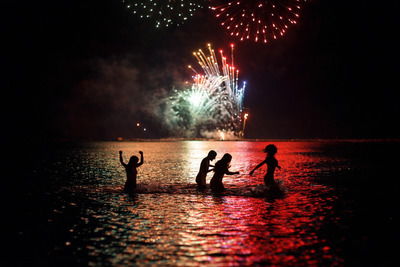
In addition to bonfires, water rituals remain an important element of the San Juan festival. On this night, water is believed to have special magical power and the ability to cleanse not only the body but also the mind. People head to seas, rivers, and lakes to swim or at least wash with water, considering it a symbol of renewal and the beginning of a new stage in life.
There is a belief that the first water you touch on the Night of San Juan brings good luck and prosperity for the entire following year. A particularly popular ritual is jumping over seven sea waves at midnight — it is believed to help strengthen health, protect against misfortune, and attract happiness.
In many regions, there is also a tradition of throwing flowers or small symbolic objects into the water. This gesture represents letting go of old grievances and the desire to start a new life. Flowers floating along the current symbolize hopes and wishes that, according to beliefs, should come true.
Sometimes water is also used for small fortune-telling rituals. For example, girls may wash with seawater or leave a bowl of water under the open sky, believing it will bring love, harmony, and positive changes in the future.
Another popular tradition is throwing coins into the water exactly at midnight. People make a wish and toss a coin into the sea or river, believing that the water will accept their request and bring luck, prosperity, and the fulfillment of their plans. This simple ritual is especially common along the coast and often becomes a symbolic beginning of a new stage in life.
Where the San Juan Festival Is Celebrated
The San Juan festival is celebrated throughout Spain — from large coastal cities to inland regions of the country. However, in some places the celebrations are especially vivid and attract thousands of people. Below are cities where San Juan traditions can be seen in all their beauty and scale.
Barcelona
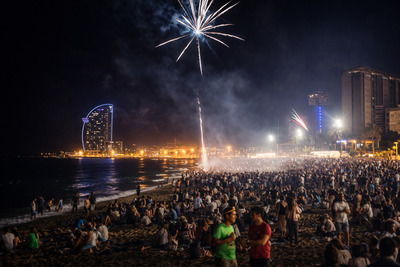
In Barcelona, the San Juan festival is considered one of the brightest nights of the year and begins long before darkness falls. Already during the day, the symbolic flame — «Flama del Canigó» — is ceremoniously delivered to the city, and it is later used to light festive bonfires. At this time, the streets fill with the sounds of firecrackers, which become an essential part of the festive atmosphere.
As evening approaches, city residents gather in squares, courtyards, and streets, where traditional parties known as «verbenas» take place. Many families buy the traditional festive cake «Coca de Sant Joan» in advance, which is considered a symbol of this night and is served at the festive table.
Later, thousands of people head to the sea, and the main center of celebration becomes Barceloneta Beach and other city beaches. Here people sing, dance, organize picnics, and hold friendly parties directly on the sand. Bonfires on the beach create a joyful atmosphere, while fireworks and firecrackers continue in almost all districts of the city.
After midnight, many participants enter the sea or wash with seawater, considering it a symbolic purification before the new summer season. The celebration continues until sunrise, and the sound of waves, the glow of bonfires, and bright flashes of fireworks create an atmosphere that makes the Night of San Juan in Barcelona one of the most memorable in Spain.
Tarragona
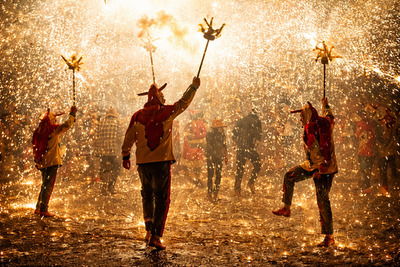
In Tarragona, the San Juan festival also begins during the day, when the first signs of preparation for the evening celebrations appear in the city. One of the important traditions is the arrival of the symbolic flame — «Flama del Canigó», which is ceremoniously brought into the city. This flame is used to light the main bonfire, symbolizing the beginning of summer and the connection with ancient Catalan traditions.
As evening approaches, the city center fills with the sound of music and anticipation of the main spectacle. One of the brightest traditions is the fire procession «correfoc», during which participants dressed as devils and mythical creatures walk through the streets carrying torches and pyrotechnics. Sparks fly around, drums sound, and spectators gather along the streets to watch this spectacular performance.
Later, the celebration moves to the coastline, where bonfires are lit on city beaches, music plays, and parties take place directly on the sand. People bring food, gather in large groups, socialize, and enjoy the warm summer night by the sea.
After midnight, many participants enter the sea or wash with seawater, considering it a sign of luck and purification. Thanks to the combination of street fire processions and beach traditions, the Night of San Juan in Tarragona becomes especially spectacular and memorable.
Valencia
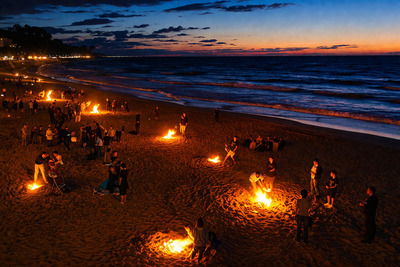
In Valencia, the San Juan festival is celebrated especially vividly thanks to the residents’ love for fire traditions and pyrotechnics. Already during the day, the first firecrackers can be heard on the streets, and closer to evening people begin gathering by the sea to welcome the shortest night of summer.
As evening approaches, the main events unfold on the city beaches — especially Malvarrosa Beach and Las Arenas. Here families organize picnics, music plays, and friendly gatherings take place directly on the sand. Bonfires become the center of the celebration: people gather around them, sing, and make wishes.
Closer to midnight, many participants perform one of the most popular rituals — jumping over seven sea waves, believing that it brings good luck, health, and happy changes. After that, people enter the sea or wash with water, symbolically cleansing themselves before the beginning of a new stage.
The night is accompanied by bright fireworks and the noise of firecrackers, which are considered an essential part of the celebration in Valencia. Thanks to the rich traditions of fire festivals for which the city is famous, San Juan here stands out for its special energy, joy, and truly festive spirit.
Alicante
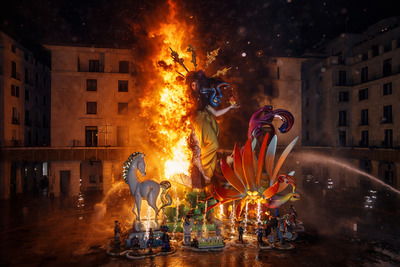
The San Juan festival in Alicante is celebrated on a grand scale — from June 20 to 24, the famous Hogueras de San Juan take place here. Several days before the main night, giant monuments (up to 12 meters high) made of wood, papier-mâché, and cardboard are installed on the streets and squares of the city, known as «hogueras». These figures often have a satirical or symbolic character and reflect events of the past year, famous personalities, or city themes.
During the festive days, daytime pyrotechnic shows known as «Mascletà» take place in the city, attracting many spectators. The main feature of these performances is powerful sound effects that create the feeling of a true fire festival. At the same time, parades, concerts, and festive processions take place in the streets, while in the evenings special venues called «barracas» and «racós» open, where music plays and parties continue.
One of the most impressive locations is the Alicante Town Hall Square, where the official hoguera — the main monument of the festival — is installed. Other figures created by local communities also appear in different districts of the city, each distinguished by its own style and concept.
The culmination of the festival is the night of June 23 to 24, known as «La Cremà», when all monuments are ceremoniously burned to the sound of music and fireworks. After the figures are burned, firefighters often spray spectators with water — this tradition is called «Banyà» and is considered a symbol of purification and a joyful end to the festival.
Thanks to numerous parades, concerts, fireworks, and fire shows, the festive atmosphere fills all of Alicante, turning it into one of the brightest and most spectacular centers of San Juan celebrations in Spain.
Malaga
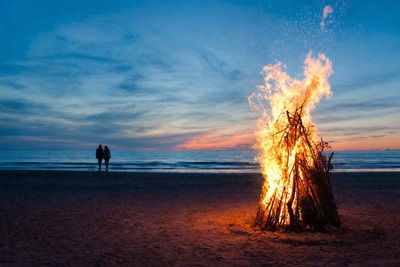
In Malaga, the San Juan festival is celebrated especially vividly and begins even before nightfall. As early as the evening of June 23, residents and tourists head to the coastline to secure places on the beach and spend time with friends and family. Many bring food with them or prepare traditional dishes, and on some beaches you can see sardines being grilled over open fire — one of the most characteristic treats of the evening.
As evening approaches, dolls and figures known as «júas» are set up and lit on the beaches. These figures often have a satirical character and symbolize everything people want to get rid of. Their burning is considered an important ritual that represents saying goodbye to the worries of the past year and the beginning of a new stage.
Later, the beaches fill with music, laughter, and the sound of waves, while large groups gather around bonfires. People socialize, dance, and enjoy the festive atmosphere under the open sky.
After midnight, many participants enter the sea or jump over bonfires, believing that such actions bring luck and purification. The night is accompanied by fireworks and continues until sunrise, making San Juan in Malaga one of the most beloved summer celebrations on the coast of Andalusia.
Cadiz
In Cadiz, the San Juan festival takes place in a particularly atmospheric setting thanks to the proximity of the ocean and the city's long-standing traditions. Already during the day, figures and dolls known as «Juanillos» appear on streets and squares. These figures are made from available materials and often have a satirical character, depicting famous people or events of the past year.
As evening approaches, residents and visitors gather on the beaches, especially La Caleta and Playa Victoria, to spend the night by the ocean. At this time, bonfires are lit, music plays, and friendly gatherings take place directly on the sand. One of the most anticipated moments is the burning of «Juanillos», which symbolizes getting rid of everything negative and the beginning of a new period.
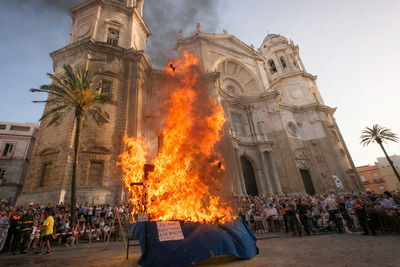
Later, the beaches fill with laughter, the sound of waves, and a festive atmosphere. People socialize, dance, and enjoy the warm summer night by the ocean.
After midnight, many participants enter the water or jump over bonfires, making wishes and leaving everything negative in the past. The night is accompanied by fireworks and continues until sunrise, making San Juan in Cadiz one of the most memorable summer events on the coast of Andalusia.
Seville
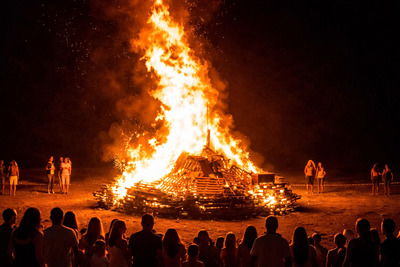
In Seville, the San Juan festival takes place in a calmer atmosphere than in coastal cities, but it retains the spirit of a traditional Andalusian celebration. Already in the evening of June 23, residents begin gathering along the banks of the Guadalquivir River, especially in the Triana district, where the first bonfires appear and music begins to play.
As darkness falls, groups of friends and neighbors gather along the riverbanks and in small courtyards. People prepare delicious traditional dishes, socialize, and enjoy the warm summer night. In some districts, live music can be heard and dances performed to the sounds of flamenco, creating a truly Andalusian festive atmosphere.
Later in the evening, friendly gatherings continue around the bonfires, and the festive atmosphere fills the streets and riverbanks of the city. Although Seville has no sea, traditions of fire and social gatherings remain an important part of this night.
Many residents of Seville also prefer to travel to the ocean — to the provinces of Cadiz or Huelva — to welcome midnight by the water and take part in traditional sea rituals. This makes the San Juan festival for city residents a special combination of urban traditions and trips to the coast.
Madrid
In Madrid, the San Juan festival is not celebrated on as grand a scale as in coastal cities, but it still preserves its unique atmosphere as a summer city celebration. Already in the evening of June 23, public festivities, concerts, and festive events begin in different districts of the capital.
One of the most well-known centers of celebration is the Vallecas district, where the traditional «Fiestas de San Juan» take place. Stages are set up here for musical performances, live music plays, festive areas operate, and large groups of residents gather. Another popular meeting place is Enrique Tierno Galván Park, where concerts and evening shows are held.
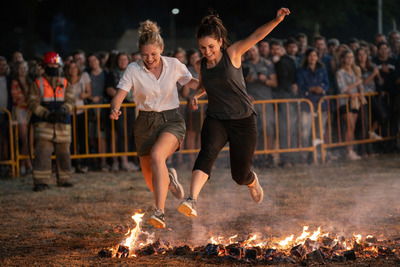
As darkness falls, small bonfires are lit in some parts of the city in specially designated areas, observing safety measures. These bonfires become a symbol of the celebration and gather residents around them to socialize, listen to music, welcome the summer night, and the bravest participants jump over the fire. Although Madrid has no sea, water purification traditions are still preserved: sometimes people wash with water from fountains or splash water on themselves, considering it a sign of luck and renewal.
Later in the evening, fireworks light up the sky above the city, and the festive atmosphere continues until late at night. For many residents of the capital, San Juan becomes an opportunity to welcome the beginning of summer outdoors and spend time in a friendly and cheerful atmosphere.
La Coruña
In La Coruña, the San Juan festival is considered one of the largest and most spectacular in all of Spain and is the city's main summer event. Preparations for the celebration begin during the day, when designated areas for bonfires appear on the beaches, and residents bring food and gather in groups to spend the evening by the ocean.
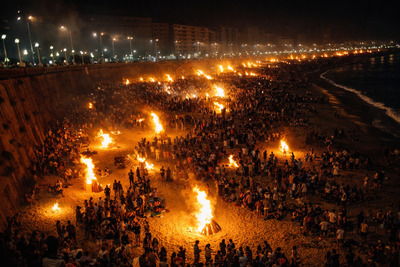
As evening approaches, thousands of people head to the city's main beaches — Orzán and Riazor — where hundreds of officially permitted bonfires are set up. People organize picnics directly on the sand, prepare food, and wait for the moment when they can light the fire. One tradition is burning old items or notes with wishes, symbolizing getting rid of everything negative and the beginning of a new stage.
Later, the beaches fill with music, laughter, and the aromas of street food, while thousands of lights create an impressive spectacle along the entire coastline. Many participants jump over bonfires and make wishes, considering it a sign of luck and renewal.
After midnight, many people enter the ocean or wash with seawater, considering it a symbol of purification. The night is accompanied by concerts and fireworks, and the huge number of bonfires makes San Juan in La Coruña one of the most famous and spectacular festivals in all of Spain.
San Sebastian
In San Sebastian, the Night of San Juan takes place in a special atmosphere of Basque traditions and is considered one of the favorite summer festivals in northern Spain. Preparations for the celebration begin in the evening of June 23, when residents and tourists gather in the city's central squares, especially Constitution Square, where the main festive bonfire is set up.
As darkness falls, one of the most spectacular events takes place here — the burning of a witch figure known as «Sorgin». This ritual symbolizes getting rid of everything negative, protection from evil forces, and the beginning of a new stage. Residents gather around the bonfire, music plays, and festive performances take place.
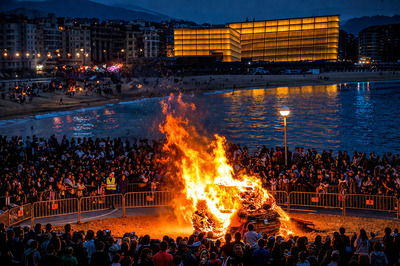
Later, many head to the ocean, especially to the famous La Concha Beach and Zurriola Beach, where festive gatherings continue. Bonfires are lit on the beaches, music plays, and friendly parties take place. People organize picnics, jump over the fire, and make wishes, symbolically leaving old worries in the past.
After midnight, many enter the water or wash with seawater, considering it a sign of luck and purification. The festive atmosphere is accompanied by fireworks and lively socializing, while the beautiful views of the ocean coastline make the Night of San Juan in San Sebastian especially memorable.
The San Juan festival in Spain is not just a date on the calendar, but a special night filled with the glow of bonfires, the sound of waves, and the joy of gatherings. It is a time when people come together to celebrate the beginning of summer and connect with ancient traditions passed down from generation to generation.
San Juan unites people, awakens a spirit of unity and joy, and reminds everyone of Spain’s rich cultural heritage. Regardless of the city or region, this night remains a symbol of hope, renewal, and belief in a happy future.

 English
  Español
  Русский