
Alicante is one of the most popular resorts on the Costa Blanca. The city is known not only for its beaches and mild climate, but also for its rich history, which spans more than two thousand years. The spirit of the past can be felt at every turn: as you climb up to the medieval fortress, wander through the narrow streets of the historic centre or pop into traditional taverns. It is this remarkable atmosphere that makes Alicante a place you want to return to time and time again.
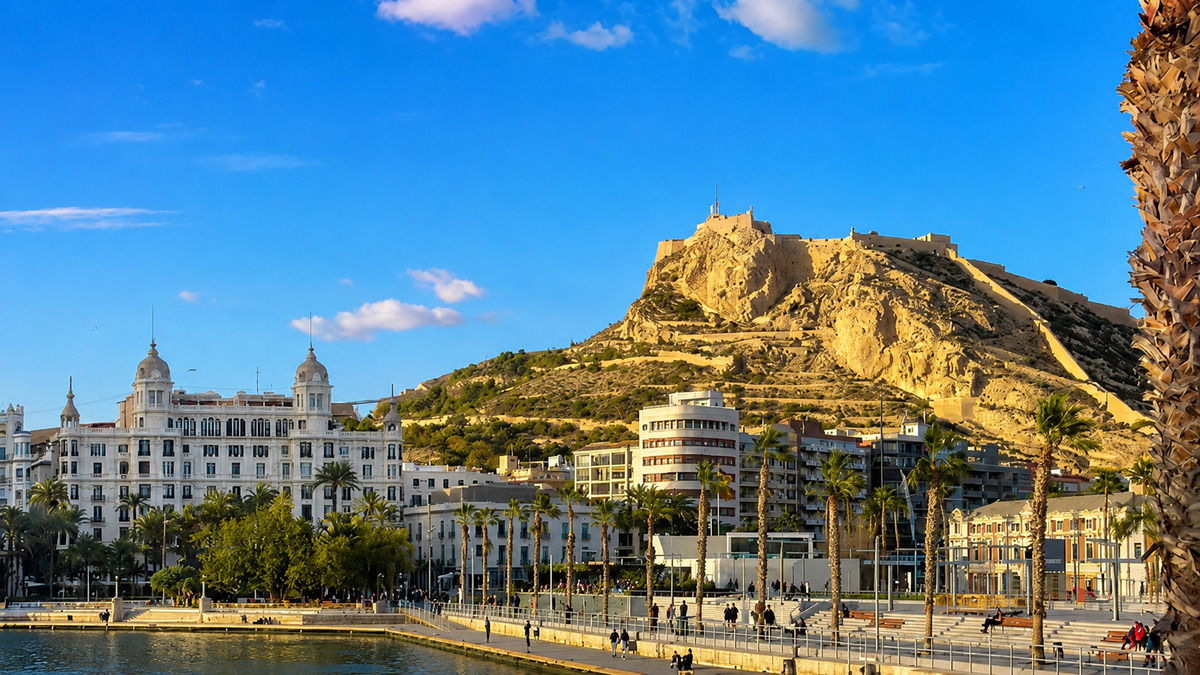
You don't have to explore the city according to a strict plan. You can start at Santa Bárbara Castle, make your way down into the old quarters or head towards the seafront promenade. Each place has its own character, and it is these walks that shape your impression of Alicante — not just as a resort, but also as a city with its own history and everyday life.
Contents
- Santa Bárbara Castle
- The Santa Cruz quarter
- Basilica of Saint Mary
- Co-Cathedral of Saint Nicholas
- Mushroom street
- The Explanada de España
- Alicante port
- Alicante Archaeological Museum (MARQ)
- Alicante beaches
Most of Alicante's attractions are close to one another, making the historic centre easy to explore on foot. It's worth setting aside the most time for Santa Bárbara Castle — allow two to three hours to explore the fortress and walk around its grounds.
Santa Bárbara Castle
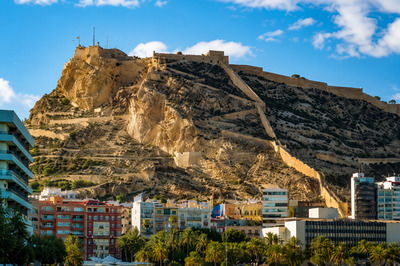
Santa Bárbara Castle is one of the largest and most impressive fortifications in Spain. For many centuries, it has towered over Alicante from the summit of Mount Benacantil, at an altitude of 166 metres above sea level.
The first fortifications on the mountain date back to the period of Muslim rule, while the castle itself began to take shape in the 9th century. Thanks to its strategic location, it controlled the approaches to the city and the Mediterranean coast for many centuries.
The very word “fortress” reflects its military purpose. There were never any royal palaces or luxurious aristocratic residences here. Santa Bárbara was built primarily for defence, as its massive walls, bastions, loopholes, old cannons and underground chambers still testify.
The castle's long history is full of events. Over the centuries, Santa Bárbara was repeatedly besieged, shelled, captured and damaged. It played a particularly important role during the many military conflicts that took place along Spain's eastern coast. In the 18th century, the castle gradually lost its defensive significance and was used as a prison for a time.
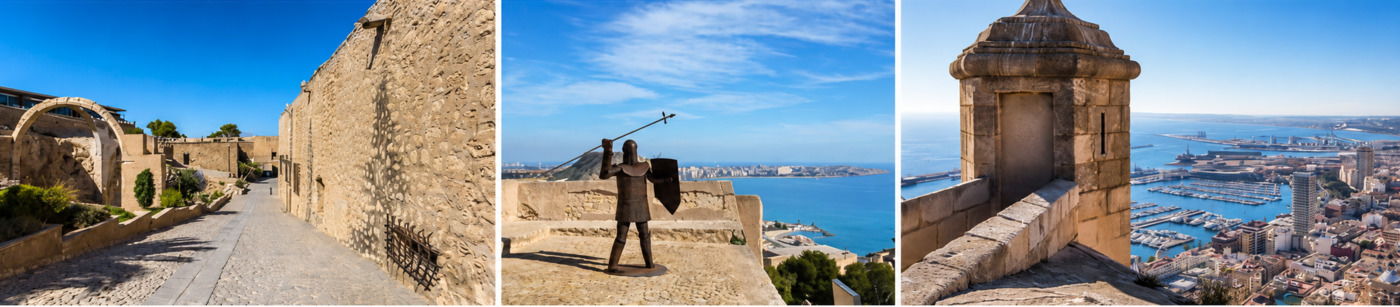
Today, the castle houses exhibition rooms that tell the story of Alicante and Santa Bárbara itself. You can see old photographs of the city, archaeological finds, documents and materials illustrating how the fortress developed over the centuries. Most of the information is in Spanish, but even if you don't speak the language, the exhibits help you gain a better understanding of this historic site.
Historians and archaeologists have gradually pieced together many chapters of the castle's past, showing how its fortifications changed and how extensive reconstruction work was carried out. Thanks to these efforts, visitors can now see Santa Bárbara in its present form.
💡 Admission to the castle is free. If you don't fancy walking up the slope of Mount Benacantil, you can take the lift from the Postiguet Beach side, on Avenida Juan Bautista Lafora. The ascent costs around €2.70, while the descent is free. Tickets are usually purchased on site.
Another option is a tourist tuk-tuk that runs between the city centre and the castle. A ride usually costs around €5 per person and can be particularly convenient on hot summer days.
If you're planning to drive to Santa Bárbara Castle, bear in mind that parking within the castle grounds is limited. You could consider parking at La Ereta or near the MARQ museum, from where you'll need to continue on foot.
The Santa Cruz quarter
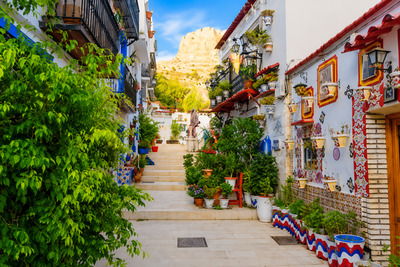
Santa Cruz is Alicante's most atmospheric historic neighbourhood, located at the foot of Mount Benacantil. After descending from Santa Bárbara Castle, your route naturally leads you here. The neighbourhood began to take shape after the city was reconquered from the Moors in the 13th century and is now considered one of the most picturesque corners of Alicante.
Santa Cruz resembles a small Andalusian village that has somehow found itself in the centre of a resort city. Narrow stairways, winding streets and whitewashed house façades create a distinctive atmosphere that differs greatly from Alicante's modern districts.
Local residents are very proud of their neighbourhood and lovingly decorate their homes with flowers, ceramics and various decorative details. You can find a cosy courtyard, a brightly coloured door or a beautiful balcony around almost every corner, which is why the area is particularly popular with photographers.
As you wander through Santa Cruz, it's easy to imagine what Alicante was like several centuries ago. There are no major attractions in the conventional sense — the neighbourhood's greatest appeal lies in its authentic atmosphere.
Basilica of Saint Mary
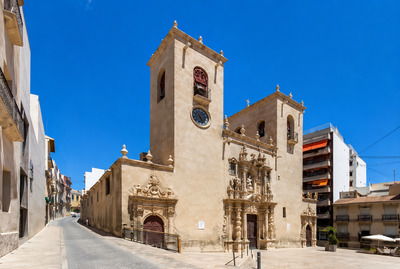
The Basilica of Saint Mary is considered one of the city's most important religious architectural landmarks. It is located near the Santa Cruz neighbourhood and is a must-see stop when exploring the historic centre.
Construction of the church began in the 14th century on the site of the city's main mosque, after Alicante came under Christian rule. In 1484, the church was damaged by a major fire and took a long time to restore. The building was remodelled several times over the following centuries, which is why it now combines elements from different periods: a Gothic structure and a striking Baroque façade with two towers.
From the outside, the basilica draws attention with its striking façade, while inside, a calm, cool atmosphere awaits — particularly welcome after walking through Alicante's sunny streets. The church's interior is adorned with historic altarpieces, religious artworks and other historic details. This is one of those places where you can really feel the city's centuries-old history and the passing of different eras. Even if you're not interested in religion, it's worth stepping inside at least for the atmosphere.
💡 Admission to the basilica is paid — a standard ticket costs €6. Visitors aged over 65 pay €5, while young people and students can buy a ticket for €4. The ticket includes access to the basilica, chapels, chapter house museum, choir and bell tower. Children under 12 accompanied by an adult can enter free of charge.
Co-Cathedral of Saint Nicholas
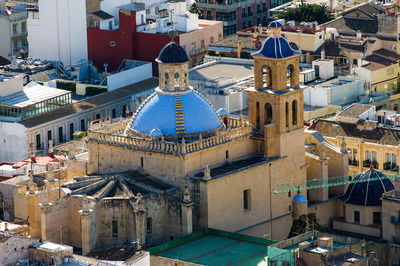
The Co-Cathedral of Saint Nicholas is the main church in Alicante and one of the city's most important religious landmarks. It is dedicated to Saint Nicholas the Wonderworker, who is considered the patron saint of Alicante and the protector of sailors, travellers and local residents.
The cathedral was built in the 17th century on the site of a former Muslim mosque. The building is designed in the Spanish Renaissance style with Baroque elements and differs noticeably from the nearby Basilica of Saint Mary. Thanks to its clean lines and harmonious proportions, the church looks both imposing and understated.
The cathedral's main architectural feature is its large blue dome, which stands around 45 metres high and is clearly visible from various points in the historic centre. Inside, the spacious nave, richly decorated chapels and Chapel of the Holy Communion stand out. The latter is considered by many to be one of the finest examples of Valencian Baroque.
The cathedral holds special significance for the people of Alicante. The city's most important religious festivals, solemn services and events honouring Saint Nicholas are held here.
💡 Admission to the interior is paid: a standard adult ticket costs €8 and includes an audio guide. Children under 12 can enter the cathedral free of charge when accompanied by their parents.
Mushroom street
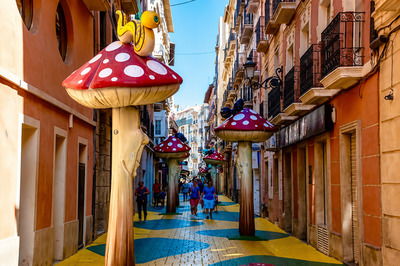
Mushroom street is one of Alicante's most unusual and recognisable attractions. It is the pedestrianised Calle San Francisco, which has become famous for its colourful decorative figures of giant mushrooms, snails, beetles and other fairy-tale characters.
The street is around 340 metres long, but its popularity with tourists far exceeds its size. The colourful mushrooms in different shapes and sizes have quickly turned an ordinary city street into one of the most photographed spots in Alicante.
Interestingly, just a few years ago, this area was not popular with either tourists or local residents. In 2013–2014, the city authorities decided to completely transform the street, turning it into a colourful public space for walks and family leisure.
The project proved so successful that it gradually changed the atmosphere of the entire neighbourhood. Empty premises gave way to cafés, shops and tourists, and the street itself became one of the symbols of modern Alicante.
This place is particularly popular with families with children, who enjoy taking photos next to giant fly agaric mushrooms, climbing onto the decorative figures and looking for characters hidden among the mushrooms.
The Explanada de España
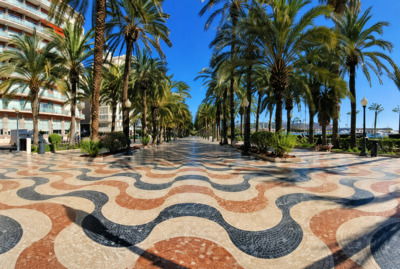
The Explanada de España promenade is one of Alicante's most recognisable attractions and a favourite place for a stroll among both tourists and local residents.
The promenade runs along the seafront and port, connecting the historic centre with the sea. People come here for a leisurely walk in the shade of the palm trees, a coffee or simply to enjoy the atmosphere of a Mediterranean resort.
The Explanada's main feature is its famous wave-patterned mosaic. The promenade's paving consists of around 6.6 million marble tiles in three colours, creating the effect of sea waves. This unusual pattern has become one of Alicante's signature sights.
During the day, you can relax at a café or buy an ice cream from one of the kiosks, while the promenade comes alive towards the evening. Street musicians and performers entertain visitors, artists offer their work and portraits, and numerous restaurants invite you to try local dishes and fresh seafood.
The promenade is around 500 metres long. It runs alongside the port and leads to Puerta del Mar Square; at the other end is the charming Canalejas Park (Parque de Canalejas), which is also worth visiting during your walk.
Alicante port
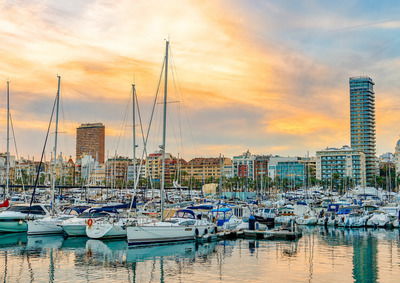
Alicante port is an important part of city life and one of the most prominent ports on the Costa Blanca. Today, it is not only a transport and cruise hub but also a popular waterfront area that connects the city's historic centre with the sea.
For many centuries, the port played an important role in Alicante's development as a Mediterranean trading city. Maritime trade helped the city grow and strengthened its links with other regions.
Today, yachts and pleasure boats are moored along the quays, and restaurants and cafés line the waterfront. People come here not only for the beautiful views but also to enjoy a leisurely walk by the water and take a break from the busy streets of the city centre.
The port area offers views of the Explanada de España promenade, the castle and Postiguet Beach. Boat trips and excursion services to Tabarca Island also depart from here, making it an interesting destination for a day trip from Alicante.
Alicante Archaeological Museum (MARQ)
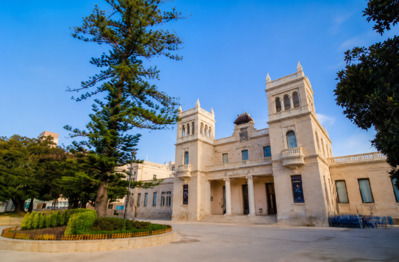
The Alicante Archaeological Museum (MARQ) is one of the city's most interesting cultural attractions. Its exhibitions tell the story of the province from prehistoric times to the present day, allowing visitors to trace the region's development over several millennia.
The museum is housed in the former San Juan de Dios Hospital and takes a modern approach to presenting its collections. Traditional archaeological exhibits are combined with multimedia technology, interactive displays and visual reconstructions. In recognition of its innovative approach to presenting history, MARQ received the prestigious European Museum of the Year Award in 2004.
The permanent exhibition is divided into themed galleries dedicated to prehistoric times, Iberian culture, the Roman era, the Middle Ages and later periods. The museum also regularly hosts major temporary exhibitions devoted to the archaeology and history of different countries and cultures.
Even if you don't usually visit archaeological museums, MARQ may pleasantly surprise you. Its exhibitions are designed not just for specialists: interactive features and visual reconstructions help you imagine how people lived in different periods and how the Alicante region changed over time.
💡 An admission ticket to MARQ costs €6. On Sundays and public holidays, a reduced price of €3 applies.
Incidentally, on Thursdays and Saturdays, one of the city's largest open-air markets, Mercadillo de Teulada, takes place near the museum. It is open from 08:00 to 14:00. You can buy fresh fruit, local produce and other goods here, while also experiencing a more everyday side of Alicante, away from the usual tourist streets.
Alicante beaches
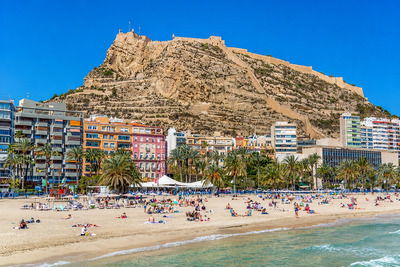
The beaches are one of the reasons why Alicante is so popular with people who love holidays on the Costa Blanca. Thanks to the Mediterranean climate, you can enjoy the sea from late spring until autumn, while warm winter days are perfect for a stroll along the shore.
One of the biggest advantages is that the sea is just a few minutes' walk from the historic centre. After exploring Santa Bárbara Castle, the old town and the waterfront, you can head straight to a sandy beach and relax by the water.
The main city beach is El Postiguet , located right at the foot of Santa Bárbara Castle. Its proximity to the centre makes it popular with both tourists and local residents. The beach has fine, pale sand, and during the season there are lifeguard stations and beach facilities, including showers and toilets.
If you prefer more spacious beaches, take a look at San Juan. This long sandy beach has a seafront promenade, sports facilities and places to eat by the sea. It is ideal for family days out, water sports and long walks along the coast. It can also get busy during peak season, but its considerable length means you can look for a quieter spot.
Another option is Albufereta beach, located between Alicante city centre and San Juan. This small sandy beach in a residential area may suit those who want to relax by the sea away from the busiest central spots.
Cafés, restaurants and chiringuitos line the beaches and promenades, where you can enjoy a refreshing drink and try fresh seafood or Mediterranean dishes. An evening stroll is particularly pleasant, when the heat subsides and the sun begins to sink below the horizon.
Even if you've come to Alicante primarily to see the sights, it's worth setting aside some time for the sea. The combination of a historic centre, sandy beaches and the relaxed atmosphere of the coast is one of the city's most appealing features.
Places to visit near Alicante
If you've already explored Alicante's attractions, be sure to set aside at least one day for trips around the surrounding area. The province of Alicante is considered one of the most interesting in Spain: here you can discover medieval villages perched on rocky hilltops, natural parks with waterfalls, picturesque resorts and some of the best beaches on the Costa Blanca.
💡 To make getting around the region easier, you can hire a car in Alicante. This will give you the freedom to explore the coast and visit several interesting places in a single day.
- Guadalest — one of Spain's most beautiful mountain villages, with a fortress, museums and stunning views of a turquoise reservoir.
- Algar Waterfalls — a natural park with cascading waterfalls, natural pools and walking routes through green ravines.
- Parks and family activities in Alicante — ideas for days out with children, including interactive museums, karting, virtual reality experiences and other family-friendly attractions.
- Benidorm theme parks — a great option for a family day out, with water parks and theme parks for children.
- Benidorm — the Costa Blanca's best-known resort, with skyscrapers, viewpoints and long sandy beaches.
- Torrevieja — a popular resort with a seafront promenade, natural parks and famous salt lakes.
- Altea — a whitewashed town beloved by artists, with a charming old centre and magnificent sea views.
- Calpe — a resort at the foot of the famous Peñón de Ifach rock, one of the Costa Blanca's landmarks.
- Dénia — an atmospheric coastal town with a castle, a port and ferries to the Balearic Islands.

 English
  Español
  Русский