
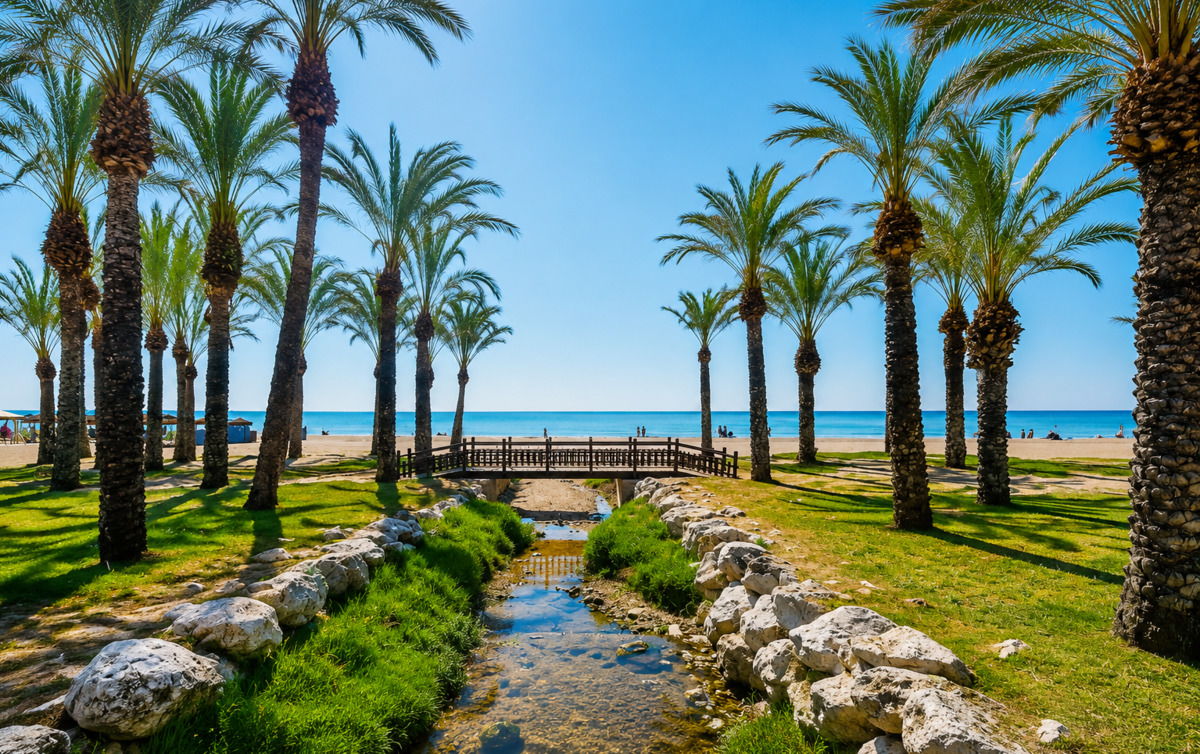
Torremolinos is one of the most famous resorts on the Costa del Sol, located just a 20-minute drive from Malaga.
The name Torremolinos comes from the words Torre and Molinos — watchtower and watermills, which shaped the character of this area for many years. Just a few decades ago, it was a small village of millers and fishermen.
Today, however, it is one of the most popular resorts in Andalusia. At the same time, Torremolinos has managed to preserve part of its traditional Spanish character, which now blends harmoniously with the modern pace of tourism.
The town attracts travellers with its mild climate, long beaches, well-developed tourist infrastructure and a wide range of entertainment options — from peaceful seaside walks to active recreation and excursions.
If you are planning a trip and wondering what to see in Torremolinos, this town will pleasantly surprise you with its combination of well-maintained beaches, promenades, natural corners and interesting attractions.
- Torremolinos Town Centre — the resort’s main streets, squares and attractions.
- Casa de los Navajas — a historic villa overlooking the coastline.
- Torremolinos Beaches — the best places to relax and swim.
- Parque de la Batería — one of the most beautiful parks in Torremolinos.
- Other Interesting Places and Activities — the bullring, family parks and unusual attractions in Torremolinos.
- What to Try in Torremolinos — traditional Andalusian dishes and seafood.
- What to See Near Torremolinos — the best ideas for day trips.
The main attractions of Torremolinos can be broadly grouped by area and theme: first, we will explore the town centre and the surrounding walking areas, followed by the beaches, parks and other interesting places around the resort.
Torremolinos Town Centre
There is no historic centre in the traditional sense, but there are plenty of squares and tourist streets that we will explore in order:
Calle Cuesta del Tajo
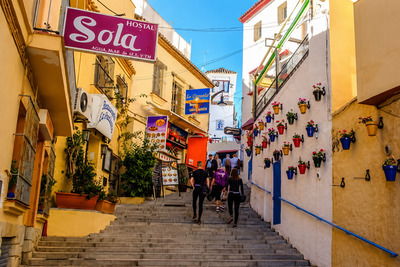
One of the most famous pedestrian streets in Torremolinos, connecting the town centre with the area around Plaza San Miguel. Its main feature is a long staircase that gently climbs between houses, shops and small cafés.
As you stroll along, you will come across souvenir shops, artisan workshops, stores selling local products and cosy terraces where it is pleasant to take a short break with a cup of coffee or a refreshing drink.
Despite its popularity with tourists, Cuesta del Tajo remains one of the most atmospheric corners of the town centre. It is here that the resort character of the town can be felt most strongly: leisurely walks, open shopfronts and the constant flow of people heading towards the sea or making their way back into the centre.
Many visitors walk along this street several times during their stay, as it is one of the most convenient pedestrian routes between the historic part of Torremolinos and the coastline.
Torre de los Molinos
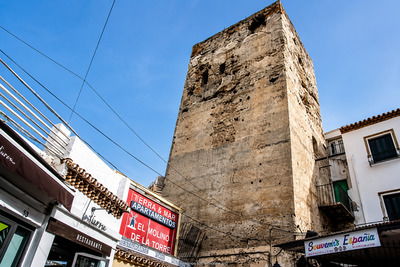
Torre de los Molinos, now better known as Torre Pimentel, is considered one of the oldest historical monuments in Torremolinos. The tower received its modern name in honour of the soldier Rodrigo de Pimentel, who took part in the conquest of Malaga by the Catholic Monarchs at the end of the 15th century.
The tower stands beside the steps of Cuesta del Tajo, yet many tourists pass by without even noticing it. Surrounded by modern buildings and a busy tourist street, it appears rather modest, although the history of the town effectively began here.
Built more than 700 years ago, around the 14th century, the tower formed part of the defensive system of the Nasrid Emirate of Granada. Similar watchtowers were positioned along the entire coastline and were used to monitor the sea and warn of possible attacks by pirates or enemy ships.
The tower is approximately 12 metres high. Inside, there were two floors and a terrace from which guards watched over the coastline. Today, the sea no longer reaches as close to the tower as it did many centuries ago, but it still serves as a reminder of a time when the safety of local residents depended on the vigilance of watchmen.
Interestingly, it was this tower that gave the town the first part of its name: the word Torre means “tower”, while Molinos means “mills”. As a result, Torre de los Molinos is regarded not only as a historical monument but also as a symbol of the origins of Torremolinos.
Plaza de San Miguel
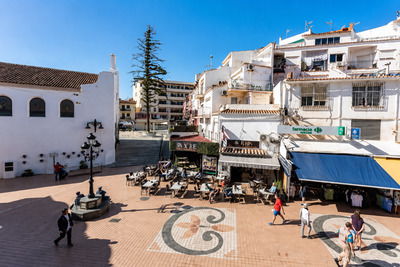
The Cuesta del Tajo staircase street leads to one of the busiest squares in Torremolinos — Plaza de San Miguel. Many visitors stop here briefly before continuing their walk through the town centre or heading down towards the sea.
The main feature of the square is the small yet very charming Iglesia de San Miguel, after which the square is named. Despite its modest size, the church plays an important role in the life of the town and remains one of the most recognisable religious buildings in Torremolinos.
Admission to the church is free, so if you wish, you can step inside for a few moments to admire the altar and experience the peaceful atmosphere that sets historic Spanish churches apart from the busy tourist streets outside their walls.
San Miguel Street — Calle San Miguel
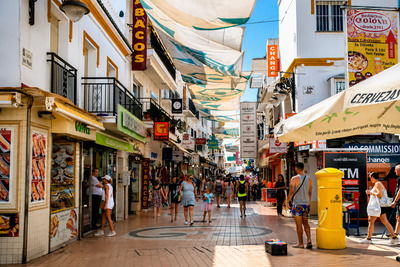
Leading away from the square is Torremolinos’ main shopping and promenade street — Calle San Miguel. For many years, it has remained one of the busiest places in town and is regarded as the heart of resort life.
Dozens of shops can be found here, offering everything from well-known Spanish and international brands to footwear, accessories, souvenirs and affordable clothing.
People come here not only for shopping but also simply to enjoy a stroll. The street is entirely pedestrianised, making it a pleasant place to wander at a leisurely pace while browsing shop windows, small cafés and pastry shops. During the high season, life on Calle San Miguel continues from early morning until late in the evening.
Even if shopping is not part of your plans, this street is still worth visiting. It is here that you can best experience the atmosphere of modern Torremolinos — lively, sunny and always filled with holidaymakers from around the world.
Plaza de La Nogalera
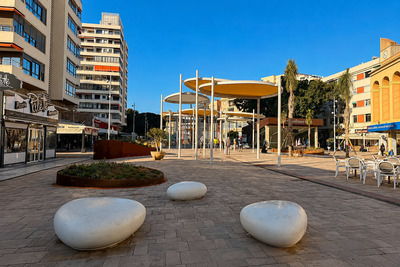
Just a few steps from Calle San Miguel lies Plaza de La Nogalera — another of the most famous and lively places in Torremolinos. Today, this area is considered the centre of the town’s nightlife and one of the symbols of Spain’s LGBT community.
It was here, in the middle of the 20th century, that one of the country's first districts dedicated to openness and free self-expression began to take shape. La Nogalera became home to the famous Tony's Bar, which is regarded as Spain’s first gay bar.
Nearby is Pasaje Begoña — a small street that played an important role in the history of the Spanish LGBT movement. Today, it is officially recognised by the Regional Government of Andalusia and the Spanish Congress of Deputies as a site of historical memory.
On the night of 24 June 1971, a police raid took place here, resulting in the detention of around one hundred people. These events became one of the symbols of the struggle for LGBT rights and freedoms in Spain.
Today, the atmosphere of the district is entirely different. The area is home to bars, restaurants and cafés, while the squares and surrounding streets regularly host festivals, concerts, gastronomic events and celebratory parades. Even if the history of the LGBT movement is not of particular interest to you, Plaza de La Nogalera remains one of the liveliest and most colourful corners of modern Torremolinos.
Plaza Costa del Sol
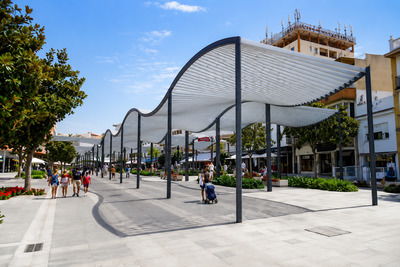
Plaza Costa del Sol is considered one of the main public squares in Torremolinos. Following a major renovation and its transformation into a pedestrian zone in 2019, it has become a popular place for walks, meetings and public events.
The square’s main feature is a modern pavilion with arches that resemble ocean waves. Its distinctive design quickly became one of the most recognisable architectural landmarks in the town centre. Nearby stands the sculpture “Los Oficios”, created by the renowned Spanish sculptor Elena Laverón.
Wide avenues, palm trees, flower beds and numerous benches make the square a pleasant place to relax at any time of day. It is an ideal spot to pause during a walk through the town centre, observe local life or simply rest in the shade.
Cafés, bars and restaurants surround the square, while concerts, fairs, festive celebrations and various cultural events are held here throughout the year. As a result, Plaza Costa del Sol has long become more than just a town square — it is one of the centres of social life in Torremolinos.
Plaza Pablo Ruiz Picasso
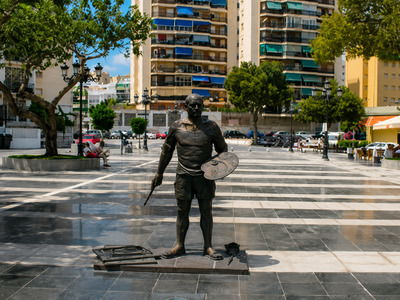
Just a short distance from Plaza Costa del Sol is the small Plaza Pablo Ruiz Picasso, named after one of the most famous artists of the 20th century. Despite its modest size, it is a pleasant place for a brief stop while exploring the centre of Torremolinos.
The square’s main attraction is a sculpture of Pablo Picasso, created by Salvador García Rodríguez in 2005. The artist is depicted holding a palette, completely immersed in the creative process.
The realistic design creates the impression that the master has only paused from his work for a moment and is about to pick up his brush again. The sculpture has long been a popular spot for photographs among visitors.
The presence of a monument to Picasso here is no coincidence. The great artist was born in nearby Malaga, and his name remains an important part of the cultural heritage of the entire province. The square serves as a reminder of Torremolinos’ close connection with one of Andalusia’s most famous sons.
Plaza de Andalucía
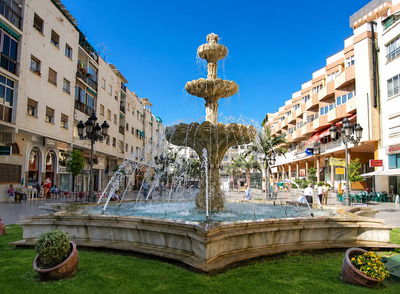
Despite its attractive name, Plaza de Andalucía cannot really be considered one of the main attractions of Torremolinos. If you do not manage to visit it during your walk around the town, you are unlikely to miss much.
Nevertheless, the square remains a pleasant and peaceful corner of the town centre where you can take a short break away from the busiest tourist streets. Its main feature is a three-tier marble fountain, which feels especially refreshing during the hot summer months.
There are usually fewer people here than in the neighbouring squares and shopping streets, making it a good place for a brief pause during your exploration of Torremolinos. Sometimes it is precisely these understated corners that allow visitors to experience the resort’s more relaxed rhythm and escape the tourist bustle for a while.
Casa de los Navajas — The Architectural Jewel of Torremolinos
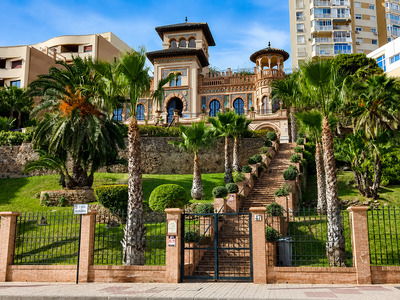
Approximately a 10–15 minute walk from the centre of Torremolinos, on a hill overlooking El Bajondillo Beach, stands one of the town’s most beautiful attractions — Casa de los Navajas. This elegant Neo-Mudéjar palace has long been one of the symbols of the resort and one of the most photographed historic buildings in Torremolinos.
The mansion was built in 1925 by entrepreneur Antonio Navajas, who made his fortune in the sugar cane industry. The residence was designed as a family home and remained in the possession of several generations of the Navajas family for many years.
In 1991, the building was declared a protected historical monument and later became the property of the Municipality of Torremolinos. Following restoration work, the palace was opened to visitors and is now one of the town’s principal architectural attractions.
The architectural style of Casa de los Navajas combines elements of Neo-Mudéjar design, which was particularly popular in Spain during the late 19th and early 20th centuries. The building is adorned with towers, arched galleries, decorative ceramics and traditional Sevillian tiles, giving the palace the appearance of a fairy-tale residence from Andalusian legends.
The terraces and viewing platforms deserve special attention, offering beautiful views of the Costa del Sol coastline and the Mediterranean Sea. Many visitors consider this one of the most romantic places in Torremolinos.
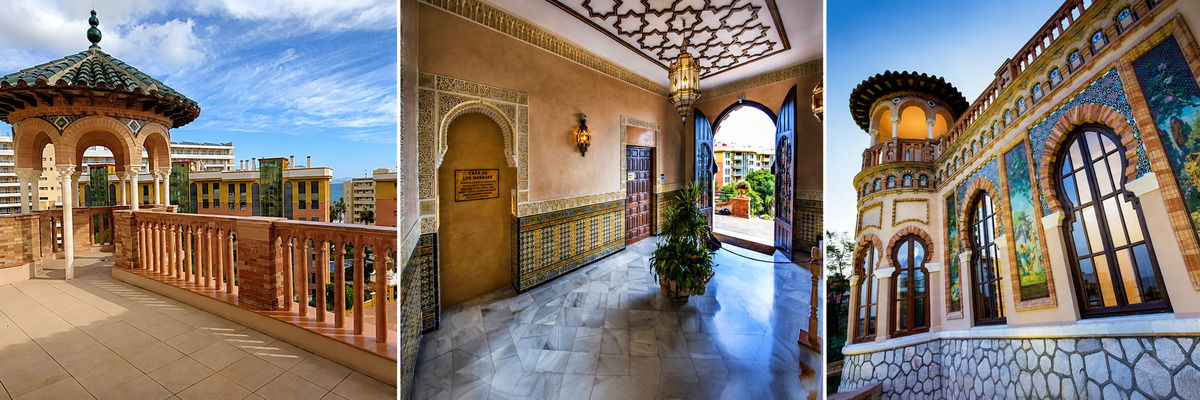
Today, the palace regularly hosts exhibitions, concerts, cultural events and even wedding ceremonies. As a result, this historic building continues to be an important part of the town’s life rather than simply a museum attraction.
Casa de los Navajas is one of those places worth visiting even if you are not usually interested in architecture. It successfully combines history, beautiful sea views and the atmosphere of old resort-era Torremolinos.
Useful to know: free admission to Casa de los Navajas is usually available from Friday to Sunday between 11:00–14:00 and 16:00–18:00. However, opening hours, visiting days and event schedules may change, so it is recommended to check the latest information on the town’s official resources before your visit.
After exploring the historic corners of the town, it is time to head towards the sea. Especially since El Bajondillo Beach is just a few minutes’ walk from Casa de los Navajas.
Torremolinos Beaches
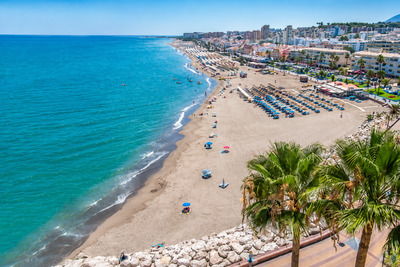
After exploring the town centre and visiting Casa de los Navajas, it is time to head to the sea. It was the beaches that made Torremolinos one of the most popular resorts on the Costa del Sol. The coastline stretches for several kilometres, offering wide sandy beaches, promenades, restaurants and traditional beach bars known as chiringuitos.
Each beach in Torremolinos has its own character: some are better suited to active recreation and water sports, others are favoured by families with children, while some are known for the atmosphere of the old fishing district and their excellent seafood restaurants.
Los Álamos Beach
Los Álamos is considered one of the most famous beaches in Torremolinos. It stretches for approximately 1,500 metres, and its wide shoreline allows visitors to relax comfortably even during the high season.
The beach is particularly popular with fans of active recreation. It offers excellent conditions for windsurfing, kitesurfing and other water sports. Along the promenade, visitors will find beach clubs, cafés and equipment rental facilities.
Thanks to convenient transport connections, the beach is easily accessible on foot, by bus or by local train.
Playamar Beach
Playamar extends for around one kilometre and is considered one of the best beaches for family holidays. Its wide sandy shore, gentle entry into the sea and well-developed infrastructure make it especially popular with families travelling with children.
In addition to sunbathing and swimming, visitors can enjoy a variety of water activities. Restaurants, cafés and a seafront promenade line the coast, becoming particularly lively in the evening.
Another advantage of Playamar is its proximity to the centre of Torremolinos, making it easy to reach on foot.
Bajondillo Beach
Bajondillo Beach lies directly below the town centre and is considered one of the most convenient options for those staying in central Torremolinos. Many visitors arrive here after walking along Calle San Miguel and visiting Casa de los Navajas.
The beach stretches for approximately one kilometre and is known for its dark sand, relaxed atmosphere and good facilities. Numerous restaurants, cafés and shops can be found along the seafront.
One of its notable advantages is the easy access to the sea. In addition to pedestrian routes, visitors can also reach the beach by lift, which is particularly convenient during the hot summer months.
La Carihuela Beach
La Carihuela is the most famous and atmospheric beach in Torremolinos. It extends for more than two kilometres and gradually merges with the neighbouring municipality of Benalmádena.
Once home to a small fishing quarter, the area gradually evolved into one of the resort’s most popular districts. Today, La Carihuela is renowned not only for its beach but also for its many seafood restaurants, taverns and chiringuitos serving fresh seafood and traditional Andalusian cuisine.
The La Carihuela promenade is considered one of the most pleasant walking areas in Torremolinos. It is enjoyable both during the day, when visitors can admire the sea views, and in the evening, when the restaurants open, the lights come on and the resort takes on a special atmosphere.
If you have limited time to explore the beaches of Torremolinos, many travellers choose La Carihuela, as it successfully combines the sea, gastronomy and the traditional atmosphere of an old fishing district.
After the lively beaches and the bustling promenade of La Carihuela, many visitors look for a little peace and greenery. In that case, it is worth continuing your walk towards Parque de la Batería — one of the most pleasant places to relax along the entire coastline of Torremolinos.
Parque de la Batería
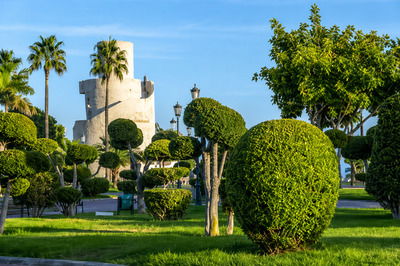
If you feel like a change of scenery after exploring the town centre and relaxing on the beach, it is worth visiting Parque de la Batería. This is one of the most beautiful parks in Torremolinos, located near the La Carihuela district. Covering an area of more than 74,000 square metres, it combines green spaces, walking paths, viewing points and areas for family recreation.
The park’s name is no coincidence. It once housed a defensive fortification that protected the Costa del Sol coastline. In memory of this past, artillery guns and two underground bunkers have been preserved within the park, serving as reminders of the area's military history.
Today, however, the atmosphere is completely different. The park is considered one of the most peaceful corners of Torremolinos and is ideal for leisurely walks away from the noise of the beaches and tourist streets. One of its most popular features is the large artificial lake, where visitors can enjoy a boat ride and relax surrounded by greenery.
For children, there is a modern playground and a Venetian-style carousel, while those who enjoy active recreation can make use of the sports facilities, jogging paths and cycling routes.
One of the park’s main attractions is its observation tower, which stands approximately 15 metres high. From the top, visitors can enjoy beautiful panoramic views of Torremolinos, the Costa del Sol coastline and the Mediterranean Sea.
Hundreds of trees and plants grow throughout the park, while sculptures, fountains and numerous seating areas are scattered across the grounds. Thanks to its combination of nature, history and beautiful views, many visitors consider Parque de la Batería one of the most pleasant places for a walk in the whole of Torremolinos.
Other Interesting Places and Activities
If you have already visited the town’s main attractions, Torremolinos still offers several other interesting places for family outings, walks and entertainment.
Bullring — Plaza de Toros
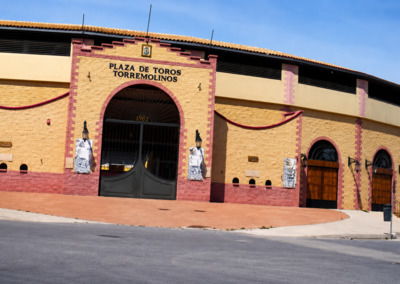
One of the more unusual attractions in Torremolinos is Plaza de Toros — a modern bullring that was opened to the public on 4 September 2003. The opening ceremony featured famous Spanish matadors Javier Conde, Morante de la Puebla and Salvador Vega.
The arena was designed by architect Ignacio Dorao Orduño. The building is constructed in the Andalusian Modernist style and is notable for its unusual circular shape. The structure has an external diameter of 76 metres, while the inner arena measures approximately 45 metres across.
The complex can accommodate around 3,500 spectators and includes all the facilities required for major events, including boxes, organiser facilities, stables, a chapel, shops and a small museum dedicated to the history of the arena.
Interestingly, traditional bullfights have not been held here since 2015. Today, Plaza de Toros serves as a multifunctional venue for concerts, festivals, evening shows and various cultural events.
Even if you do not plan to attend an event, the arena is worth seeing as an example of contemporary Spanish architecture and as a reminder of the centuries-old tradition of bullfighting, which was once an important part of Andalusian culture.
On Thursdays and Sundays, a street market is held near the arena, where visitors can buy fresh produce, clothing, souvenirs and various other goods. If your visit to Torremolinos coincides with a market day, a walk to the arena can easily be combined with a visit to the market.
Molino de Inca Botanical Garden — Jardín Botánico Molino de Inca
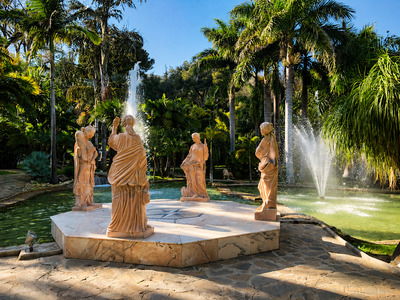
If the busy beaches and tourist streets have started to feel a little overwhelming, it is worth visiting Jardín Botánico Molino de Inca — one of the most peaceful and green corners of Torremolinos. This botanical garden is located near Aqualand and occupies part of the historic Los Manantiales complex, where ancient springs once supplied the water that powered the town’s famous mills. Visitors can even see a reconstructed Molino de Inca mill, which serves as a reminder of the time when watermills played an important role in the life of the town.
Today, the botanical garden is a true oasis amid the urban landscape. Its grounds are home to hundreds of plant species, including dozens of varieties of palm trees, trees and ornamental shrubs from around the world. Streams, small waterfalls, shaded pathways and numerous quiet resting spots create a particularly relaxing atmosphere.
One of the most unusual features is a small Japanese garden with characteristic bridges, stone arrangements and ponds. Thanks to this area, a walk through the garden unexpectedly transports visitors from Andalusia into an entirely different cultural setting.
In addition to its plant collections, the garden is home to various bird species, while its viewpoints offer attractive views of the surrounding parkland. Molino de Inca is especially appreciated for its tranquillity and excellent maintenance, particularly when visited in the morning or on weekdays.
The botanical garden is an excellent choice for families with children, nature lovers and anyone wishing to discover a different side of Torremolinos — one that is quieter, greener and closely connected to the town’s history.
Useful to know: admission to the botanical garden is usually around €3, making Molino de Inca one of the most affordable attractions in Torremolinos. However, opening hours and ticket prices may change, so it is advisable to check the latest information on the town’s official resources before your visit.
Aqualand Torremolinos

Aqualand Torremolinos is the largest water park on the Costa del Sol and one of the region’s most popular family attractions. It is located approximately a 20-minute walk from the centre of Torremolinos, while the journey by car takes only a few minutes.
The site features a spacious car park, making the water park convenient to visit both from Torremolinos itself and from neighbouring Costa del Sol resorts.
There is entertainment here for almost every age group. Thrill-seekers can enjoy extreme slides such as Kamikaze, Boomerang, Black Hole and other attractions featuring steep drops, sharp turns and high speeds. Families can enjoy gentler slides, a large wave pool, relaxation areas and a dedicated children’s water playground for younger visitors.
In addition to the water attractions, the park offers restaurants, cafés, snack kiosks, souvenir shops and even a mini-golf course. Prices inside the park are typically higher than in town, so many visitors prefer to plan their food expenses in advance.
Ticket prices vary depending on the season and special offers, but an adult ticket usually costs around €39, while a child’s ticket is approximately €31. Before visiting, it is recommended to check the latest prices and opening times on the water park’s official website.
If possible, it is best to avoid visiting in July and August. During the peak summer holiday season, thousands of visitors arrive from across the coast, and queues for the most popular slides can become quite long.
Spring, early summer and September are generally much more comfortable times to visit. During these periods, there are noticeably fewer visitors, and most attractions can be enjoyed with little or no waiting time.
Crocodile Park — Crocodile Park
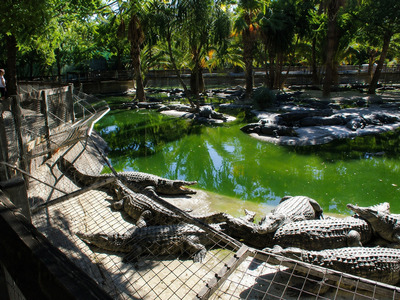
If you would like to see something unusual beyond the beaches and seafront promenades, it is worth visiting Crocodile Park. This is one of the most distinctive family attractions in Torremolinos, where visitors can get up close to some of the oldest predators on our planet.
The park is home to hundreds of crocodiles of different species and ages — from tiny hatchlings to impressive fully grown adults. Many visitors note that seeing these animals at close range is far more impressive than photographs might suggest.
One of the park’s main stars is the famous “El Gran Paco” — one of the largest crocodiles in Europe. Its enormous size never fails to capture the attention of both children and adults.
During your visit, you can explore a small museum, learn about the history of these reptiles and discover more about their way of life. Demonstration feeding sessions are particularly popular, as park staff explain crocodile behaviour and their unique characteristics.
The creators of the park place great emphasis on education and nature conservation. The venue regularly hosts themed activities for children and school groups, while its exhibitions help visitors better understand the role of crocodiles within ecosystems across different regions of the world.
Crocodile Park is especially popular with families travelling with children, although it is also of interest to adult visitors. A typical visit lasts several hours and can be an excellent addition to a beach day or a trip to the nearby Aqualand water park.
Useful to know: admission to Crocodile Park usually starts from €18.50 for adults and €13.50 for children. The park is open year-round, with opening hours varying by season: from September to June it is generally open from 11:00 to 17:00, while in July and August it remains open until 18:00.
What to Try in Torremolinos
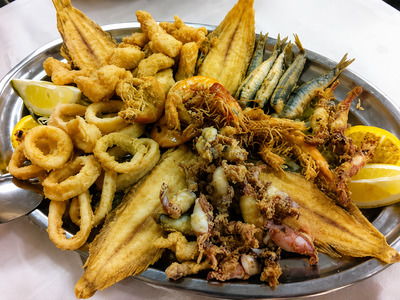
A holiday in Torremolinos would not be complete without exploring the local cuisine. Thanks to its location on the Costa del Sol, dishes made with fresh fish and seafood are particularly popular here, while Andalusian food is represented in almost every restaurant and traditional tavern.
One of the first dishes you should try is the famous espeto de sardinas — sardines grilled over an open fire directly on the beach. It is one of the most iconic dishes of the Malaga province coastline. Equally popular are fried boquerones (anchovies), a variety of seafood dishes, gazpacho, tortilla and, of course, paella.
A special place in the town’s gastronomic scene is occupied by the many chiringuitos — beachside restaurants where fish is often prepared according to traditional recipes just a few metres from the sea. It is here that many dishes can be enjoyed at their very best.
If you would like to combine sightseeing with culinary discoveries, make your way to La Carihuela. Once a small fishing quarter, it is now one of the best places in Torremolinos to experience the local cuisine. The area is home to numerous restaurants and taverns specialising in fish and seafood.
Tapas lovers will also be spoilt for choice. Around Calle San Miguel and the neighbouring squares in the town centre, dozens of bars serve small portions of different dishes, allowing visitors to sample several flavours of Andalusia in a single evening.
As for drinks, it is worth trying the local wines of Malaga Province, the refreshing tinto de verano, and the popular coastal beer Victoria, which is brewed in nearby Malaga. On a hot day, they make the perfect accompaniment to fish and seafood dishes.
What to See Near Torremolinos
Torremolinos is conveniently located in the heart of the Costa del Sol, making it easy to reach many of Andalusia’s most interesting towns and attractions. If you are planning a stay of several days, we recommend considering the following destinations:
- Malaga Attractions — the historic centre, the Alcazaba fortress, Gibralfaro Castle, the Picasso Museum and one of the most beautiful promenades in Andalusia.
- What to See Near Malaga — the best ideas for day trips around the province, including white villages, natural parks and picturesque towns.
- Parks and Entertainment in Malaga — water parks, museums, zoos, theme parks and attractions for the whole family.
- What to See in Benalmádena — the cable car, Butterfly Park, Puerto Marina and one of the most popular resorts on the Costa del Sol.
- What to See in Fuengirola — long sandy beaches, the medieval Sohail Castle and the famous Bioparc Zoo.
- What to See in Marbella — the charming Old Town, luxurious Puerto Banús and the atmosphere of one of Spain’s most famous resorts.
- What to See in Estepona — whitewashed streets, hundreds of flower pots and one of the most beautiful historic centres on the coast.
- What to See in Mijas — a picturesque white village in the mountains with panoramic views over the Costa del Sol.
- What to See in Ronda — the famous Puente Nuevo bridge, the dramatic El Tajo gorge and one of the most impressive towns in Andalusia.

 English
  Español
  Русский