
Ronda is one of the most unusual towns in Andalusia, spread across cliffs on both sides of a deep gorge. This place is known for its impressive landscapes, the famous Puente Nuevo bridge, and its atmospheric historic center.
If you are planning a trip and looking for what to see in Ronda, here you will find the main city attractions, the best viewpoints, and interesting places for walking and photography.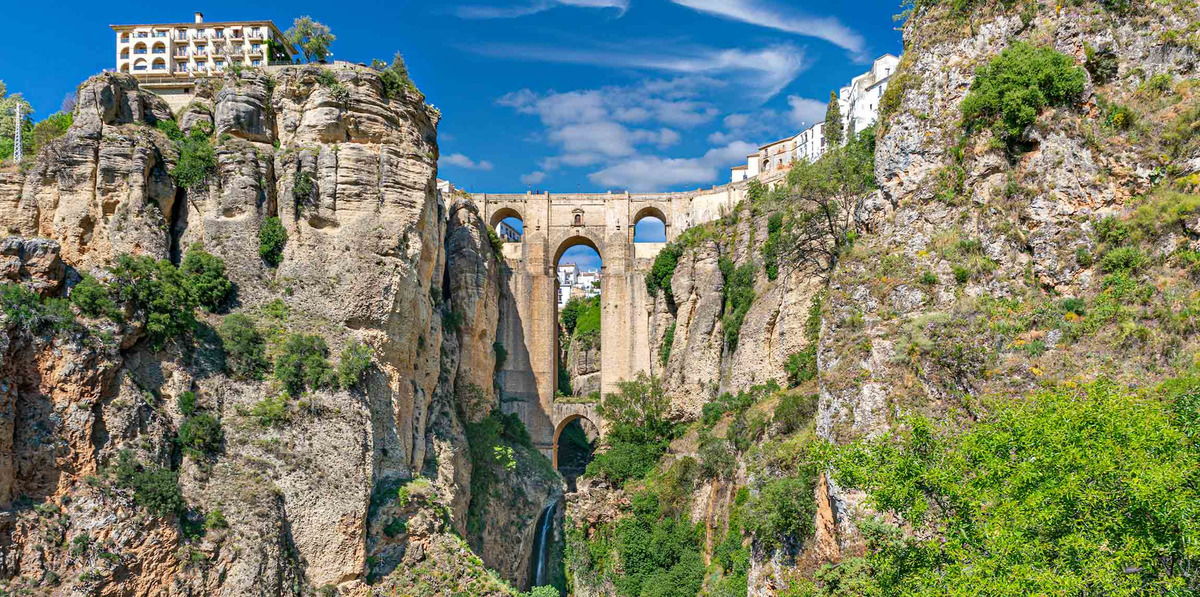
This article brings together the main attractions in Ronda, route tips, and places you should definitely include in your walk. But first — a little about the history of this place, which helps to better understand its unique atmosphere.
A brief history of Ronda
Ronda is a small but unique town with a rich past. Its history dates back to the Neolithic and early Copper Age (5th–4th millennium BC), when seasonal settlements appeared in this area.
Of particular interest are Paleolithic cave paintings found in caves such as Cueva de la Pileta.
According to one version, the name of the town comes from the Celts of the 6th century BC, who called this place Arunda. In later centuries, Phoenicians settled here, founding the nearby settlement of Acinipo.
The town as such was formed after the Second Punic War, when the Roman commander Scipio ordered the construction of the Laur castle.
During the time of Julius Caesar, Ronda received city status, and the inhabitants of the settlements became Roman citizens.
Development of the town in modern times
The 18th century became a period of active construction. A particularly notable event was the construction of the New Bridge (Puente Nuevo), which connected the two parts of the town and contributed to its further development.
The 19th century gave Ronda a romantic image: the town became a symbol of traditions such as bullfighting; however, the cultural heritage of this place is much broader, making Ronda unique and attractive for tourists today.
What to see in Ronda — main attractions
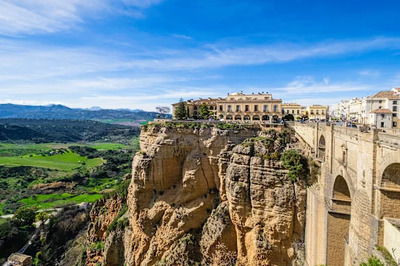
Now let's move on to the main part — the key places worth visiting in Ronda.
Even during a short walk you will be able to see architectural and historical gems of the town, enjoy views from the viewpoints, and feel the atmosphere of traditional Andalusia.
Main attractions of Ronda that should be included in your walking route:
- Historic center (Casco antiguo)
- Church of Santa María (Iglesia Santa María la Mayor)
- New Bridge Puente Nuevo
- Bullring Plaza de Toros
- Mondragón Palace
As usual, exploring the attractions of any city begins with the historic center.
If you are travelling by car, it is best to leave it in a parking area called Parking Ronda.
The parking is located very close to the center — only about a 10-minute walk away. The rate is approximately €2.20 per hour — not too expensive, especially since we are on vacation.
Do not forget about the parking rules; do not leave your car in places marked with a yellow line, otherwise it may be towed. But let’s not talk about unpleasant things.
So, let’s begin our walk:
Historic center of Ronda (Casco antiguo)
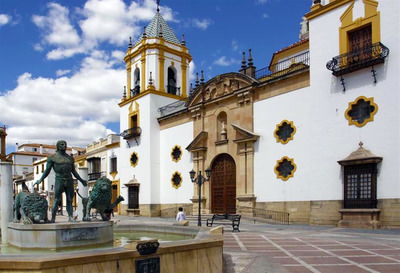
One of the first places on your list should be the historic center, which will transport you back in time with its narrow streets and traditional architecture.
Walking through the old town, you will be able to see:
- Many charming white houses, beautifully preserved from ancient times;
- Plaza del Socorro — a central square that is a must-visit for tourists who want to feel the atmosphere of Andalusia.
- Iglesia de Nuestra Señora del Socorro — a magnificent building on Plaza del Socorro that is worth including in your walking route.
- Plaza Duquesa de Parcent — one of the most famous squares in the historic center with a beautiful fountain. A great place for photos and a short rest.
Among the main architectural landmarks of the historic center, the Church of Santa María (Iglesia Santa María la Mayor) holds a special place.
Church of Santa María (Iglesia Santa María la Mayor)
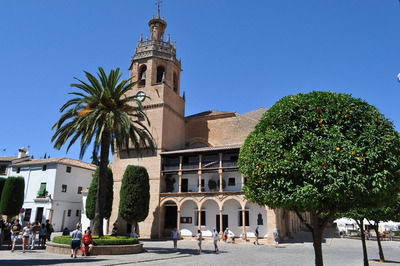
The Church of Santa María is one of the most significant historical landmarks of Ronda, located in the old town near Plaza Duquesa de Parcent. The building was constructed on the site of a former mosque after the Reconquista, which is why its architecture combines elements of late Gothic, Renaissance, and Baroque styles.
The main façade and interior of the church feature rich decorative details, and inside you can see historic altars, carved wooden elements, and works of religious art. Thanks to its location near Plaza Duquesa de Parcent, the church is easy to include in a walking route through the historic center of Ronda.
💡 Tip: step inside not only for the architecture but also for the peaceful atmosphere — there are far fewer tourists here than at Puente Nuevo.
New Bridge (Puente Nuevo)
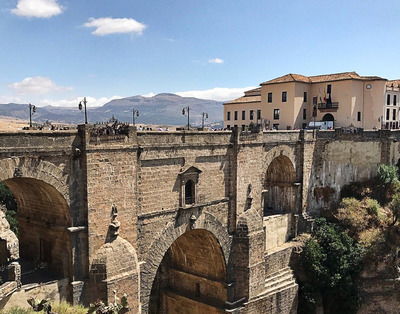
When it comes to what to see in Ronda, the majestic New Bridge Puente Nuevo is the first thing that comes to mind — the city’s main landmark, which attracts travelers from all over the world. This architectural masterpiece of the 18th century took almost 40 years to build and connects the two parts of Ronda separated by the deep El Tajo gorge.
The bridge reaches a height of about 100 meters, and its massive stone walls seem to rise directly from the rocks, creating an impressive and dramatic landscape. The bridge project was completed by architect Martín de Aldehuela — the same master who was involved in the creation of the Plaza de Toros arena.
From the bridge you can enjoy some of the most famous panoramas of Andalusia: steep gorge cliffs, white houses of the old town, and surrounding mountain scenery. Puente Nuevo is especially beautiful at sunset, when the sunlight paints the stone in golden tones.
💡 Interesting fact: inside the central part of the bridge there was once a room that was used as a prison. Today, viewpoints and walking paths nearby allow you to see it from different angles and take the most spectacular photos.
Bullring (Plaza de Toros)
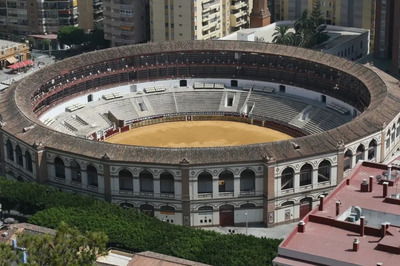
Another important attraction of Ronda is the bullring Plaza de Toros, considered one of the oldest and most significant in Spain. It was here that the traditions of modern bullfighting were formed, and Ronda became one of the symbols of this historic art.
The arena was built in the 18th century according to the design of architect Martín de Aldehuela — the same master who participated in the creation of the famous Puente Nuevo bridge. The structure is designed in neoclassical style and is distinguished by its unusually large arena diameter and two-tier galleries with stone columns.
The Romero family — a dynasty of matadors from Ronda — played a special role in the history of bullfighting, having a major influence on the development of bullfighting techniques and the formation of classical rules.
Today Plaza de Toros can be visited as a museum: inside there are exhibitions dedicated to the history of bullfighting, matador costumes, and Andalusian traditions. Even those who are not interested in bullfighting should visit for the architecture, atmosphere, and beautiful views of the surrounding mountains.
Mondragón Palace (Palacio de Mondragón)
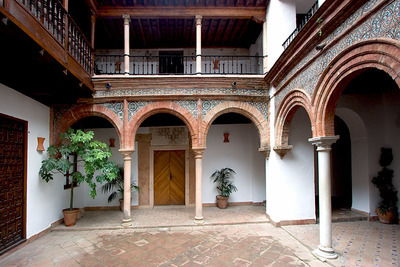
Mondragón Palace is one of the most interesting historical monuments of Ronda and an excellent example of architecture from the period of Muslim rule. Its construction is believed to date back to the 14th century, when the building served as a residence for local rulers. Later, the palace was rebuilt and used by the Catholic Monarchs after the Reconquista.
Today, an archaeological museum is located inside, showcasing the rich cultural heritage of the region — from prehistoric settlements to the Roman and Arab periods. The exhibitions allow visitors to see ancient artifacts found near Ronda and learn about reconstructions of everyday life from past eras.
Special attention should be paid to the architectural details: inner patios, traditional Andalusian gardens, and elegant decorative elements reminiscent of the atmosphere of the Alhambra in Granada. The palace terraces offer beautiful views of the valley and surrounding hills, creating a sense of calm and seclusion.
💡 Interesting fact: Palacio de Mondragón is located on the site of one of the oldest parts of the town, so walking through its inner courtyards allows you to literally pass through different historical eras of Ronda.
Entrance to the palace is paid but inexpensive — about €3. It is an interesting and educational place suitable for visitors of all ages.
What else to see and do in Ronda
Besides the main attractions, Ronda offers many other experiences — from gastronomy to nature walks and interesting routes in the surrounding area.
Andalusian cuisine
Local cuisine deserves special attention — an important part of travelling through Andalusia.
In Ronda there are many cafes and restaurants where you can try traditional Andalusian food such as tapas, a variety of seafood, jamón, and famous regional wines.
The town is also known for its sweets, especially alfajores — a local dessert that you should definitely try.
Natural wonders
If you have already visited all the main places but still have time for walks, nature lovers will enjoy the surroundings. There are many routes nearby, including hiking trails where you can fully enjoy natural landscapes.
For example, the Sierra de las Nieves National Park offers scenic walks that allow you to admire the local flora and fauna.
Those who enjoy active recreation and adrenaline will also find something to do: about one hour from Ronda there is the very interesting King’s Path — Caminito del Rey.
A walk along the narrow suspended pathway about 1 meter wide in the Garganta del Chorro gorge will give you unforgettable impressions!
Ronda combines rich history, impressive architecture, and natural wonders. It is a unique place that everyone interested in Spanish culture and traditions should visit.
Where to go near Ronda — travel ideas around Andalusia
If you plan to continue travelling through Andalusia, pay attention to these interesting towns and destinations not far from Ronda:
- Malaga — a major city on the Costa del Sol with a historic center, museums, the Alcazaba fortress, and an atmospheric promenade.
- Marbella — an elegant resort town combining historic streets, whitewashed houses, and a luxurious Mediterranean atmosphere.
- Benalmádena — a popular destination with a beautiful marina, theme parks, and scenic coastal views.
- Fuengirola — a cozy seaside town with long beaches, a promenade for walking, and the medieval Sohail Castle.
- Torremolinos — one of the most famous resorts in the region with atmospheric districts, viewpoints, and a lively promenade.
- Setenil de las Bodegas — an unusual white town near Ronda, famous for houses built directly into the rocks, narrow streets, and a unique atmosphere.

 English
  Español
  Русский