
Setenil de las Bodegas is one of the most unusual towns in Andalusia. Its narrow streets run directly beneath enormous rock overhangs, and some houses are literally built into the cliffs, creating scenery that is difficult to find anywhere else in Spain. Thanks to this extraordinary architecture, Setenil de las Bodegas has become known as the “town under the rocks” and is now one of the most popular stops on a journey through Andalusia.
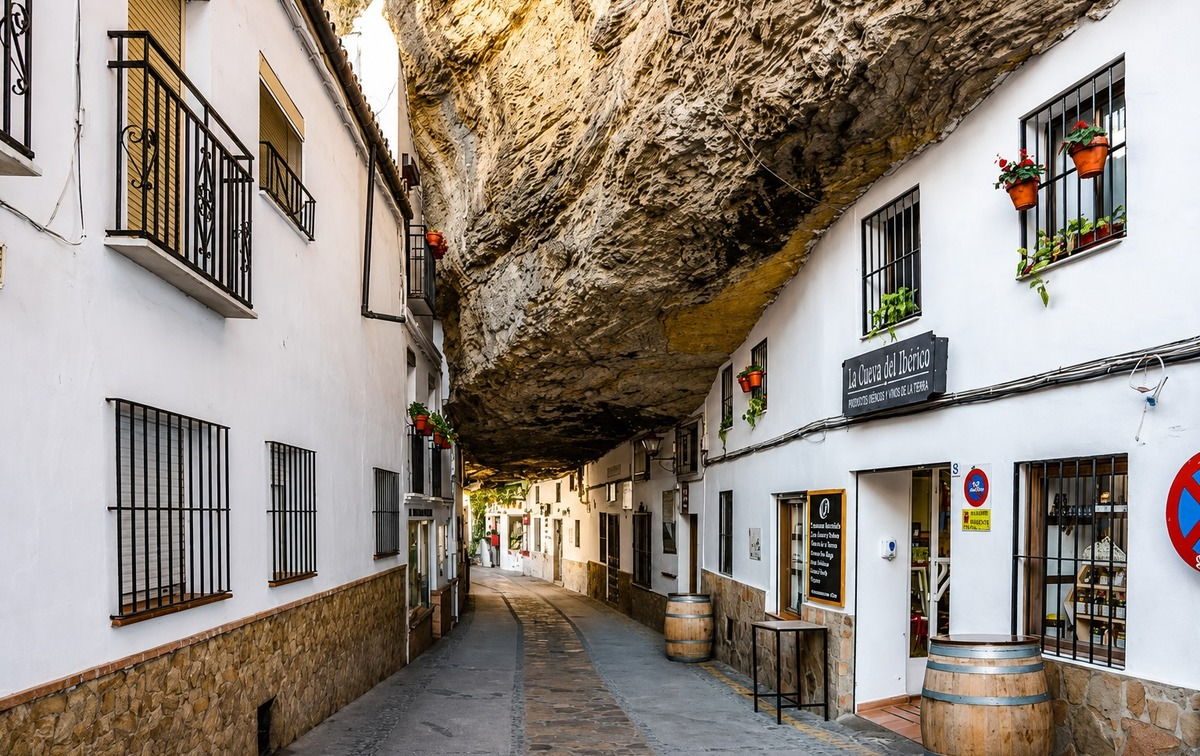
The history of this place stretches back many centuries. During the Reconquista, the town was regarded as an important fortress, and according to one version, its name is linked to seven unsuccessful attempts to capture it. Today, however, visitors come mainly to see the famous streets of Cuevas del Sol and Cuevas de la Sombra, its unique architecture, and the atmosphere of one of the most remarkable white villages in southern Spain.
Thanks to its compact size, Setenil de las Bodegas can be explored in just a few hours, but to avoid missing the most interesting sights, it is worth planning your route in advance. Below you will find the town’s main attractions, recommendations for walking along the famous streets beneath the rocks, tips on local cuisine, and useful information for an independent visit.
Contents:
- Main Attractions of Setenil de las Bodegas — streets beneath the rocks, the castle, and viewpoints
- Where to Eat in Setenil de las Bodegas — tapas bars and local cuisine
- Parking and Visitor Tips — where to leave your car and how to plan your walk
- What to See Nearby — Ronda, Cádiz, and other places in Andalusia
Main Attractions of Setenil de las Bodegas
As Setenil de las Bodegas is a small town, it is easy to explore on foot. Most of the main attractions are located close to one another, so a walk usually takes between two and four hours, depending on the number of stops, photographs, and café visits.
The route passes through the famous streets beneath the rocks, the historic centre, the main square, and the best viewpoints, gradually revealing all the most fascinating aspects of Setenil de las Bodegas.
Calle Cuevas del Sol
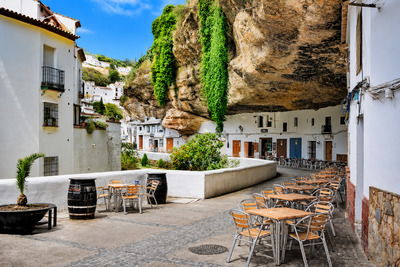
Calle Cuevas del Sol is the most famous street in Setenil de las Bodegas and the main attraction that draws visitors to this unusual Andalusian town. It is here that you will find the renowned houses built beneath enormous rock overhangs, which have made Setenil famous far beyond the borders of Spain.
The street’s name translates as “Street of the Sun Caves”. Unlike the neighbouring Calle Cuevas de la Sombra, this part of the town receives sunlight for most of the day. The settlement developed over many centuries along the banks of the Trejo River, and local residents used the natural rock formations as a ready-made part of their homes. These stone overhangs provided protection from the summer heat and helped maintain a comfortable indoor temperature long before the appearance of modern cooling systems.
Walking along Calle Cuevas del Sol, it is difficult to shake the feeling that nature and architecture have become one. Huge multi-tonne rocks hang directly above cafés, shops, and residential buildings, creating a landscape that resembles a film set more than an ordinary town street. For this reason, it is considered one of the most unusual attractions in Andalusia.
Today, Calle Cuevas del Sol remains the heart of Setenil’s tourist life. It is lined with cosy tapas bars, small restaurants, and terraces where visitors can take a pleasant break during their walk. The street is particularly beautiful in the morning and towards sunset, when the sunlight highlights the contrast between the snow-white façades of the houses and the dark rocky vaults above. For many travellers, this street becomes the most memorable part of a visit to Setenil de las Bodegas.
Calle Cuevas de la Sombra
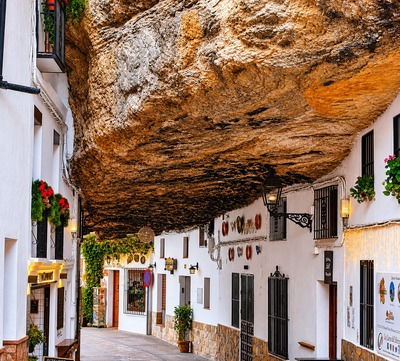
Calle Cuevas de la Sombra is the second famous street in Setenil de las Bodegas and perhaps the most unusual part of the town. While on Calle Cuevas del Sol the rock overhangs rise above the houses on one side of the street, here an enormous rock almost completely covers the space overhead, creating the impression of a genuine stone cave beneath the open sky.
The street’s name translates as “Street of the Shadow Caves”, and it is entirely fitting. Because of the massive rocky vault, sunlight reaches this area only for a short period of time, so even at the height of the Andalusian summer, a pleasant coolness remains here. Thanks to this feature, many visitors first explore the sunny Calle Cuevas del Sol before crossing a small bridge to its more mysterious neighbour.
A walk along Calle Cuevas de la Sombra creates a completely different impression. If Cuevas del Sol feels bright and lively, the atmosphere here becomes more intimate and almost fairy-tale-like. An enormous stone ceiling hangs above the white façades of houses, cafés, and small shops, making visitors constantly look upwards in amazement at how nature and architecture have merged so harmoniously.
Despite its popularity with tourists, the street retains its local character. Small bakeries, grocery shops, and traditional bars operate here, where visitors can sample Andalusian tapas and take a short break from sightseeing. It is through the contrast between the sunny Cuevas del Sol and the shaded Cuevas de la Sombra that the unique character of Setenil de las Bodegas is revealed most clearly.
For many travellers, this street becomes the town’s most unexpected discovery. Photographs taken here often look so unusual that they appear to have been captured not in Spain, but in some fantastical underground settlement hidden within a rock.
Andalusia Square (Plaza de Andalucía)
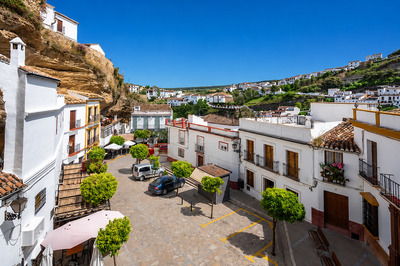
After walking through the shaded Calle Cuevas de la Sombra and then climbing up Calle Ronda, you will arrive at Plaza de Andalucía, the main square of Setenil de las Bodegas and the town’s social centre. After the narrow streets beneath the overhanging rocks, this place feels completely different: the space suddenly opens up, becomes brighter and livelier, and is surrounded by café terraces, small shops, and lively groups of local residents.
Plaza de Andalucía has long been the town’s main meeting place. Bars, cafés, banks, and other public institutions are located here, so it is always busy throughout the day. This is where the residents of Setenil come to have a coffee, discuss the latest news, or simply spend time with friends. As a result, the square offers a glimpse not only of the town’s tourist side but also of its everyday life.
Despite its modest size, Plaza de Andalucía plays an important role in the layout of Setenil. Many walking routes pass through it, and the square itself serves as a convenient starting point for further exploration of the old town, the castle, and the viewpoints. It also offers attractive views of the surrounding whitewashed houses climbing the hillside.
It is especially pleasant to spend a few minutes here after exploring the famous streets beneath the rocks. Over a cup of coffee or a glass of local wine, visitors can quietly observe the rhythm of the town and experience the relaxed Andalusian atmosphere that draws so many travellers to the small white villages of southern Spain.
Church of Nuestra Señora de la Encarnación
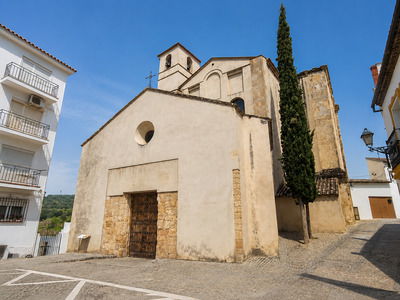
Continuing your walk from Plaza de Andalucía through the narrow streets of the old town, you will gradually make your way up to the Church of Nuestra Señora de la Encarnación, one of the most prominent historic buildings in Setenil de las Bodegas. Its bell tower is visible from various parts of the town and has remained one of the main landmarks among the whitewashed houses rising up the hillside for many centuries.
The church was built in the late 15th and early 16th centuries after Setenil came under the rule of the Catholic Monarchs. Its construction became a symbol of a new era in the town’s history following the completion of the Reconquista. The architecture of the church displays elements of Late Gothic and Renaissance styles, which is fairly typical of many Andalusian churches from this period.
Unlike the famous streets beneath the rocks, which are always filled with tourists, the area around the church has a much calmer atmosphere. There are fewer cafés and souvenir shops here, but the historic character of old Setenil is more strongly felt. Narrow cobbled lanes, white façades, and small squares make it easy to imagine what the town looked like several centuries ago.
Even if you do not plan to visit the church interior, it is worth making the climb for the walk itself. Along the way, you will enjoy beautiful views of the rooftops, the surrounding hills, and the lower part of the town with its famous streets beneath the rocks.
Castillo y Torreón
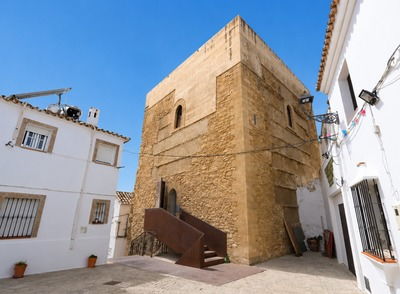
Climbing even higher through the streets of the old town, you will reach Castillo y Torreón, the most historic part of Setenil de las Bodegas. Today, only fragments of the medieval fortifications and the main defensive tower remain, yet it was here that the history of the town began. For centuries, it was regarded as one of the most important strongholds in the region.
The first fortifications on this site were built during the period of Muslim rule in Andalusia. Thanks to its position on a high rocky outcrop, the fortress commanded the surrounding area and remained virtually impregnable for a long time. It is believed that the name Setenil is linked to the Latin expression Septem Nihil — “seven times nothing”, referring to the seven unsuccessful attempts by Christian forces to capture the town. Only in 1484 were the armies of the Catholic Monarchs Ferdinand and Isabella able to take the fortress after a prolonged siege.
Today, the main feature of the complex is the Torreón, a massive tower rising above the whitewashed houses of Setenil. As you make your way up here, it is impossible not to notice how the atmosphere of the town gradually changes. The tourist-filled streets remain below, the sounds of cafés grow quieter, and ancient stone walls and panoramic views of the Andalusian hills begin to surround you.
It is worth making the climb not only for its history but also for the panoramic views of the town. The viewpoints beside the tower offer some of the finest panoramas in Setenil de las Bodegas. From here, you can clearly see the course of the Trejo River, the whitewashed neighbourhoods, the famous streets beneath the rocks, and the surrounding mountain landscapes of Cádiz Province.
Castillo y Torreón provides a fitting conclusion to a walk through the town. After discovering its unusual streets, squares, and historic centre, this is the place where you can see Setenil as a whole and once again appreciate how remarkably nature and architecture have become intertwined in one of Andalusia’s most extraordinary towns.
Where to Eat in Setenil de las Bodegas
After exploring the streets beneath the rocks, it is time to discover another important part of Andalusia — its gastronomy. Despite the town’s modest size, Setenil de las Bodegas is home to numerous cosy bars, tapas establishments, and family-run restaurants where visitors can sample traditional regional dishes in a unique setting among the rocks and whitewashed houses.
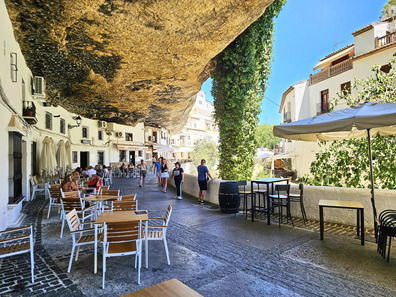
Most restaurants and cafés are located along Calle Cuevas del Sol, near Plaza de Andalucía, and on the neighbouring streets of the historic centre. Rather than searching for a particular venue in advance, it is often best simply to choose a terrace that appeals to you as you walk. In Setenil, the pleasure often comes not only from the meal itself but also from the opportunity to sit beneath the enormous rock overhangs and watch the life of the town unfold around you.
The local food largely reflects the gastronomic traditions of inland Andalusia. Particular attention should be paid to seafood dishes, Iberian pork, homemade sausages, jamón, grilled meats, and a wide variety of tapas. Menus often feature slow-cooked meats, game dishes, Andalusian soups, and recipes that have been prepared in the region for many generations.
If you are travelling in autumn or winter, look out for seasonal stews and hearty homemade soups. During spring and summer, lighter dishes, fresh salads, chilled gazpacho, salmorejo, and a variety of vegetable appetisers are especially popular, making them ideal for the hot Andalusian climate.
Local wines and sherries from neighbouring areas of Cádiz Province also deserve special attention. They pair perfectly with traditional tapas and offer an even deeper insight into the gastronomic character of southern Spain.
Setenil is not a destination that people visit specifically for fine dining. Its main appeal lies in the combination of extraordinary scenery, a relaxed atmosphere, and traditional Andalusian cuisine. For this reason, the best approach is not to rush, but to take a break during your walk and simply enjoy a leisurely meal in one of the most unusual towns in Spain.
Parking and Visitor Tips
Below are the main recommendations regarding parking, the best time to visit, and route planning that will help you explore the town comfortably and avoid common mistakes during your trip.
Where to Leave Your Car
The biggest mistake when visiting Setenil de las Bodegas is trying to drive directly to the famous streets beneath the rocks. The historic centre consists of very narrow streets, steep inclines, and a limited number of parking spaces. It is far more convenient to leave your car in one of the car parks near the centre and continue exploring on foot.
One of the most convenient options is considered to be Parking Los Caños, from which the main attractions can be reached within a few minutes on foot. Many visitors also leave their cars in the upper part of the town near Calle San Sebastián and begin their walk from the viewpoints, gradually making their way down to the historic centre.
How Much Time You Need for a Visit
Setenil is quite compact. Two to four hours are usually enough to explore the main attractions, stop for photographs, and enjoy lunch. If you are travelling around Andalusia by car, the town can easily be combined with a visit to Ronda as part of the same day trip.
When to Visit
The most pleasant atmosphere in Setenil is usually found in the morning and towards the evening. During the middle of the day, the town is often visited by organised tour groups, and in summer temperatures can rise to +40 °C. If possible, plan your walk for the first half of the day or during the hours before sunset.
Spring and autumn are considered the best seasons to visit. At this time of year, it is more comfortable to walk through the streets and climb to the viewpoints, while the town itself looks particularly picturesque.
Comfortable Footwear Is Recommended
Although Setenil appears small on the map, exploring it involves a considerable number of climbs, stairways, and cobbled streets. This is especially noticeable on the route from Plaza de Andalucía to the Church of Nuestra Señora de la Encarnación and the Torreón tower. Comfortable footwear will make your walk significantly more enjoyable.
What to Combine Your Visit With
Setenil is often visited together with Ronda, which is located very nearby. This route allows travellers to see two completely different yet equally impressive Andalusian towns in a single day: Ronda with its famous bridges and the El Tajo Gorge, and Setenil with its unique houses built beneath the rocks.
What to See Near Setenil de las Bodegas
💡 For convenient travel around the region, it is best to hire a car, allowing you to travel without being tied to public transport timetables.
Setenil de las Bodegas is conveniently located in the heart of Andalusia and is an excellent base for day trips around the region. Many travellers include the town in a road trip through southern Spain, combining it with visits to other picturesque white villages, historic towns, and natural attractions.
- Ronda — one of the most beautiful towns in Andalusia, famous for the El Tajo Gorge, the iconic New Bridge, and spectacular panoramic views.
- Cádiz — the oldest city in Western Europe, known for its atmospheric historic centre, Atlantic beaches, and excellent gastronomy.
- Seville — the capital of Andalusia, home to the Alcázar, the cathedral, flamenco, and a rich historical heritage.
- Málaga — the largest city on the Costa del Sol, featuring the Picasso Museum, the Alcazaba fortress, and a Mediterranean atmosphere.
- Córdoba — the city of the famous Mezquita, flower-filled patios, and one of the most beautiful historic centres in Spain.
- Arcos de la Frontera — one of the most famous white villages of Andalusia, perched dramatically on top of a cliff.
- Zahara de la Sierra — a picturesque white village located near the Sierra de Grazalema Natural Park.
- Grazalema — one of the most beautiful places in Andalusia for mountain walks and discovering the region’s traditional architecture.
- Olvera — a white village with an Arab fortress and beautiful views over the surrounding hills.
- Caminito del Rey — one of Spain’s most famous walking routes, passing through a spectacular gorge.
- Theme Parks and Family Activities in Seville — theme parks, water parks, an aquarium, and family-friendly attractions in the capital of Andalusia.
Thanks to its convenient location, Setenil de las Bodegas can easily be included in an Andalusian itinerary lasting one or several days. The combination of Setenil and Ronda is particularly popular, although having a car makes the opportunities for exploring the region virtually unlimited.

 English
  Español
  Русский