
Estepona is one of the most charming and picturesque towns on the Costa del Sol, located in the province of Malaga between Marbella and Gibraltar.
This resort is often called the “garden of the Costa del Sol” thanks to its well-kept streets decorated with hundreds of flower pots, the whitewashed houses of the old town, and its calm, truly Andalusian atmosphere.
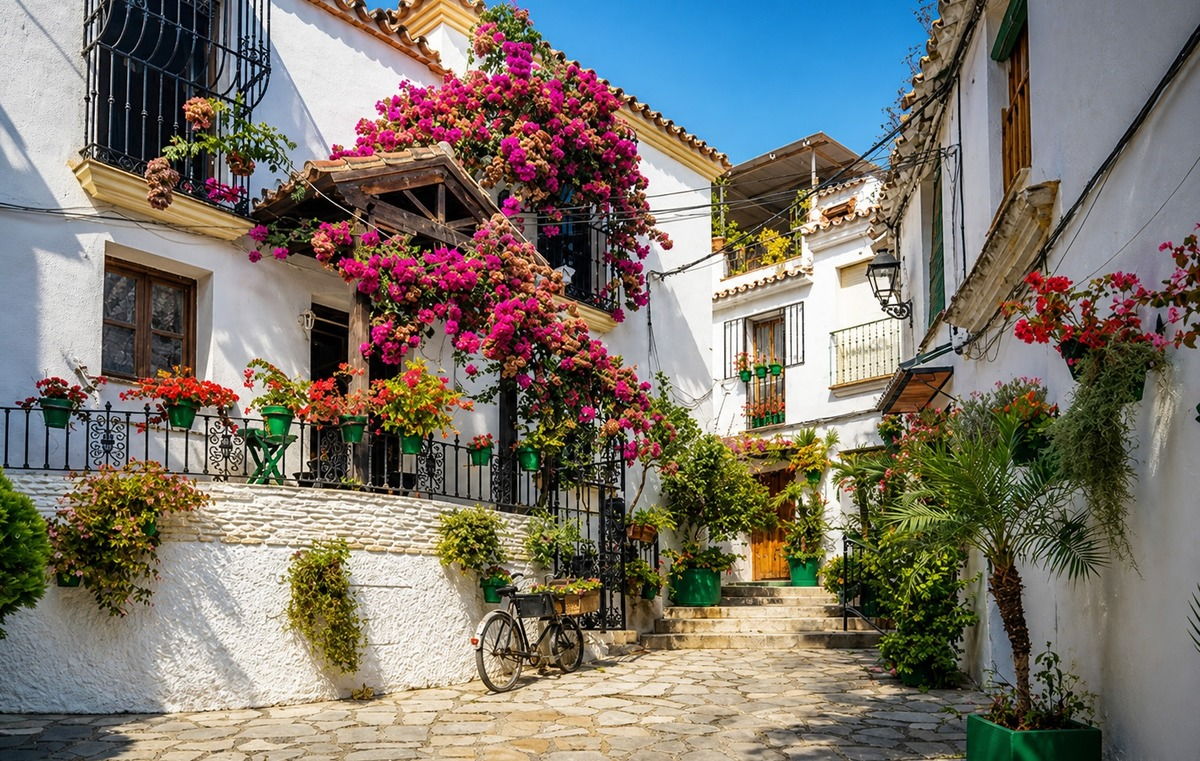
Unlike the noisier resorts of the region, Estepona has preserved its authentic character: there is no hustle and bustle of large tourist centres here, but instead cosy squares, narrow flower-filled streets, long beaches, and promenades perfect for relaxed walks.
In this article, you will discover what to see in Estepona: the city’s main attractions, the best places for walks, beaches, and interesting locations worth including in your itinerary during your trip.
What to see in Estepona in one day — walking route
If you only have one day to explore the city, Estepona can easily be explored on foot, enjoying its atmosphere, flower-filled streets, and sea views.
Most of the main attractions are located close to each other, making the route convenient, logical, and very pleasant for a walk.
- Estepona old town (Casco Antiguo)
- Plaza de las Flores
- Murals route (Ruta de los Murales)
- Estepona orchidarium
- Estepona promenade (Paseo Marítimo)
- Estepona beaches
- Estepona marina (Puerto Deportivo)
Additionally:
The best place to start exploring Estepona is the old town — Casco Antiguo, considered one of the most beautiful areas on the Costa del Sol.
Estepona old town (Casco Antiguo)
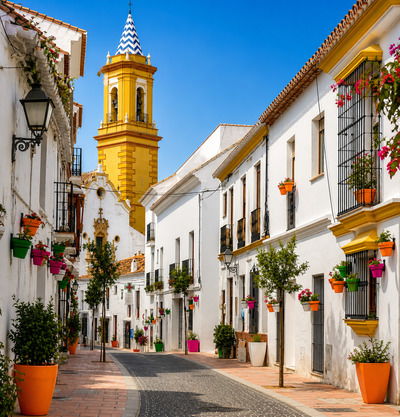
Estepona Old Town is a network of narrow pedestrian streets with whitewashed houses and hundreds of flower pots decorating the facades. This is exactly why Estepona is often called the “city of flowers.”
A walk here is built not around a single attraction, but around the atmosphere and details: neat streets, floral decorations, small squares, and traditional Andalusian architecture.
One of the most recognizable places is Calle Terraza, which is a convenient starting point for the route. From here, you can gradually move deeper into the old town, wandering from one street to another.
The unique feature of Casco Antiguo is its carefully designed streets: each one is decorated in its own color palette, creating a sense of variety and making the walk even more interesting.
Along the way, you will come across small churches, galleries, and local shops, as well as interesting details that are easy to miss at first glance.
The heart of the historic centre is considered to be Plaza de las Flores — one of the most recognizable and picturesque places in the city, where every walk through the old town eventually leads.
Plaza de las Flores
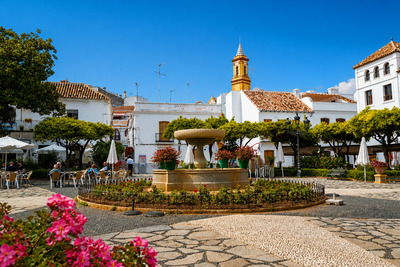
Plaza de las Flores is the central square of the old town and one of the most recognizable places in Estepona, where the main pedestrian streets intersect.
The square got its name thanks to the abundance of flowers decorating it all year round. In the centre, there is a small fountain surrounded by orange trees that create shade and a cosy atmosphere even during hot weather.
Historically, this place has always been part of city life: in the past, there were trading rows and small markets here, and today the square remains a natural meeting point for both locals and tourists.
The square is surrounded by cafés, bars, and restaurants with open terraces, but unlike many resort towns, it does not feel artificially touristy — the lively everyday atmosphere can still be felt here.
Plaza de las Flores is not just a beautiful square, but a natural centre of city life where the rhythm of Estepona can best be experienced.
Murals route (Ruta de los Murales)
Continuing your walk through Estepona, it is worth paying attention to one of the city’s most unusual features — the Murals Route (Ruta de los Murales), which has transformed residential neighbourhoods into an open-air gallery.
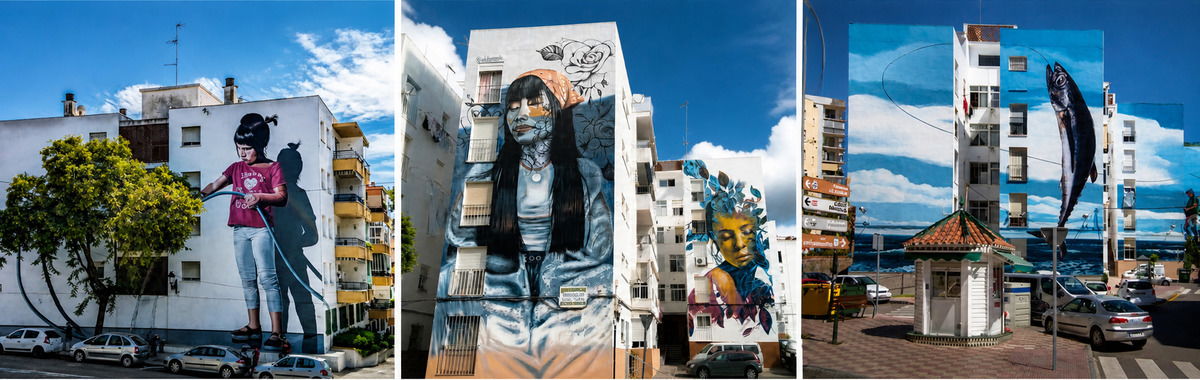
Estepona’s murals are large-scale paintings on building facades, many of which cover several floors and look like huge artworks integrated into the urban landscape.
The project appeared in the early 2010s as part of the city’s renewal program. Instead of standard neighborhood reconstruction, the authorities focused on art — and this completely changed the perception of Estepona.
Today, the city features more than 50 large artworks created by artists from different countries. Each mural has its own idea and style: from realistic scenes to symbolic and abstract compositions.
One of the most famous is “Día de Pesca” (“Fishing Day”), considered one of the largest vertical murals in Spain. It depicts a scene from everyday life and looks so realistic that it creates a sense of presence.
Unlike the old town, where the atmosphere and street details are important, here the focus is placed on large visual accents — offering a completely different perspective of Estepona.
The murals are located in different districts, so the most convenient way to explore them is not by searching for them intentionally, but by gradually including them in your route while moving from the centre toward the more modern neighbourhoods.
Ruta de Murales is an example of how the city managed to combine traditional architecture with contemporary art, making a walk through Estepona more diverse and unexpected.
Estepona orchidarium
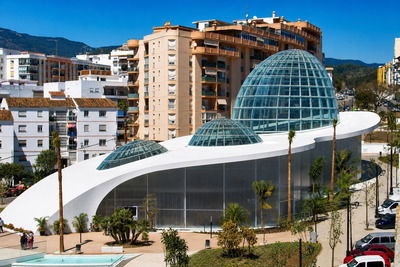
Estepona Orchidarium is one of the city’s most unusual places and a striking example of how modern architecture can blend organically into a historic environment.
It was opened in 2015 as part of Estepona’s large-scale renovation, when the city began actively developing as a modern and comfortable resort destination.
The orchidarium’s main feature is its three glass domes, which rise above the city and can be seen from afar. Even from the outside, it becomes clear that this is not just a park, but an architectural landmark that immediately attracts attention.
Inside, there are more than 5,000 plants, including hundreds of orchid species from around the world. The space is designed as a multi-level garden with pathways, bridges, green areas, and small observation points.
A particularly impressive feature is the tall waterfall, considered one of the largest indoor waterfalls in Europe. It creates the feeling of a real tropical space right in the centre of the city.
The orchidarium differs significantly from the rest of Estepona: after walking through the whitewashed streets of the old town, this place feels like a completely different world — more modern, greener, and more dynamic.
A visit usually takes around 30–60 minutes, making the orchidarium easy to include in your route between the old town and the promenade.
💡 Good to know: entry is paid (around 3 euros), and the interior remains comfortable even during hot weather thanks to the shade and humid air.
This place is worth visiting not only for the plants, but also for the space itself — the combination of light, glass, and nature that makes the orchidarium one of the most memorable spots in Estepona.
Estepona promenade (Paseo Marítimo)
After walking through the old town and exploring Estepona’s modern districts, the route naturally leads to the sea — to the wide and well-maintained Paseo Marítimo promenade.
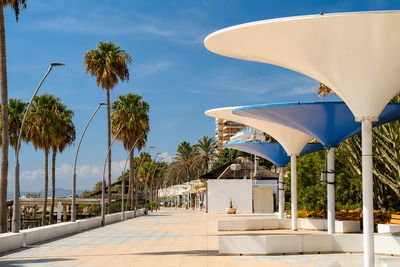
Estepona Promenade stretches along the coastline for several kilometres, connecting the city centre with beaches and residential districts. It is one of the places where the resort character of the city can best be felt.
The promenade gained its modern appearance during Estepona’s large-scale renovation: wide pedestrian areas, cycling paths, green alleys, and comfortable relaxation spaces were added.
A walk along the sea follows a calm rhythm: on one side are the beaches and the Mediterranean Sea, and on the other — cafés, restaurants, and chiringuitos where you can stop for a break and enjoy lunch with a sea view.
Along the way, you will come across palm trees, neat flower beds, and modern sculptures that complement the city’s appearance and make the walk more diverse.
The promenade is not overcrowded with tourists like in some of the more famous Costa del Sol resorts, so it still retains a sense of space and tranquility.
It is especially pleasant to walk here closer to the evening, when the sun begins to descend toward the horizon and the city gradually slows down. At this time, the promenade becomes one of the best places to watch the sunset.
It is also a convenient location for active recreation: you can go jogging, ride a bicycle, or simply take a long walk along the coast, gradually discovering different parts of the city.
💡 Good to know: there are convenient beach access points and parking areas along the promenade, making it easy to reach both on foot and by car.
Estepona beaches — where to swim and relax by the sea
Estepona is famous for its long and well-maintained beaches, considered among the most comfortable on the Costa del Sol coastline.
The city’s coastline stretches for more than 20 kilometres, making it easy to choose the type of holiday you prefer: from lively beaches near the centre to more secluded and peaceful coastal areas.
Many of Estepona’s beaches have been awarded the “Blue Flag,” confirming the cleanliness of the water, safety, and developed infrastructure.
The beaches here are mostly sandy and pebbly, with comfortable access to the sea — making them suitable both for families with children and for a relaxing holiday.
La Rada beach (Playa de la Rada)
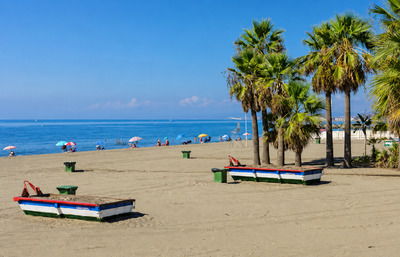
Playa de la Rada is Estepona’s main urban beach, located directly along the promenade.
It is the most convenient option if you are staying in the centre: you can easily walk here from the old town.
The beach stretches for about 2.5 km, so even during the high season there is still plenty of space.
The surface is mainly sandy with some small pebbly sections, and the entrance to the sea is gentle, making it comfortable for most visitors.
Everything needed for a comfortable stay can be found here: sunbeds, showers, sports areas, as well as cafés, restaurants, and chiringuitos along the beach.
It can occasionally be windy here, especially in the afternoon — a typical feature of the Costa del Sol coastline.
Best for: those who want to combine city walks with seaside relaxation without unnecessary travel.
El Cristo beach (Playa del Cristo)
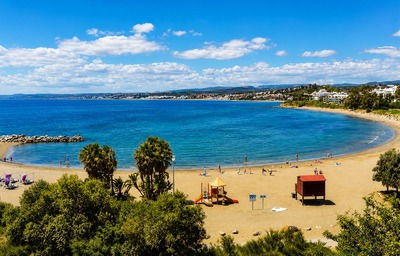
Playa del Cristo is one of the cosiest and most sheltered beaches in Estepona, located near the marina.
It is situated in a small bay, which means there are almost never strong waves here, and the water warms up faster than on the open coastline.
Because of this, the beach is considered one of the best options for families with children.
The sand here is soft, the entry into the sea is smooth, and the depth increases gradually, making swimming more comfortable and safe.
The beach has chiringuitos, sunbeds, and relaxation areas, while the atmosphere remains more intimate and peaceful compared to the central beaches.
Best for: families with children and those looking for calm, wave-free sea conditions.
El Padrón beach (Playa del Padrón)
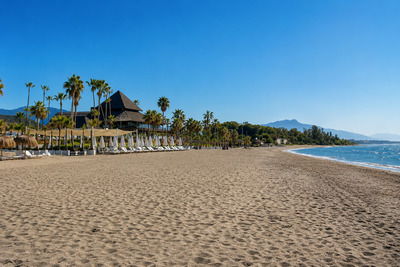
Playa del Padrón is located slightly east of the centre and offers a calmer atmosphere compared to the central beaches of Estepona.
There are fewer tourists here, more open space, and a sense of privacy, making it a great choice for a relaxed seaside holiday.
At the same time, the beach remains comfortable: there are sunbeds, showers, nearby restaurants, and convenient parking areas close to the beach.
A river flows nearby, and the surrounding landscape makes this place more scenic and less urbanized.
💡 Good to know: the entrance to the sea is rocky in some areas — first with small stones and then larger rocks, so it is better to bring special water shoes for comfortable swimming.
Best for: those who want to move away from the centre while still keeping comfort and do not mind a more natural beach setting.
Arroyo Vaquero beach (Playa Arroyo Vaquero)
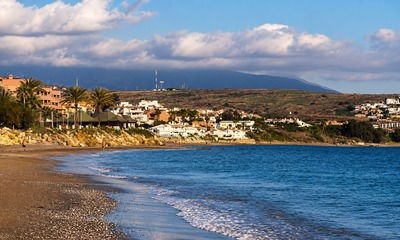
Playa Arroyo Vaquero is one of the quietest and least touristy beaches in Estepona, located west of the city centre.
There is noticeably less infrastructure and fewer people here, which helps preserve the feeling of a more natural and “wild” coastline.
The beach is long and wide, so even during the high season it is possible to find a secluded place to relax.
The surface is mixed: sand with pebbly areas, and the entrance to the sea is rocky in some places — special water shoes may be useful for comfort.
💡 Special feature: some sections of the beach include nudist areas — they are usually located farther from the main entrances and busier spots.
The infrastructure here is minimal: there are a few chiringuitos, but overall the atmosphere remains calm and less tourist-oriented.
Best for: those looking for peace, open space, and a more natural coastal atmosphere.
Estepona marina (Puerto Deportivo de Estepona)
After relaxing on the beach, you can head to Estepona marina (Puerto Deportivo de Estepona) — one of the liveliest and most atmospheric places in the city, especially in the evening.
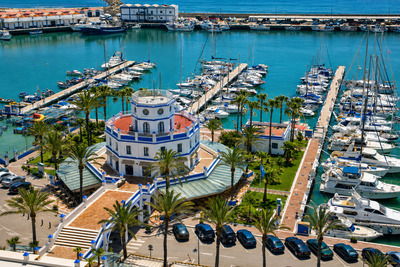
The marina is located just a few minutes from the centre and combines several functions at once: it is both a yacht marina and a popular leisure area with restaurants, bars, and walking streets.
The history of the marina is connected with Estepona’s development as a resort during the second half of the 20th century. In the past, the town was primarily a fishing village, and the sea played a key role in the lives of local residents. Over time, a modern marina was built on the site of the old fishing harbor, becoming an important part of the tourist infrastructure.
Today, Puerto Deportivo is a place where you can see beautiful yachts, walk along the piers, and experience the atmosphere of a Mediterranean resort.
During the day, it is relatively calm here, but closer to the evening the marina comes alive: restaurants open, lights turn on, and the streets become busier.
Along the marina promenade, there are many places where you can try fresh seafood, paella, tapas, and traditional Andalusian dishes.
It is a perfect place for dinner with a sea view or a relaxed evening with a glass of wine.
💡 Interesting fact: on Sundays, a small street market takes place near the marina, where you can find souvenirs, clothing, and handmade products by local artisans.
If you would like to explore larger and more diverse markets in the region, it is worth checking out the street markets of Malaga province, which take place on different days of the week and often become a separate part of the travel experience.
What to try in Estepona
A holiday in Estepona is not only about walks and beaches, but also about discovering the traditional cuisine of Andalusia, known for its simple yet rich flavors.
Thanks to its proximity to the sea, dishes made with fresh fish and seafood are especially popular in local restaurants and chiringuitos.

- Espeto de sardinas — sardines grilled over charcoal directly on the beach. This is one of the most characteristic dishes of the Costa del Sol coastline.
- Pescaíto frito — an assortment of fried fish and seafood served in most coastal restaurants.
- Gazpacho — a cold tomato soup that is perfect for the hot Andalusian climate.
- Paella — the classic Spanish dish with rice, seafood, or meat, often prepared in seaside restaurants.
🍷 Among the drinks, it is worth trying local wines, sangria, and traditional Spanish aperitifs. You can learn more about the region’s gastronomy in the article traditional Andalusian food and the guide to traditional Spanish drinks.
Discovering the local cuisine is an important part of traveling to Estepona, helping you better experience the atmosphere of southern Spain.
What to see near Estepona
Estepona is located in the western part of the Costa del Sol, making it an excellent starting point for traveling around Andalusia.
Within a radius of 1–1.5 hours by car, you will find both major cities and picturesque white villages, as well as popular resorts with entertainment for the whole family.
💡 For convenient travel, many visitors choose to rent a car 🚗 — this makes it easy to combine different destinations without depending on public transport.
Major cities and resorts
- Malaga — the main city of the region, located about 1 hour away by car. Here you can visit the Alcazaba fortress, the Picasso Museum, and the historic centre with its cosy streets.
- Marbella — one of the most famous Costa del Sol resorts, featuring a beautiful old town, Plaza de los Naranjos, and the atmosphere of southern Spain. The famous Puerto Banús is also located here.
- Fuengirola — a popular resort with a long promenade, the Bioparc zoo, and convenient infrastructure for holidays.
- Benalmádena — an excellent option for a family trip: there is an amusement park, a cable car, and one of the best marinas in the region.
Atmospheric places and white villages
- Ronda — one of the most impressive towns in Andalusia, located on cliffs. The main attraction is the Puente Nuevo bridge above the deep gorge.
- Mijas — a traditional white village with narrow streets, panoramic views, and the atmosphere of old Andalusia.
Ideas for leisure and entertainment
- Torremolinos — a resort town with beaches, walking areas, and developed tourist infrastructure.
- What to see near Malaga — a selection of the best routes and interesting places for one-day trips around the region.
- Parks and entertainment in Malaga — great ideas for family trips and active recreation.
💡 It is also worth mentioning Gibraltar — a unique place on the border between Spain and the United Kingdom, located about an hour’s drive from Estepona. Here you can see the famous Rock of Gibraltar, panoramic views, and the only wild monkeys in Europe.
Thanks to its convenient location, Estepona is perfect not only for a beach holiday, but also for rich and diverse trips around southern Spain.

 English
  Español
  Русский