
Calpe is a charming town on the Costa Blanca coast in the province of Alicante, located in the autonomous community of Valencia.
This resort is known for its picturesque beaches, historical attractions, and unique natural landscapes. The main symbol of the town is the famous Peñón de Ifach Rock, which rises above the coastline and is visible from almost any point in the town.
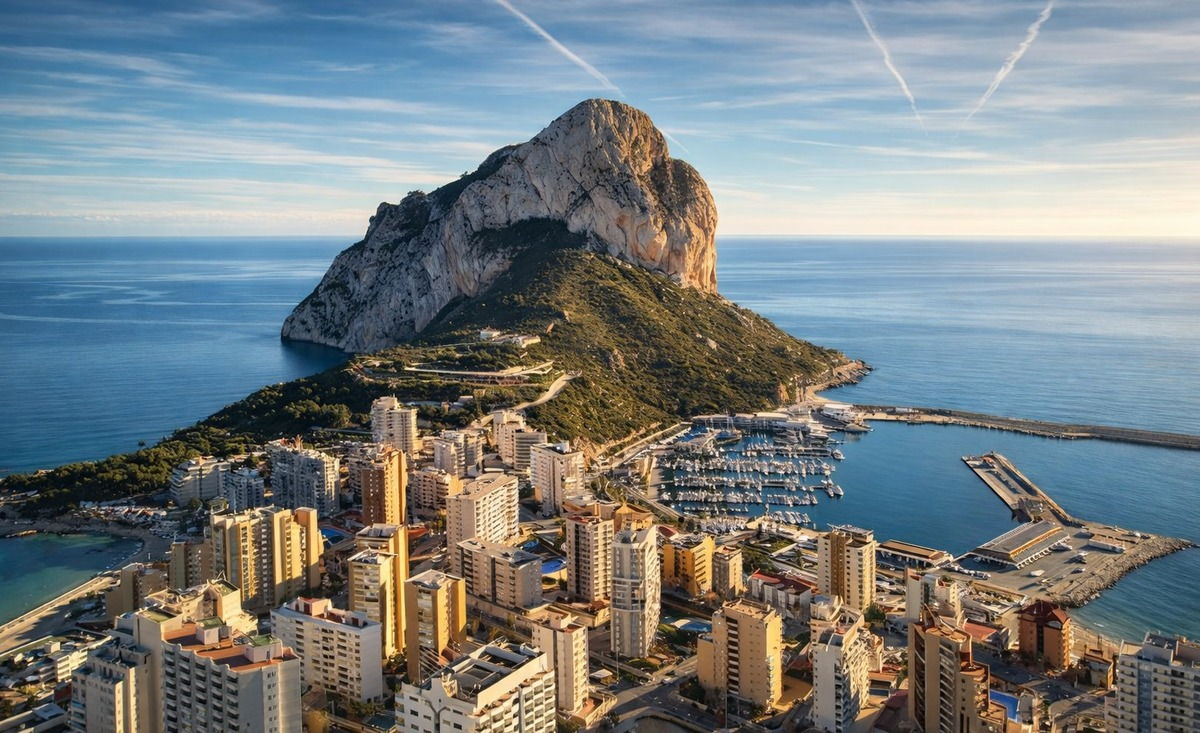
If you are planning a trip and looking for what to see in Calpe, this town will pleasantly surprise you with its combination of nature, charming streets, sea views, and interesting places for walks.
This guide features the main attractions of Calpe — from natural landmarks and the Old Town to beaches, museums, and places for active recreation.
What to See in Calpe — Contents
- Peñón de Ifach Rock
- Calpe Old Town
- Watchtowers and Fortifications
- Salinas (Las Salinas)
- Calpe Beaches
- Where to Park in Calpe
- What to See Near Calpe
Main Attractions of Calpe
Calpe is a relatively small town, so most of its attractions are located close to each other. Many interesting places can be comfortably explored in one day; however, if you have more time, it is worth staying longer and enjoying unhurried walks.
Peñón de Ifach Rock
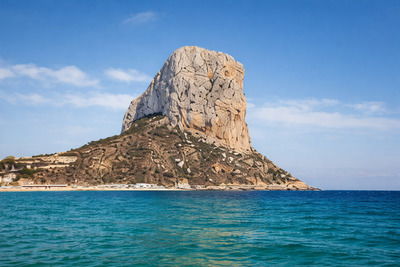
Peñón de Ifach Rock (Peñón de Ifach) is the main natural attraction of Calpe and one of the most recognizable symbols of the entire Costa Blanca coastline.
It is a huge limestone rock formation that rises 332 meters above sea level and is part of the natural park of the same name. Its silhouette is clearly visible from different parts of the town and even from the sea.
The name “Ifach” has ancient roots and, according to one version, comes from an Iberian word meaning “northern rock.” For centuries, this natural peak served as a landmark for sailors and trading ships traveling along the coast.
Today, climbing Peñón de Ifach is considered one of the most popular activities in Calpe and represents a true adventure that rewards travelers with stunning panoramic views.
The route to the summit follows a designated trail and is conventionally divided into two parts. The first part of the route is relatively easy and suitable for most travelers. The second part begins after passing through a tunnel carved into the rock and requires greater caution, as the trail becomes steeper and rockier.
The ascent usually takes from 1 to 2 hours depending on pace and physical condition. The total route length is about 5 kilometers round trip. Despite the relatively short distance, part of the trail passes over rocky terrain, so it is important to plan your strength and choose comfortable footwear.
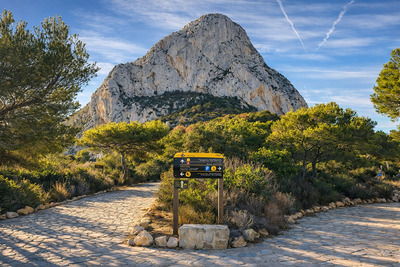
From the summit, impressive views open over the town of Calpe, the Salinas salt lagoons, the beaches, and the Mediterranean coastline. In clear weather, you can see a significant part of the Costa Blanca shoreline from here.
The area around the rock is part of the Parque Natural del Peñón de Ifach Natural Park, which was created to protect the unique flora and fauna of this region. Rare plants adapted to rocky terrain and the marine climate grow here.
Peñón de Ifach is also home to many bird species, including rare types of gulls, shearwaters, and hawks. For this reason, the site attracts not only tourists but also ornithologists who come here to observe birds throughout the year.
It is important to note that the number of visitors allowed to reach the summit may be limited during the high season, so advance registration may sometimes be required to visit the natural park.
The best time for the climb is in the morning or closer to the evening when the air temperature is more comfortable. Be sure to bring water, comfortable footwear, and sun protection.
Calpe Old Town (El Casco Antiguo)
Calpe Old Town (El Casco Antiguo) is one of the most atmospheric places in the town, where you can feel its historical past and the unhurried Mediterranean rhythm of life.
The historic center is located on a small hill and forms a labyrinth of narrow streets with stone houses decorated with flowers, ceramics, and decorative elements. It is pleasant to walk here without hurry, admiring the facades of old buildings and discovering cozy corners of the town.
There are several interesting places in the Old Town that should definitely be included in your walk.
Carrer Puchalt Street
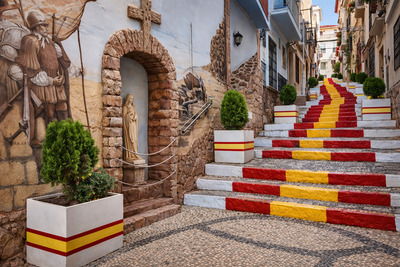
One of the most famous streets is Carrer Puchalt (C/ Puchalt) — the most photogenic street in Calpe.
Its steps are decorated with tiles in the colors of the Spanish flag, and flower pots are placed along the walls. This is one of the most popular photo spots, and almost every tourist takes a picture here.
Plaza de la Villa Square
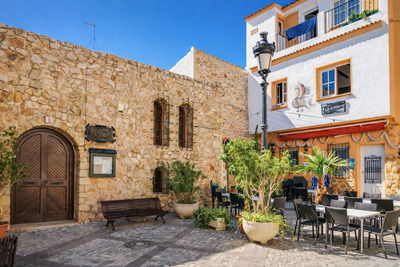
The center of the Old Town is considered to be Plaza de la Villa — a small historic square surrounded by buildings with traditional architecture. It is one of the most important public spaces in Calpe, where many city events take place.
Festive events, concerts, and ceremonial activities are often held here. During well-known city festivals, the square becomes one of the main meeting places for residents and tourists.
The square becomes especially lively in October during the Moros y Cristianos festival, dedicated to the town’s patron — Santísimo Cristo del Sudor. During these days, religious services, theatrical performances, and ceremonial events take place in the square, and the Old Town fills with music and a festive atmosphere.
Various cultural events, small concerts, and seasonal activities are also held here, making it an important center of public life in Calpe.
Around the square, there are cozy restaurants and cafés where it is pleasant to take a break during your walk and enjoy the atmosphere of the historic town center.
Torre de la Peça Tower
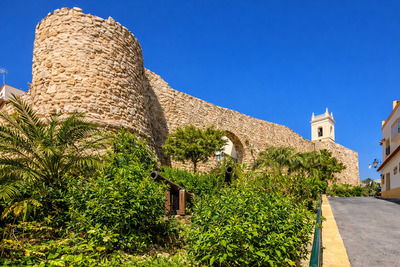
One of the important historical landmarks of the Old Town is Torre de la Peça — a medieval defensive tower built in the 15th century.
It was part of the city’s fortification system that protected Calpe from pirate attacks, which were frequent along this section of the coast in the past.
Today, the tower is well preserved and is considered one of the symbols of the historic center. Nearby, you can see fragments of the old city walls, reminding visitors of the time when the town was surrounded by fortifications.
Nowadays, exhibitions and cultural events are sometimes held inside the tower, making it interesting not only from a historical perspective but also as part of the town’s modern life.
Nuestra Señora de las Nieves Church
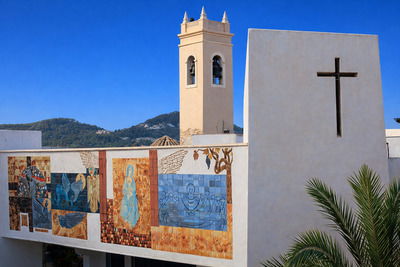
Another major attraction of Calpe located on the square is the Nuestra Señora de las Nieves Church.
Nearby, there is an old 15th-century church and a more modern building constructed in an unusual architectural style. These two buildings create an interesting contrast and form an important part of the town’s historical appearance.
Museum of Collecting (Museo del Coleccionismo)
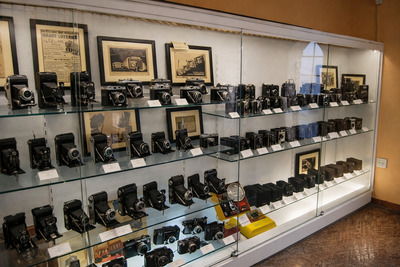
Not far from the square is Museo del Coleccionismo — a small museum featuring collections of antique items, coins, porcelain, and decorative objects.
The exhibition allows visitors to better understand the town’s history and the lifestyle of local residents in past centuries.
The history of Calpe dates back to ancient times. Even in prehistoric periods, these lands were inhabited, and later the Iberians — one of the oldest peoples of the Iberian Peninsula — lived here.
During the Roman Empire, settlements existed on the territory of modern Calpe that were connected with fishing and the production of garum — a popular fish sauce that was exported throughout the Mediterranean.
Later, these lands were under Moorish rule, and in the Middle Ages, the town was repeatedly attacked by pirates. That is why defensive walls and watchtowers were built in Calpe, some of which have survived to this day.
Visiting the museum helps to better understand how the town developed over the centuries and what role it played in the history of the Costa Blanca coast.
Admission to the museum is free, and it can be visited from Tuesday to Saturday from 10:00 to 14:00 and from 16:30 to 19:30 (a later evening schedule applies in summer). It is recommended to check opening hours before visiting, as the schedule may change during public holidays.
Old Town Viewpoints
While walking along the upper streets of the Old Town, you can find several small viewpoints.
From these spots, beautiful views open over the modern districts of Calpe, the port, and the famous Peñón de Ifach Rock. These viewpoints are especially popular among photographers and lovers of panoramic views.
Watchtowers and Fortifications of Calpe
Watchtowers and fortifications of Calpe remind visitors of times when the Mediterranean coast was regularly attacked by pirates. In the past, the town’s residents had to build defensive structures to protect the population and control sea approaches.
Today, some of these fortifications have survived and are considered an important historical heritage of the town. They help to imagine what Calpe looked like during an era of constant threats from sea raiders.
Torre Molinera Tower
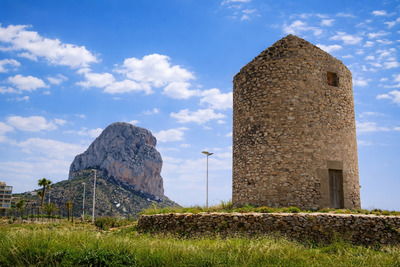
Torre Molinera — one of the historic watchtowers of Calpe that formed part of the coastal defense system.
The tower was built in the 16th century on an elevated area near the shore and was used to observe the sea. When enemy ships appeared, signals were sent from the tower to warn the town’s residents about possible attacks.
Such towers were located along the entire Costa Blanca coastline and formed a unified defense system. Thanks to visual signals, warnings could be quickly transmitted to neighboring settlements.
Today, Torre Molinera is considered an important historical monument that reminds visitors of the times when coastal defense played a key role in the life of the town.
City Walls and Defensive Fortifications
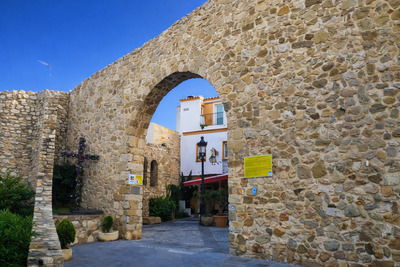
In addition to individual towers, fragments of the old city walls — Murallas de Calpe, built in the 15th century — have been preserved in Calpe.
These walls protected residents during pirate attacks and allowed control over access to the town. Some of the fortifications can still be seen today in the Old Town area, near Torre de la Peça Tower.
The defensive system of Calpe included towers, walls, and fortified gates that created a closed protective perimeter around the settlement.
Walking through the historic districts of the town, you can notice remains of these structures and imagine what Calpe looked like during an era of constant threats from the sea. Such sites are especially interesting for lovers of history and Spain’s military heritage.
Calpe Salinas (Las Salinas)
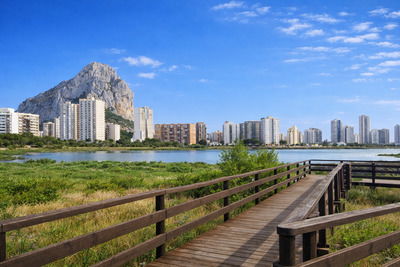
Calpe Salinas (Las Salinas) is one of the most unusual natural places in the town and an important part of its historical heritage.
The name “Salinas” translates from Spanish as “salt mines.” For many centuries, these salt lagoons played an important role in Calpe’s economy: salt was extracted here and used to preserve fish, and it was actively traded to other regions of the Mediterranean.
Today, the Salinas area is a protected natural zone where a unique ecosystem has been preserved. Many species of water birds live here, including the well-known pink flamingos, which can be seen throughout the year.
This place looks especially beautiful in the morning and evening hours, when the water reflects the silhouette of Peñón de Ifach Rock, creating picturesque views popular among photographers and nature lovers.
Convenient walking paths run around the perimeter of the lagoon, and special observation platforms for birdwatching have been installed. This makes Salinas an excellent place for peaceful walks and relaxation away from the city bustle.
The Salinas are located between the beaches and Ifach Rock, so a walk here can easily be combined with a visit to the coastline or a climb to viewpoints in the natural park area.
By the way, on Saturdays, one of the largest street markets in Calpe takes place near the Salinas area. Here you can buy fresh fruits, vegetables, clothing, and local products, so visiting the market often becomes part of a walk around this district.
Even a short walk around the salt lagoons allows you to see unusual natural landscapes and experience the peaceful atmosphere of this corner of Calpe.
Calpe Beaches
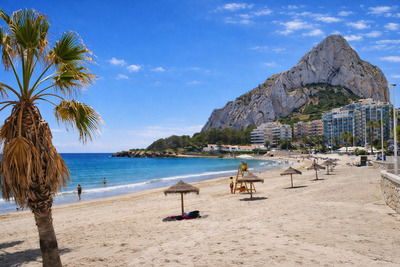
Calpe beaches are considered one of the town’s main advantages. They stretch along the entire coastline and are suitable both for relaxing family holidays and active seaside entertainment.
Most beaches here are sandy, with easy access to the water and well-developed infrastructure. Along the coastline run promenade areas with restaurants, cafés, and relaxation zones offering beautiful views of the sea and the famous Peñón de Ifach Rock.
Among all the beaches in Calpe, there are several of the most well-known and popular ones that are definitely worth visiting.
Arenal-Bol Beach (Playa Arenal-Bol)
Arenal-Bol Beach (Playa Arenal-Bol) is one of the main city beaches, located near the center of Calpe.
It is a long sandy beach with soft golden sand and a gentle entrance into the water, making it especially convenient for families with children. The infrastructure here is well developed: there are showers, sun umbrella and sunbed rentals, as well as many cafés and restaurants along the promenade.
A wide promenade runs along the beach, making it pleasant to walk in the evening, admire the sunset, and enjoy sea views.
La Fossa — Levante Beach (Playa La Fossa / Levante)
La Fossa — Levante Beach (Playa La Fossa / Levante) is located on the other side of the Peñón de Ifach Rock and is considered one of the most beautiful beaches in the town.
This beach is known for its long promenade lined with restaurants and shops, as well as magnificent views of Ifach Rock. It is especially pleasant to walk here and take landscape photographs.
The beach is suitable both for relaxing and for active entertainment — water sports, equipment rentals, and various marine activities are available here.
Cala del Racó Cove
Cala del Racó is a small picturesque cove at the foot of the Peñón de Ifach Rock. It is one of the best places in Calpe for snorkeling and underwater activities.
The water here is usually very clear, and the rocky seabed makes the cove interesting for observing marine life. This place is especially popular among those who prefer a quieter atmosphere away from large beaches.
Regardless of the chosen beach, in Calpe it is easy to find a place to relax for any taste — from lively city beaches to more secluded corners near Ifach Rock.
Where to Park in Calpe
If you are planning a trip by car or intend to use car rental, finding parking in Calpe is usually not difficult. The town has both free zones and paid covered parking facilities near major attractions.
One of the most convenient options is to leave your car at the entrance to the town. Large supermarkets with spacious parking areas are located here, where it is usually possible to find a free space. From here, it is convenient to start your walk on foot and gradually move toward the center or promenade.
If you prefer not to walk much, you can drive closer to the historic center, where several covered parking facilities are located. This option is especially convenient in hot weather or if you are traveling with children.
There are also many parking spaces in the beach areas; however, during the high season, available spaces may fill up quickly, especially near popular beaches such as Arenal-Bol and La Fossa.
On Saturdays, it is worth considering that a large street market takes place near the Salinas area, so some parking zones may be occupied in the morning hours.
Overall, Calpe is considered a convenient town for traveling by car, and most attractions are located at relatively short distances from each other.
What to See Near Calpe
Calpe is conveniently located between popular resorts of the Costa Blanca coastline, making it easy to take day trips to other interesting towns and natural attractions in the region.
- What to See in Altea — one of the most beautiful towns on the coast with white houses, narrow streets, and the famous church with blue domes.
- What to See in Benidorm — the largest resort on the Costa Blanca with skyscrapers, long beaches, and a lively atmosphere.
- What to See in Guadalest — a picturesque mountain village located on a rock with stunning views of the valley and turquoise reservoir.
- Algar Waterfalls (Fonts de l'Algar) — one of the most beautiful natural places in the region, where you can walk along cascading waterfalls and refresh yourself in natural pools.
- What to See in Dénia — an atmospheric coastal town with a castle, historic center, and picturesque beaches.
- Main Attractions of Alicante — the provincial capital with Santa Bárbara Fortress, a promenade, and interesting museums.
- 5 Best Theme Parks in Benidorm — a great option for family holidays, including Terra Mítica and popular water parks.

 English
  Español
  Русский