
Elche is one of the most interesting cities in the province of Alicante, located just a few kilometers from the Costa Blanca coastline.
This city is known throughout Spain for its unique palm grove, included in the UNESCO World Heritage list, as well as for the mysterious sculpture of the Lady of Elche — one of the most famous symbols of ancient Spanish history.
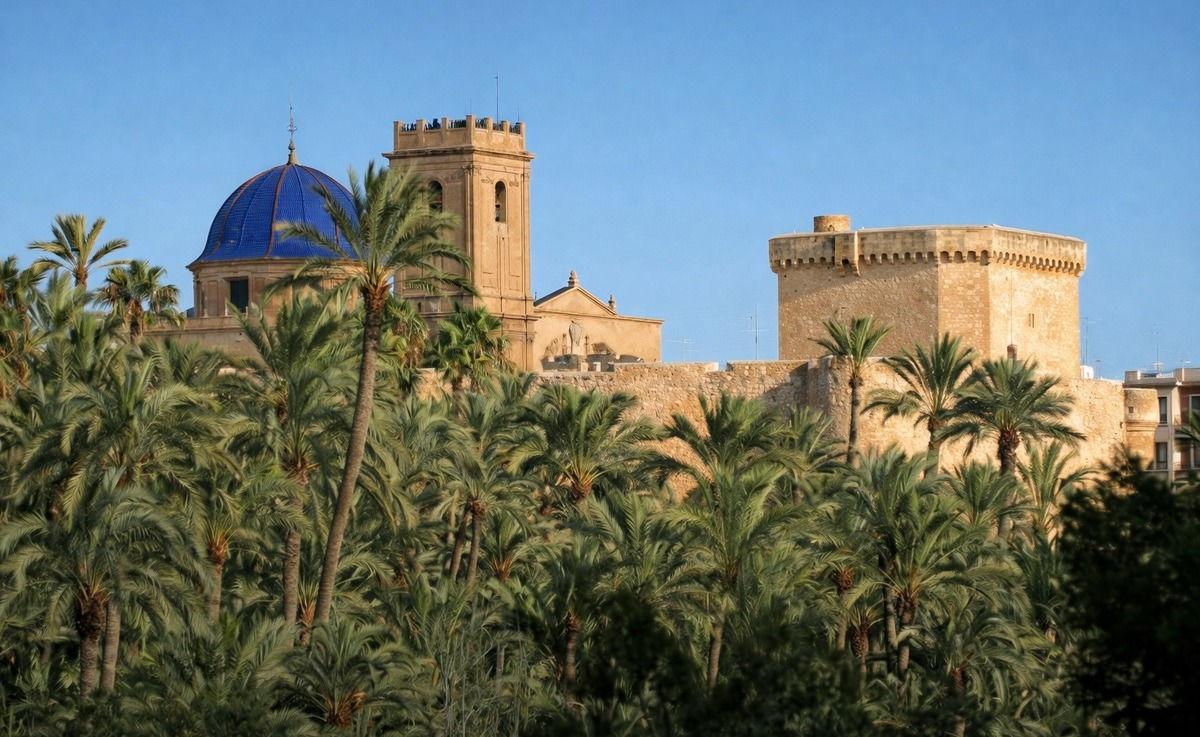
In this article, you will learn what to see in Elche: the city's main attractions, interesting places for walking, beaches, and events worth seeing during your trip.
What to See in Elche in 1 Day — Walking Route
If you only have one day to explore Elche, most of the main attractions can be seen during a single walking tour through the city center.
- Plaza de la Glorieta
- Elche Palm Grove (Palmeral de Elche)
- Huerto del Cura Garden
- Elche Municipal Park
- Basilica of Santa Maria
- Lady of Elche
- Calahorra Tower
- MAHE Archaeological Museum
- Puente de Altamira Bridge
Additionally:
The most convenient and logical way to explore Elche in one day is to start your walk from the central Plaza de la Glorieta and then head toward the famous palm complex Palmeral de Elche.
This route will allow you to see the city's main attractions and get acquainted with its history, culture, and green areas in just one day.
Plaza de la Glorieta
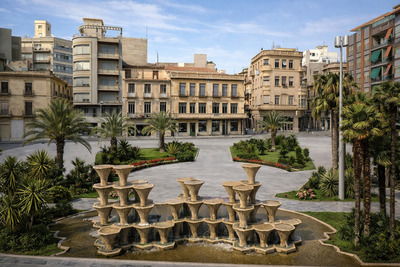
Plaza de la Glorieta is one of the liveliest places in the center of Elche and the most convenient starting point for exploring the city.
It is located near the historic quarters and the green areas of the famous palm complex Palmeral de Elche, which makes it an ideal place to begin a walk to the main attractions.
This is a small but very cozy square surrounded by cafés, shops, and shady trees. In the center of the square there is a fountain of an unusual shape that attracts attention with its original design and often becomes a popular place for photos.
It is a pleasant spot to stop for a cup of coffee while watching the unhurried city life and enjoying the atmosphere of everyday Spanish leisure.
In the evenings, the square fills with the soft light of lanterns, the fountain is beautifully illuminated, and it becomes a popular place for meetings and walks.
From Plaza de la Glorieta, it is easy to continue the route toward the palm complex and one of the city's most famous gardens — Huerto del Cura.
Elche Palm Grove (Palmeral de Elche)
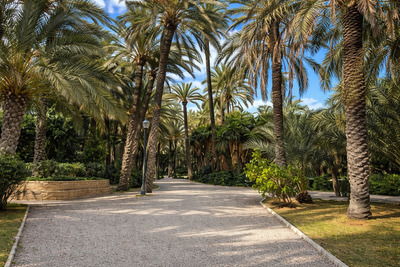
From Plaza de la Glorieta, the walk continues toward the famous palm complex Palmeral de Elche — the city's main pride and one of the most well-known attractions in Spain.
This vast palm forest is considered the largest in Europe — more than 200,000 palm trees grow here. Its history dates back to the period of Arab rule, when a complex irrigation system was created in the city. The Arabs transformed the land around Elche into a true oasis by planting palms in rows and dividing the land into separate gardens that are still used today.
In 2000, the palm grove was included in the UNESCO World Heritage list due to its historical value and its unique irrigation canal system, many parts of which have survived to this day. Today, this green landscape shapes the city's unique appearance and makes Elche truly stand out among other cities in the region.
Walking through the palm grove is not only an opportunity to see thousands of palm trees but also to enjoy beautiful green spaces. Convenient walking routes run through the area, the most famous of which is the Ruta del Palmeral, passing through historic gardens, cozy squares, and shady alleys.
During the walk, you can see decorative ponds, small bridges, sculptures, rest areas, and playgrounds. In some places, ancient elements of the irrigation system can still be seen, reminding visitors how this unique green city was created.
It is especially pleasant to walk here during the warmer months, when the shade of tall palm trees protects from the sun and the green alleys create the feeling of a true oasis. Along the way, you can find picturesque spots to relax, take beautiful photos, and experience the atmosphere of one of the most unusual cities in the province of Alicante.
Huerto del Cura Garden
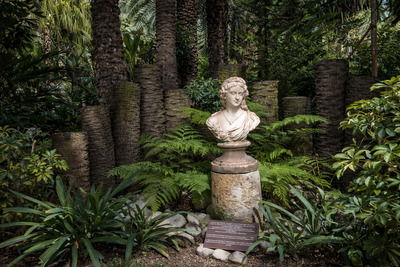
Continuing the walk through the Palmeral de Elche palm complex, it is definitely worth visiting Huerto del Cura Garden — one of the most beautiful and famous places in the city. This cozy botanical garden is located not far from the central part of Elche and is considered a true gem of the palm complex.
The history of the garden dates back to the 19th century, when the land belonged to a local priest — which is why the garden received the name Huerto del Cura, meaning "Priest's Garden." Over time, the garden became famous for its unique plant collection and well-maintained landscape.
Within the garden, visitors can see not only various species of palm trees but also cacti, ornamental plants, and rare trees brought from different parts of the world. Neatly arranged paths run throughout the garden, with small ponds, sculptures, and shaded resting areas along the way.
The main highlight of the garden is the famous "Imperial Palm" (Palmera Imperial), which has an unusual shape and is considered a symbol of this place. This remarkable palm received its name in honor of Empress Elisabeth of Austria (Sisi), who visited Elche in the 19th century. Today, it is one of the most photographed palm trees in the city.
A walk through Huerto del Cura is a perfect opportunity to relax during a busy sightseeing route. It is pleasant to sit in the shade of the palms, listen to the sound of water in the ponds, and take a break from the bustle of the city. Sometimes, peacocks can be seen walking freely around the garden, creating a special atmosphere of calm.
Huerto del Cura is especially popular among tourists thanks to its beauty and harmonious combination of nature, history, and a cozy relaxing atmosphere.
💡 Entrance to the garden is paid, but the ticket price is usually low — about 6–7 euros for adults. It is one of the most well-maintained and beautiful places in Elche, so the visit is absolutely worthwhile.
Elche Municipal Park (Parque Municipal de Elche)
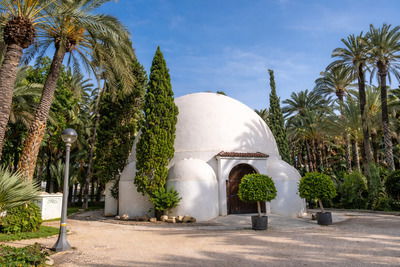
Continuing the walk after visiting Huerto del Cura Garden, it is worth passing through Elche Municipal Park — one of the most pleasant places to relax in the city center.
This park is part of the famous Palmeral de Elche complex and is considered a true green oasis among the city buildings.
There are shaded alleys, flower beds, and small ponds with decorative bridges. Special attention is drawn to the artificial waterfalls and ponds, where ducks and other water birds can be seen.
While walking through the park, you can hear birds singing, see ancient palm trees, and feel as if time slows down. Benches are placed along the paths, making it easy to pause and rest in the shade before continuing the walk through the historic part of the city.
The Municipal Park is one of those places loved by both tourists and local residents: families come here for walks, people relax with children, and simply enjoy the peaceful atmosphere among greenery and water.
Basilica of Santa Maria — Main Church of Elche
Continuing the walk through the Municipal Park, you gradually reach one of the most recognizable buildings in the city — the Basilica of Santa Maria, the main religious temple of Elche.
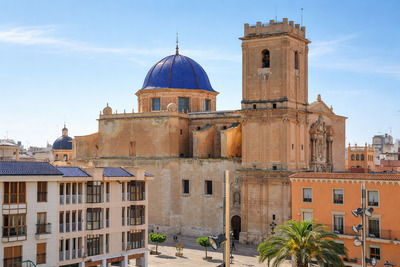
The church was built on the site of a former mosque after the Reconquista, when the city came under Christian rule. Over the centuries, the building was rebuilt several times, which is why today its appearance reflects features of different architectural periods.
The basilica acquired its modern appearance in the 17th–18th centuries and is considered one of the striking examples of Baroque architecture in the region. Its massive façade and tall bell tower are clearly visible from different parts of the city and serve as an important landmark during a walk.
The basilica gained particular fame thanks to the performance of a unique theatrical religious event — Misteri d’Elx. This ancient mystery play, dedicated to the Assumption of the Virgin Mary, takes place annually in August and is considered one of the most unusual cultural events in Spain. The performance is included in the UNESCO Intangible Cultural Heritage list.
Inside the church, visitors can see beautiful altars, historic decorative elements, and an atmosphere that reflects the rich history of the city. Even if you do not plan a long visit, it is worth stepping inside for a few minutes to feel the calmness and grandeur of this place.
💡 If you wish, you can climb the basilica’s bell tower — from there, beautiful views of the historic city center and palm-lined avenues open up.
Lady of Elche (La Dama de Elche)
After visiting the Basilica of Santa Maria, it is worth remembering another key symbol of the city — the mysterious Lady of Elche (La Dama de Elche). While walking through the city streets, it is impossible not to notice the image of a female bust with two large discs on either side of the head — her image appears on squares, building façades, and souvenirs.
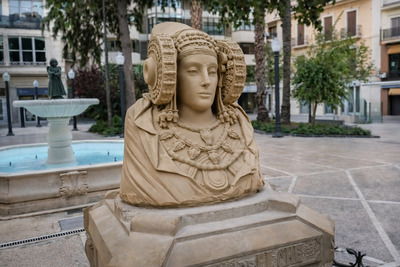
This is one of the most famous archaeological discoveries in Spain. The author of the sculpture is unknown, but its origin dates back to the Iberian period and is estimated to be from the 5th–3rd centuries BC.
The Lady of Elche was discovered completely by chance in 1897 near the city. According to one version, the discovery was made by a teenager working in agricultural fields when he came across a hidden niche in the ground. The sculpture was located inside a specially prepared cavity, which immediately attracted great interest from researchers.
An additional mystery is created by the hole at the back of the bust. This detail became the reason for numerous debates among scholars and historians about the sculpture’s purpose.
According to one version, the Lady of Elche may have represented an ancient deity and been used to store valuable items or talismans. Another hypothesis suggests that the bust had a funerary function and was intended to hold the ashes of the deceased.
Today, the original sculpture is kept in the National Archaeological Museum in Madrid, but in Elche you can see its exact replicas — for example, near the MAHE Archaeological Museum and in different parts of the historic city center.
The story of the Lady of Elche gives a special sense of depth to a walk through the city: it becomes clear that the history of this place began long before the appearance of modern streets and buildings.
Calahorra Tower (Torre de la Calahorra)
Continuing the walk through the historic center, just a few steps from the Basilica of Santa Maria, you can see one of the oldest structures in the city — the Calahorra Tower, an important symbol of medieval Elche.
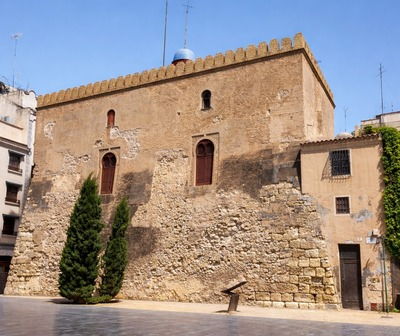
This massive stone tower was built in the 12th century during the period of Arab rule and was part of the city's defensive fortifications. It once belonged to a system of fortress walls that protected the city from attacks and served as a watchtower.
Today, Torre de la Calahorra looks like a true guardian of history, reminding visitors of a time when the narrow streets around it were part of a fortified city. Near the tower, the atmosphere of old Elche with its stone façades and quiet streets can be felt especially well.
Inside the tower, there is a small museum dedicated to the history of Elche, where visitors can learn about the development of the city from ancient times to the present day and see exhibits related to the lives of residents in different eras.
It is especially pleasant to walk near the tower in the evening, when it is beautifully illuminated and the surroundings are filled with a calm and slightly romantic atmosphere of the historic center.
💡 Visiting the tower is paid, but the ticket price is usually low — about 2 euros, making it easy to include in a walk through the historic center.
MAHE Archaeological and History Museum (Museo Arqueológico y de Historia de Elche)
Near the Calahorra Tower, there is another interesting place — the MAHE Archaeological and History Museum, which allows visitors to explore Elche’s past in greater depth.
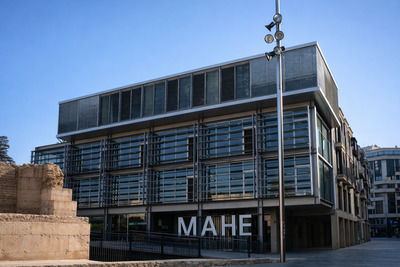
The museum is located inside the city’s historic fortifications, so visiting it becomes part of the historical journey itself. Some halls are located in underground spaces, creating a special atmosphere and a feeling of true immersion in history.
The museum exhibitions tell the story of the city's life across different eras — from the ancient Iberians to the Roman period and the Middle Ages. Here you can see archaeological finds, jewelry, household items, and ancient artifacts that help imagine what Elche looked like many centuries ago.
Particular interest is drawn to exhibits related to Iberian culture — it is to this period that the famous Lady of Elche belongs, which became the main symbol of the city.
Even if you do not plan a long visit, the museum is worth including in your route at least for a short time — it helps to better understand the history of the city and see how its unique character was formed.
💡 On Sundays, admission to the MAHE Museum is usually free, making it a good day to visit.
Altamira Bridge (Puente de Altamira)
It is convenient to finish your walk through the historic center at Altamira Bridge — one of the most recognizable places in Elche, located near the historic part of the city.
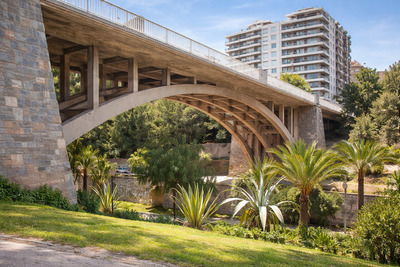
This bridge crosses the Vinalopó River (Río Vinalopó), which for centuries played an important role in the life of the city and helped shape the surrounding landscape. Although today the river looks calm and shallow, it was thanks to it that fertile lands and the famous palm gardens appeared around the city.
From the bridge, beautiful views open onto palm-lined avenues, historic buildings, and green areas along the riverbed. It is one of the best places to take memorable photos and see Elche from a slightly different perspective.
Near the bridge, there are walking paths, small parks, and shaded relaxation areas where it is pleasant to spend time after a busy walk through the city.
It is especially beautiful here closer to the evening, when the soft light of lanterns reflects on the water and the city gradually sinks into the calm atmosphere of the end of the day.
If you still have time after exploring the city's attractions, it is worth heading to the coast — the nearest beaches, Arenales del Sol and La Marina, are located about 15–20 minutes by car from the center of Elche and are considered among the most beautiful on the Costa Blanca.
Events and Festivals in Elche
Elche is a city with rich traditions, where bright festivals and cultural events take place throughout the year. Many of them have centuries-old histories and are considered an important part of the region's cultural heritage.
It is especially interesting to visit Elche during major city celebrations — at this time, the streets fill with music, parades, and the atmosphere of a true Spanish celebration.
Misteri d’Elx — the main cultural event of the city
Misteri d’Elx is the most famous event in Elche and a unique theatrical performance that takes place inside the Basilica of Santa Maria.
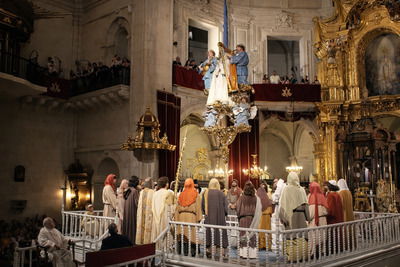
It is a religious musical drama dedicated to the Assumption of the Virgin Mary, with a history of more than five hundred years. During the performance, special stage mechanisms are used that allow actors to appear directly under the vaults of the church, as if descending from the heavens — making the spectacle truly unusual and memorable.
The performance takes place annually in August and attracts thousands of spectators from all over Spain and other countries.
Misteri d’Elx is included in the UNESCO Intangible Cultural Heritage list and is considered one of the most unusual theatrical events in Europe.
Even if you are not planning a trip in August, it is worth learning about this event in advance — it is an important part of the city's history and cultural life.
Palm Sunday Festival (Domingo de Ramos)
Domingo de Ramos is one of the most beautiful and well-known festivals in Elche, which takes place on Palm Sunday before Easter.
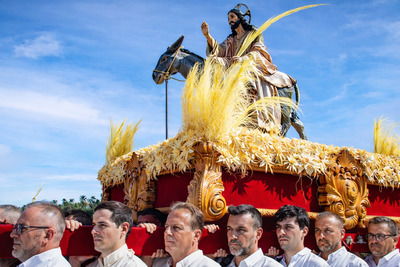
On this day, a ceremonial procession passes through the city streets, with participants carrying decorated palm branches — a symbol of peace and prosperity.
Palms for this festival are handmade by local craftsmen. Young leaves are specially protected from sunlight, which makes them lighter and gives them their characteristic white color. These decorated palms are considered true works of art and are known far beyond the region.
The atmosphere on this day is especially festive — the streets are decorated, music is played, and the city fills with a sense of tradition and unity.
August Festivals (Fiestas de Agosto)
Fiestas de Agosto is the main summer celebration of the city, held in mid-August and accompanied by numerous events.
During these days, concerts, street performances, fairs, and colorful parades take place in Elche, while the historic center fills with music and a festive mood.
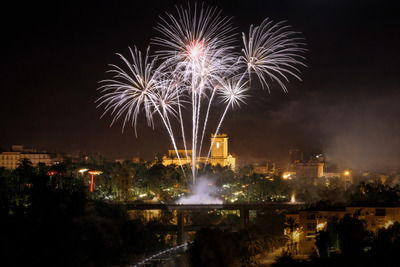
One of the most anticipated events is the traditional fireworks display associated with the celebration of Misteri d’Elx. It gathers large crowds and is considered one of the most spectacular moments of the entire festival.
August is an excellent time to visit the city if you want to see Elche in its most vibrant and festive atmosphere.
What to See Near Elche
Elche is conveniently located in the province of Alicante, making it an excellent starting point for traveling around the region. Within a one-hour drive, you can find picturesque towns, historic attractions, and popular resorts of the Costa Blanca.
💡 For convenient travel around the region, many travelers choose to rent a car 🚗 — this allows you to see more interesting places and freely plan your route.
- History lovers and those who enjoy walking should definitely visit Alicante — the provincial capital with Santa Barbara Castle, a seaside promenade, and a charming old town.
- A popular day trip is Guadalest, a picturesque mountain village with panoramic views, an ancient castle, and the nearby Algar waterfalls.
- Those who want to combine sightseeing with seaside relaxation should consider Benidorm — one of Spain's most famous resorts with long beaches, viewpoints, and a wide range of entertainment.
- For peaceful walks and discovering the atmosphere of coastal towns, Torrevieja is a great choice, known for its salt lakes and long promenade.
- Another interesting destination is Denia, a city with a beautiful historic center, a castle, and picturesque beaches on the northern part of the coast.
- If you want to experience local life, it is worth visiting the street markets in Elche, which take place on Mondays and Saturdays at Plaza Barcelona. Here you can buy fresh fruits, vegetables, clothing, and souvenirs, as well as see how an ordinary day of local residents unfolds.
- Travelers with children will especially enjoy visiting parks and family entertainment venues in the province of Alicante, where the best theme parks, water parks, and leisure areas of the region are gathered.

 English
  Español
  Русский