
Spain is a country where beach holidays blend effortlessly with rich culture, history, and unforgettable experiences. Here you can spend the morning by the Mediterranean Sea, explore historic streets and world-class museums during the day, and enjoy lively squares, gastronomy, and the southern rhythm of life in the evening.
Travelling through Spain is not only about Gaudí’s architectural masterpieces in Barcelona, the royal palaces of Madrid, or the historic landmarks of Andalusia. It also includes theme parks, scenic viewpoints, festivals, and unique places that make every trip diverse and memorable.
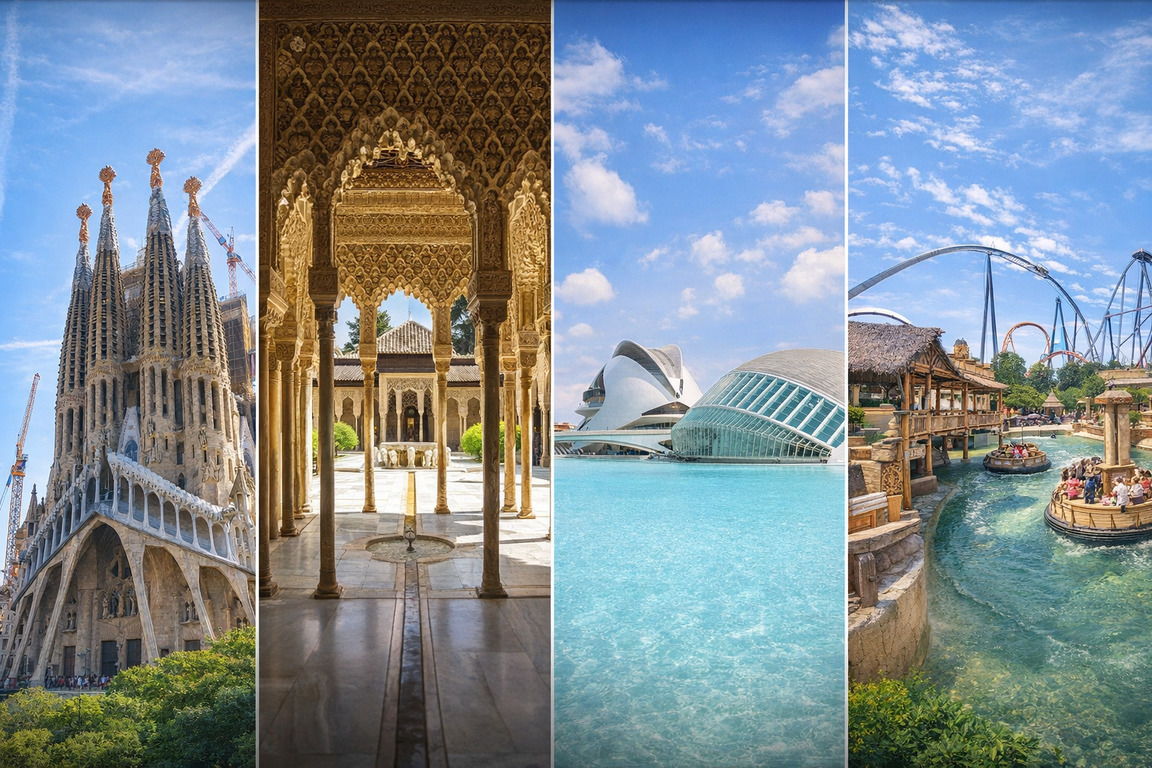
This guide brings together the top attractions in Spain worth adding to your itinerary, along with tickets that help you skip queues and make your trip more comfortable and well planned.
This page is regularly updated to include popular attractions and current travel offers.
Popular attractions in Spain right now
If you are planning a trip to Spain and want to see the country’s most iconic places, start with the attractions travellers choose most often. Below you will find popular museums, architectural landmarks, and entertainment experiences where booking tickets in advance is especially convenient.
Choose places that interest you, compare visiting options, and plan your itinerary before your trip — this helps save time and avoid queues during the high season.
Most booked attractions in Spain:
Spain offers hundreds of fascinating places to visit — from world-famous museums to theme parks and historic complexes. Below, we have grouped attractions into categories to help you plan your journey more easily.
Top attractions in Spain you shouldn’t miss
Spain combines different eras, cultures, and travel styles — from architectural masterpieces to modern entertainment parks. If you are planning your first trip, these places offer a perfect introduction to the country from multiple perspectives.
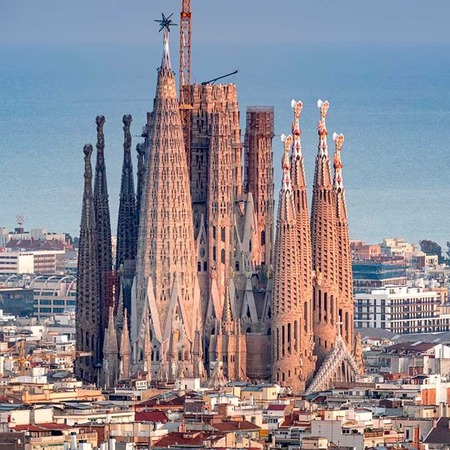
- Sagrada Família (Barcelona) — Antoni Gaudí’s famous basilica and one of Europe’s most recognisable landmarks, combining art, architecture, and a unique spiritual atmosphere.
- Park Güell — a unique space where nature and modernist architecture create one of the world’s most extraordinary urban parks.
- Prado Museum (Madrid) — one of Europe’s most important art galleries, featuring masterpieces by Velázquez, Goya, and Rubens.
- Alhambra (Granada) — a Moorish palace and fortress complex listed as a UNESCO World Heritage Site.
- PortAventura World — Spain’s largest theme park, perfect for family holidays and unforgettable experiences.
These attractions are easy to combine within one trip, travelling between cities by train or domestic flights.
Why it’s better to book tickets for popular attractions in Spain in advance
Many attractions in Spain limit the number of visitors per day, especially during the high tourist season. Booking tickets in advance helps you plan your itinerary ahead of time and makes your journey more comfortable.
Fewer queues and waiting times
Popular places such as museums, palaces, and architectural landmarks often attract long queues. Electronic tickets allow you to choose a visiting time and enter more quickly.
Convenient itinerary planning
Booking in advance helps you organise attractions across different days of your trip and avoid an overloaded schedule.
Guaranteed entry to popular attractions
Some sites limit the number of visitors per day, which means tickets for popular dates may sell out in advance.
This approach is especially useful when travelling between several Spanish cities during one trip.
Main categories of attractions in Spain
Spain offers travellers an incredible variety of experiences — from world-famous museums and historic landmarks to modern architectural complexes and family-friendly theme parks. Choosing attractions based on your interests makes it easier to create a balanced itinerary and discover different sides of the country.
Tip: many travellers combine cultural sightseeing with entertainment and seaside relaxation to create a richer and more diverse travel experience.
🏛 Museums, architecture and cultural heritage
Spain is one of Europe’s leading cultural destinations, where you can explore masterpieces of world art, modernist architecture, and historic complexes from different eras.
Sagrada Família in Barcelona — Antoni Gaudí’s iconic basilica and one of the most recognisable architectural symbols of Spain.
Prado Museum in Madrid — one of the most important art galleries in Europe.
Alhambra in Granada — a Moorish palace and fortress complex and UNESCO World Heritage Site.
Park Güell — a unique space designed by Antoni Gaudí offering panoramic views over Barcelona.
Casa Batlló — one of Gaudí’s most recognisable architectural masterpieces.
Casa Milà (La Pedrera) — a symbol of Catalan modernism and innovative early-20th-century architecture.
Madrid Wax Museum — an interactive museum ideal for family visits.
🎡 Modern complexes and science spaces
Beyond historical landmarks, Spain is also known for contemporary architecture and cultural centres that combine science, art, and entertainment.
City of Arts and Sciences in Valencia — a futuristic complex of museums, an oceanarium, and exhibition spaces that has become a symbol of modern Spain.
🎢 Theme parks and family entertainment
Theme parks and entertainment complexes make Spain an excellent destination for travelling with children and enjoying active holidays.
PortAventura World — Spain’s largest theme park featuring themed areas and thrilling attractions.
Terra Mítica — a themed park in Benidorm inspired by ancient Mediterranean civilisations.
Parque Warner Madrid — a movie-themed park perfect for family entertainment.
Siam Park in Tenerife — one of the world’s best water parks and a popular destination in the Canary Islands.
Best cities to explore Spain
Travelling around Spain is often built around its major cities, each offering a unique atmosphere and cultural identity. Many itineraries combine several destinations, allowing travellers to experience different sides of the country.
Popular route: Barcelona → Madrid → Andalusia — a classic way to discover multiple regions of Spain in one trip.
- Barcelona — a perfect combination of beach lifestyle, Antoni Gaudí’s architecture, gastronomy, and Mediterranean atmosphere. An ideal starting point for a first trip to Spain.
- Madrid — the cultural heart of Spain with royal palaces, famous museums, and lively plazas.
- Seville — Andalusian charm, historic quarters, and the atmosphere of traditional Spain.
- Granada — home to the Alhambra, one of Europe’s most impressive historic complexes.
Thanks to Spain’s well-developed transport network, many travellers easily combine several cities within one trip.
When is the best time to visit attractions in Spain?
Spain remains an attractive destination all year round, although the travel experience may vary depending on the season. Planning your trip according to the time of year can make your itinerary more comfortable and enjoyable.
🌸 Spring (March–May)
One of the best times to explore Spanish cities. Pleasant temperatures are ideal for walking tours, sightseeing, and visiting museums without intense heat or large crowds.
☀️ Summer (June–August)
The perfect season to combine beach holidays with theme parks and evening strolls through historic cities. Popular attractions are in high demand, so booking tickets in advance is highly recommended.
🍂 Autumn (September–November)
Mild weather and fewer tourists make autumn an excellent time for cultural routes, museums, and historic towns.
❄️ Winter (December–February)
Ideal for museum visits, gastronomic trips, and experiencing the festive atmosphere of Spanish cities. Southern regions continue to offer comfortable weather for walking and sightseeing.
Tip: spring and autumn are considered the most balanced seasons for a first trip to Spain.
Your travel itinerary can easily be adapted to the season by combining cultural attractions, beach relaxation, and entertainment experiences.
Frequently asked questions about attractions in Spain
Do I need to buy tickets in advance?
For popular attractions such as the Sagrada Família, the Alhambra, or major museums, booking in advance helps you choose a convenient time slot and avoid queues.
How many days do you need to explore Spain?
An ideal trip lasts between 7 and 10 days, allowing you to visit several cities and experience different regions of the country.
Which cities are best for a first trip?
Most travellers start with Barcelona and Madrid, often adding Andalusia or the Mediterranean coast to their itinerary.
Can you combine beach holidays with sightseeing?
Yes, and that is exactly what makes Spain so popular: many cities allow you to combine seaside relaxation, culture, and entertainment within one trip.
When are queues at attractions shortest?
Early morning and the shoulder seasons (spring and autumn) are generally the most comfortable times to visit popular sites.
Planning a trip to Spain?
After selecting the main attractions, it’s helpful to move on to planning your itinerary by city. Explore our city guides to organise your travel days and discover even more highlights.
Spain remains one of Europe’s most inspiring destinations thanks to its unique combination of history, culture, gastronomy, and vibrant experiences that make every trip unforgettable.

 English
  Español
  Русский